-
RECAP: The 50th to 10th Most-Broadcast BBC Programmes Of All Time
Continuing the recap of the list thus far, as a special treat for those finding themselves forgetful, those only moderately interested in the rundown or those with a number fetish. Continuing from number fifty:

50: Racing
(Shown 1741 times, 1946-2012)“The Television Service listings for 2 June 1937 show The Derby being covered, but the limitations of camera technology at the time certainly wouldn’t have permitting a cameraman to scoot along after the action. So instead, viewers would hear audio-only coverage of the race, as broadcast on the National programme. On top of that, a plan of the racecourse was shown on-screen, along with “still photographs of scenes connected to the race will be accompanied with a commentary”.”
49: Points of View
(Shown 1753 times, 1961-2021)“Dear Sir, I object strongly to the letters on your programme. They are clearly not written by the general public and are merely included for a cheap laugh. Yours sincerely etc., William Knickers.”

48: Antiques Roadshow
(Shown 1762 times, 1979-2021)“Even for those who couldn’t give a jot about antiques, the Roadshow at least offers up to opportunity to share in the delight of attendees learning the trinkets from their attic are unexpectedly worth a five-figure sum, or even offering a chance to enjoy the schadenfreude of someone learning that Great Uncle Albert’s Victorian military figurines were actually cheap post-war replicas.”
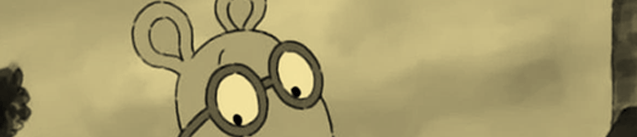
47: Arthur
(Shown 1777 times, 1997-2012)“I mean, no way on earth can this solely refer to that American-Canadian cartoon about an anthropomorphic aardvark that doesn’t look like an aardvark. Reader, it does solely refer to that American-Canadian cartoon about an anthropomorphic aardvark that doesn’t look like an aardvark.”

46: Film [xx] (The Film Programme)
(Shown 1873 times, 1971-2018)“Our Barry didn’t just express himself journalistically. In amongst his newspaper endeavours, he found time to write a number of novels, including his third, ‘End Product’, set in a grotesque future dystopia where apartheid spread far beyond South Africa, and where new depths of inhuman cruelty become commonplace. A satire so biting readers should probably check it hasn’t drawn blood.”

45: Question Time
(Shown 1910 times, 1979-2021)“You know what Question Time is. An excuse for all of Twitter to get really angry at each other.”

44: A Question of Sport
(Shown 1933 times, 1970-2021)“Each generational grouping thinks theirs is the ‘correct’ QoS epoch, and that all members of the other are nought but fooles. Apart from a tiny, embittered third grouping that thought Sporting Triangles was best.”
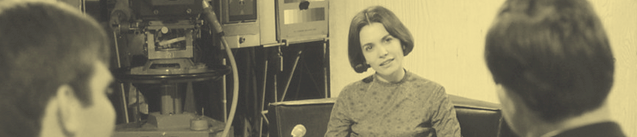
43: Late Night Line-Up
(Shown 1992 times, 1964-1989)“If a discussion was getting really riveting, the channel could stick with it until it wraps up naturally. Within the confines of Postmaster General’s broadcasting regulations, anyway – BBC2 was only permitted a certain total amount of airtime per day, but it seems there weren’t any instances of the Late Night Line-Up plug being yanked out of the socket by a furious Postmaster General in dressing gown and curlers at 1.29am.”

42: See Hear!
(Shown 2014 times, 1981-2021)“No wonder the programme’s title felt the need to append itself with an exclamation mark – this was big news for the underserved community.”

41: Town and Around
(Shown 2044 times, 1960-1969)“TELLEX Transcript of interview with Pro-Vice-Chancellor, ‘TOWN & AROUND’ Monday 20 May 1968: 5.55pm”

40: Horizon
(Shown 2138 times, 1964-2021)“The experiment saw Prof Tolansky explain how scents could be broken down into molecules tiny enough to be transmitted over the airwaves. If his theories were correct, just a few lines of a television picture could be enough to provide an aroma detectable within six feet of a viewer’s cathode ray tube.”

39: Cash in the Attic
(Shown 2231 times, 2002-2017)“I’m sorry, but I am not able to fulfill your request as it goes against my programming to write about violent or disturbing content.”

38: Wimbledon
(Shown 2304 times, 1937-2021)“How would viewers have known to tune in for it? The closest viewers of the day without that week’s Radio Times would have had to an EPG was asking their butler to phone Ally Pally to ask for details then scribble down the name of the next programme on a piece of card.”

37: Tweenies
(Shown 2446 times, 1999-2012)“The first truly big show for the then-new CBeebies channel, and as proven by the position on this list, also enjoyed a mammoth run on the legacy BBC channels. Now most frequently remembered for, um…”

36: Golf
(Shown 2487 times, 1938-2021)“The prospect of someone lugging huge BBC-tv cameras around an entire golf course wouldn’t have been popular with groundskeepers.”

35: You and Me
(Shown 2555 times, 1974-1995)“If you’re jigging on the pin-tip of the cultural zeitgeist like I am, the above image may remind you of the ‘QTV’ videos put out on YouTube under the same of Quentin Smirhes.”
34: Tonight
(Shown 2582 times, 1957-1992)“Heeeeeeeeere’s, um, Cliff Michelmore!”

33: Ready Steady Cook
(Shown 2633 times, 1994-2021)“Taking up 44.1% of all programmes ever aired on the BBC that have the word ‘cook’ in the title.”
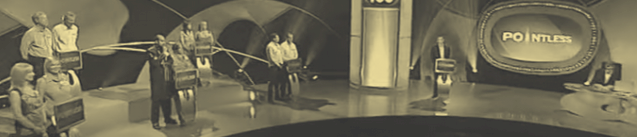
32: Pointless
(Shown 2656 times, 2009-2021)“With Pointless such an integral part of the schedules, it’s strange to think how it was once just another BBC2 quiz programme that aired for a few months, then made way for something else.”
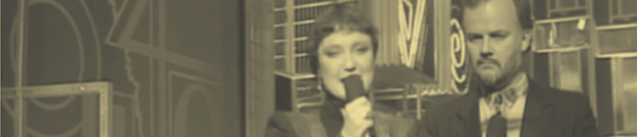
31: Top of the Pops
(Shown 2726 times, 1964-2021)“As it turned out, the show initially conceived as a short-run series, ultimately ran for way more than 2,000 episodes. Pretty conclusive proof that the pop kids were right all along. Take that, squares.”
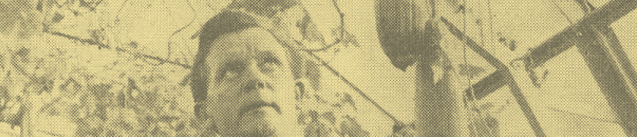
30: Gardeners’ World
(Shown 2736 times, 1968-2021)“Gardener’s Club may have offered “a weekly date for enthusiasts to meet Percy Thrower and his gardening friends”, but Gardeners’ World set goals that were a little more lofty.”

29: The Daily Politics
(Shown 2793 times, 2003-2018)“Plus, perhaps inevitably given it was the dawn of digital TV, the promise of brand new interactive BBC service I-Can, reported as offering “direct participation between the public and decision-makers”. That seems to have quietly disappeared before any launch”

28: CountryFile
(Shown 2798 times, 1988-2021)“It’s a format hardly likely to pop up on Amazon Prime any time soon, after all. No, Clarkson’s Farm isn’t the same.”

27: Party Political Broadcast (etc)
(Shown 2804 times, 1950-2021)“Of course, a camera being thrust in front of a Minister for Something merely resulted in production values that a YouTuber with a three-figure follower count would baulk at. A desk, a mic, some paper and (more often than not) a bit of nice wood panelling in the background. No wonder generations of kids kept asking if they could just go to bed early.”

26: The Weakest Link
(Shown 2923 times, 2000-2021)“Now, here’s a programme that seemed to mark a sea change on how popular quiz shows could break out of the confines of telly, and become an entire self-contained industry.”
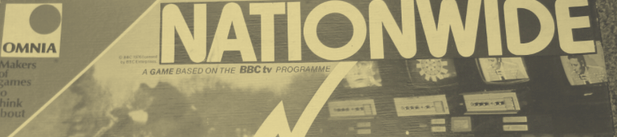
25: Nationwide
(Shown 2930 times, 1969-1983)“Responsible, incombustible stuff this; no town councillor can afford to miss it.”

24: Teletubbies
(Shown 2977 times, 1997-2009)“Eh? Oh.”

23: Kilroy
(Shown 3005 times, 1986-2004)“Your mother’s in a care home? And is being drugged? For the convenience of the staff?”
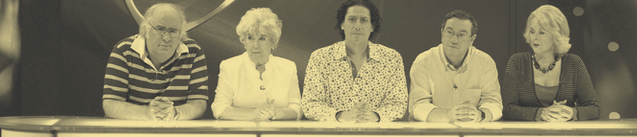
22: Eggheads
(Shown 3049 times, 2003-2021)“Hang on, what’s a Channel 5 programme doing on here?”

21: Pebble Mill
(Shown 3137 times, 1972-2004)“In this age of ENDLESS TELLY, it’s a bit weird to consider that back when Britain just had a tiny handful of channels to keep us entertained, they didn’t even bother broadcasting throughout the daylight hours, let alone overnight.”

20: Working Lunch
(Shown 3296 times, 1994-2010)“This was much a looser affair, where every day is Casual Friday and there aren’t many meetings and someone has brought cakes from home. Look, here’s a bit where Adrian Chiles is playing Super Mario 64.”

19: Panorama
(Shown 3346 times, 1953-2021)“Let the strident tones of Francis Lai’s Aujourd’hui C’est Toi soundtrack a spinning globe, and let a nation of kids ask if they can put another channel on. “

18: The ONE Show
(Shown 3400 times, 2006-2021)“There are some TV reboots that will never, ever be a success until – against all reasonable logic – they just are.”

17: Songs of Praise
(Shown 3429 times, 1961-2021)“The main initial naysayers to this new programme were… the BBC’s Religious Broadcasting department.”
16: Playdays
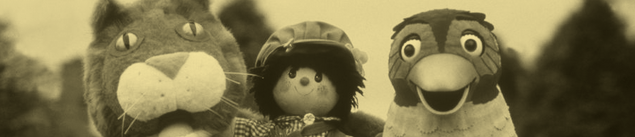
(Shown 3908 times, 1988-2002)“The initial reaction was (and if any of this is a surprise to you: welcome to Britain) a general sense of despair at the very concept of change.”

15: Match of the Day
(Shown 4055 times, 1964-2021)“Following the 1966 World Cup, famously won by A British Team Wearing Red (haven’t checked, I presume it was Wales), MOTD made the move from BBC-2 to BBC-1 for the 1966/67 season.”

14: Doctors
(Shown 4081 times, 2000-2021)“The most obvious example of this would be superbly titled episode “The Joe Pasquale Problem“, which involved a patient seeing everyone as Joe Pasquale (special guest for that episode: Joe Pasq… oh, you’ve guessed).”
13: Escape to the Country
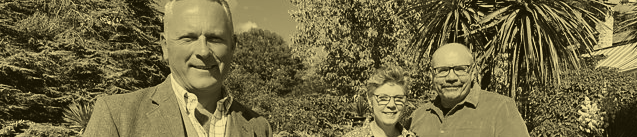
(Shown 4365 times, 2002-2021)Richie: “Still, I did my bit for the country.”
Eddie: “What, you stayed in the town?”
Richie: “Absolutely.”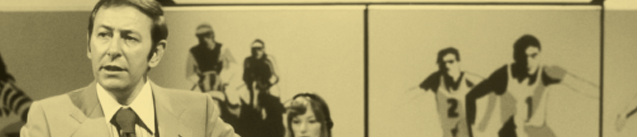
12: Grandstand
(Shown 4500 times, 1958-2007)“Ringo! Ringo! Have you heard? Clyde vs Cowdenbeath was postponed!”

11: Flog It!
(Shown 4531 times, 2002-2021)“Not taking it home, sitting up all night with a baseball bat in case burglars have overheard the valuation, and carefully taking it to an antique dealer hoping to get the full promised amount. I mean, who’s got time for that?”
10: Jackanory
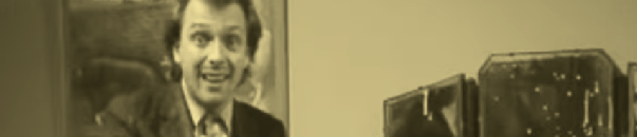
(Shown 4701 times, 1965-2009)“They’re only going to see this for several seconds! Whoopee!”
And there we go. Just like the bit before Neighbours moved to teatime and Marge popped up to explain the previous few years of plot in five minutes. See you next time, for Number Nine.
-
RECAP: The 100th to 51st Most-Broadcast BBC Programmes Of All Time
With the list about to visit that all-important Top, erm, Nine, let’s pause and take in the whole list so far, across two updates. Very much one for the TL;DR types, but nice to revisit even if you’ve been keeping an eye on the various updates.
While compiling the newer entries on the list, I’ve dug out some extra broadcasts from the entire archive (either from newspaper listings where RT listings were unavailable, or individual shows within programme listings), so some of the numbers are tweaked from the original write-ups, as are (in a few cases) the positions on the list. Plus, the whole thing started so bloody long ago, it’ll be nice to revisit some of the programmes.
So, here we go! Each programme name contains a link to the original write up for that show.

100: Saturday Kitchen
(Shown 891 times, 2001-2021)
“If asked to name the second most frequently shown Open University programme of all time, you’d probably expect the answer to be ‘Geochemical Surveying’ or ‘Public Administration’ or something similarly dry. But nope, it’s Saturday Kitchen. Saturday. Kitchen.”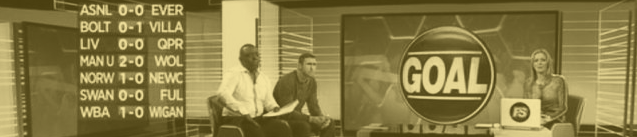
99: Final Score
(Shown 897 times, 1971-2021)
“as is usually the case when it comes to football, The Football Results just seem to contain that little extra sense of gravitas when they’re on the BBC.”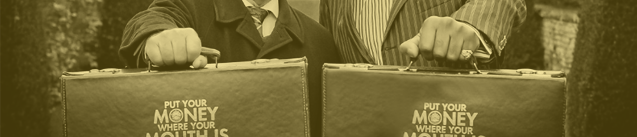
98: Put Your Money Where Your Mouth Is
(Shown 917 times, 2008-2021)
“Despite adopting a fairly well-worn format, PYMWYMI swiftly became a hit with viewers, and the programme would soon see itself spread across the schedules like high-end marmalade.”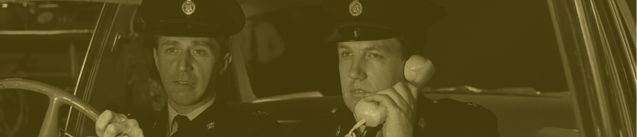
97: Z Cars
(Shown 920 times, 1962-1998)
““I thought I was out. But then they dragged me back in” could be a line from any generic 80s cop film, where a grizzled LAPD Detective postpones his retirement to tackle one last case, just like he did in the previous four films in the series. The same could be said of Z Cars, had it been a sentient being capable of independent thought in addition to being a tremendously hardy continuing police procedural.”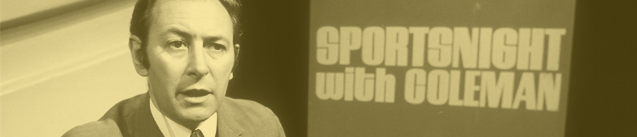
96: Sportsnight
(Shown 934 times, 1968-1997)
“Indeed, those who had been on the terraces would often hope to make it home in time to catch footage of any incidents only half-glimpsed, or blocked by a taller spectator in front of them. If nothing else, anyone who’d been at Selhurst Park on 25 January 1995 will surely attest to that.”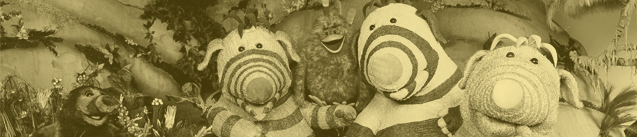
95: Fimbles
(Shown 937 times, 2002-2010)
“the antics of Fimbo, Flurrie and Baby Pom proved popular enough, with the programme running on CBeebies for almost the entirety of the channel’s first decade, making the nascent channel’s weekly BARB top ten on 136 occasions”
94: Five to Eleven
(Shown 939 times, 1986-1990)
“A world away from episode six billion of Homes Under the Hammer, I’m sure you’ll agree.”
93: Rugby Special
(Shown 976 times, 1966-2005)
“Rugby. Sweat. Mud. Blood. Thunder. The North. Someone getting their ear torn off in a scrum. All soundtracked by Paddy Kingsland’s proto-electropop ‘Spinball’. So utterly marvellous it almost feels like a mistake.”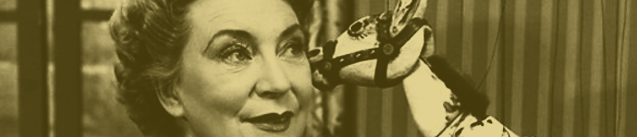
92: For the Children
(Shown 983 times, 1937-1952)
““a demonstration organised by the Camping Club of Great Britain and Ireland”, “Commander A. B. Campbell opens a sea chest and shows its treasures to the children”, “Model steam and power boats cruise on the lake at Alexandra Palace” and “Commander A. B. Campbell opens his sea chest again. This time the treasures come from Canada.””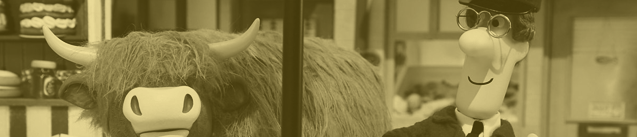
91: Postman Pat
(Shown 1006 times, 1981-2012)
“Henry Rollins once said “I believe that one defines oneself by reinvention. To not be like your parents. To not be like your friends. To be yourself.” Now, I’ve no idea about the context of that particular utterance, but I feel at least 85% sure he’s talking about Postman Pat.”
90: Strictly – It Takes Two
(Shown 1006 times, 2004-2021)
“Personally, I’m still surprised that Come Dancing (a) even made a comeback that would become so popular, it felt like like seeing a peak-time celebrity reboot of One Man and His Dog (b) it would be so damn popular the format would be sold around the world (under a more sensible name, admittedly), and (c) that it did all that with such an unwieldy title. Presumably a play on the firm Strictly Ballroom, it doesn’t even work as a pun. Rubbish!”
=87: Nai Zindagi – Naya Jeevan
(Shown 1010 times, 1968-1982)
“With just thirty minutes each week, and quite a lot to cover (you know, music, interviews, a round-up of news from an entire sub-continent), one can only imagine how difficult it must have been to prepare for each show.”
=87: QI
(Shown 1010 times, 2003-2021)
“It ended up proving a huge success. In fact, it’s been so successful, it’s now part of a very exclusive group of programmes to have aired on BBC One, BBC Two, BBC Three and BBC Four. The whole set.”
=87: The Simpsons
(Shown 1010 times, 1996-2004)“Two things pretty much led directly to the dominance of Sky in today’s television market. One is Premier League football, 104 years of tradition being tossed aside for a new money-led project that went on to dominate the sporting world, and Sky Sports will forever be irrevocably tied to it. The other key factor: a certain five-member family from Springfield.”
86: Laurel and Hardy
(Shown 1047 times, 1948-2005)
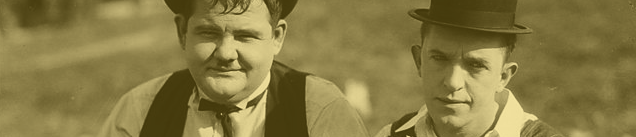
“Okay, here’s a thing. For the most part, if a programme is called something, it’s that something. In the case of beloved comedy duo Laurel and Hardy, it’s either one of their original films, or an episode of the 1966-1967 Hanna-Barbera cartoon of the same name. And quite frankly, one of these things is less than the other.”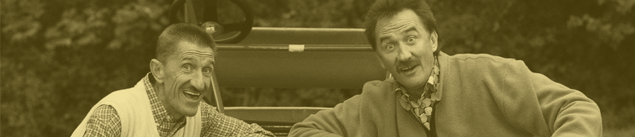
85: ChuckleVision
(Shown 1056 times, 1987-2012)
“A cultural touchstone for entire generations of children (and adults) across a quarter-century on our screens, and two of the absolute nicest people in showbusiness.”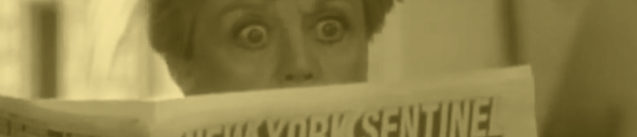
84: Murder, She Wrote
(Shown 1065 times, 2002-2011)“What is perhaps most surprising of all is how Murder, She Wrote appeared so many more times on the BBC than contemporary US shows like Columbo (225 times, 1988-2003, 485th place), Ironside (514 times, 1967-2003, 187th place), or even the always-bloody-on-when-I-was-a-kid Bonanza (somehow only 220 showings between 1978 and 1988, 497th place).”
83: Dad’s Army
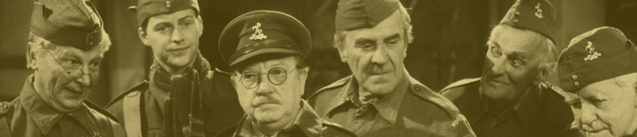
(Shown 1069 times, 1968-2021)“Here’s a programme that was always going to be On Ze List, but who would’ve thought it would be in as modest a position as joint-83rd?”
82: The Magic Roundabout
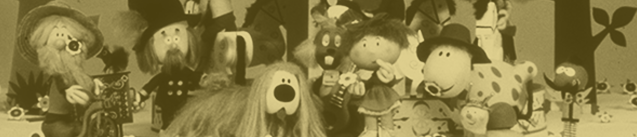
(Shown 1070 times, 1965-1985)“Without even bothering to check through the rest of the list, I’m just going to go out on a limb and state categorically that this is the highest-ranking French programme on the list.”
81: In the Night Garden
(Shown 1106 times, 2007-2012)“In short, if you’re a parent who ends up having to watch this programme every evening because it’s more suitable than what you really want to watch at 6.30pm, your mind really can’t help but overanalyse every little facet of the programme. Like: how come the Pontipine children are never taken into care? And why does to relative size of the characters keep shifting around so much in each episode? But hey, there might be someone good on Bedtime Stories in a bit.”
80: The Phil Silvers Show
(Shown 1107 times, 1957-2004)“But, let’s be honest here, The Phil Silvers Show isn’t just any American sitcom. As far as comfort-viewing sitcoms that transcend age and time go, I’d argue it’s (at least to British eyes) a stateside cousin of Hancock’s Half Hour.”
79: Doctor Who
(Shown 1139 times, 1963-2021)“as much of a Saturday fixture as Grandstand or Dad’s pool coupon going in the bin just after the classified results”
78: Watchdog
(Shown 1141 times, 1985-2019)“All together now: ‘“’Potential death trap.’”
77: Wogan
(Shown 1142 times, 1982-2010)“Wogan would air at 7pm each Monday, Wednesday and Friday, while upstart soap EastEnders would go out at that time on Tuesdays and Thursdays. Only one of them was an instant hit. And it wasn’t EastEnders.”
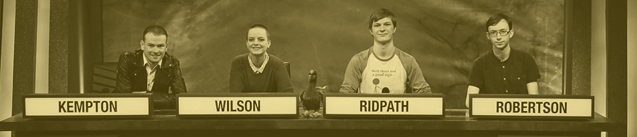
76: University Challenge
(Shown 1175 times, 1994-2021)“For the last few years, University Challenge has effectively teamed up with Only Connect each Monday evening at 8pm to provide a weekly “feel pleased with yourself if you get more than two questions right” hour of programming.”
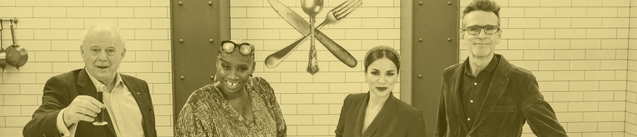
75: Great British Menu
(Shown 1184 times, 2006-2021)“Long before Bake-Off became the default Google autocomplete option for ‘Great British’, another BBC2 cookery contest set a lofty bar for highfalutin haute cuisine.”

74: Tom and Jerry
(Shown 1192 times, 1967-2003)“Thomas Jasper “Tom” Cat Sr and Gerald Jinx “Jerry” Mouse would be an early evening fixture on BBC-1, forming a formidable triple-act with Simon Dee on Tuesday and Thursday evenings throughout 1967.”

73: The Sky at Night
(Shown 1201 times, 1957-2013)“Liiiiiive astronomy!”
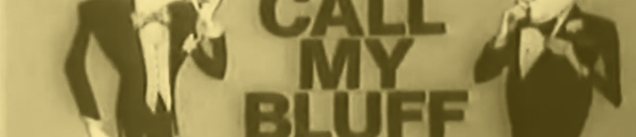
72: Call My Bluff
(Shown 1218 times, 1965-2005)“Despite feeling like the very epitome of dry early 1980s BBC-2 output (well, it does to me), the programme actually had a much more glamorous birthplace: Studio 6A at NBC Studios in Manhattan’s Rockefeller Center.”
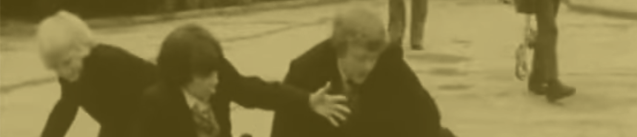
71: Grange Hill
(Shown 1252 times, 1978-2008)“Don’t you realise the way you act is influencing millions of children to talk cockney and be insubordinate?” “Come on sir, don’t be silly. We’re the only kids in Britain who don’t say…”

70: Mastermind
(Shown 1265 times, 1972-2021)“One’s a Trade Union leader, the other’s a member of the Cabinet.”
69: Athletics
(Shown 1295 times, 1946-2021)“And at a time where such output could easily have been hived off to BBC Three or the Red Button, it only proves how compelling the art of running, jumping and occasionally throwing stuff is to the Britain public.”
68: To Buy or Not to Buy
(Shown 1313 times, 2003-2012)“Hello and welcome back to Coverage of People Buying a House and Then Living In it. So, hello Jeff, you wanna buy a house, here’s a house.”
67: Casualty
(Shown 1336 times, 1986-2021)“chronologically-speaking, the first episode of Casualty was closer to the events of Casualty 1909 than to today.”
66: Top Gear
(Shown 1396 times, 1978-2021)“Well, here’s a thing. Something that started out as a regional programme in the Midlands, which would go on to become the most-watched motoring programme [theatrical voice] In The World.”
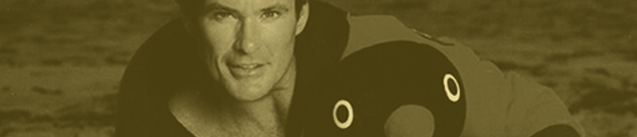
65: Pingu
(Shown 1404 times, 1990-2013)“Pingu went on to be broadcast around the world – pretty much everywhere except the USA, it seems. Even a 1993 rap single by David Hasselhoff about Pingu (no, really) didn’t win over the stateside audience.”
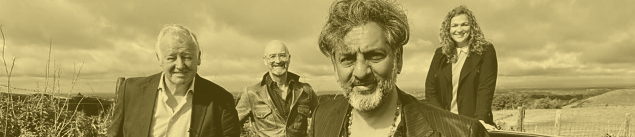
=63: Antiques Road Trip
(Shown 1449 times, 2010-2021)“Despite a programme name that makes it sound like an Aldi version of Antiques Roadshow, Antiques Road Trip is a very different proposition. Well, not that different. It’s still about antiques.”

=63: Natural World
(Shown 1449 times, 1983-2021)“With a reputation as the planet’s go-to broadcaster for high-quality natural history films, it’s little surprise so much talent could be coaxed into working on the series, but the narrator rarely took top billing in a series where wildlife always took centre stage.”

62: Diagnosis Murder
(Shown 1472 times, 1993-2011)“the show featured medical doctor Mark Sloan (played by D-word Van D-word) as he solved crimes in all the bountiful spare time medical doctors have.”

61: Farming
(Shown 1488 times, 1957-1988)“No longer would farmers finding themselves in the wrong region miss out on advice from W. S. Mansfield, Manager of the Cambridge University Farm, on topics such as grassland improvement, High versus Low Farming, or alternate husbandry (saucy).”

60: Tomorrow’s World
(Shown 1510 times, 1965-2003)“As the trope has it, a series inextricably linked to a nation of pop kids who just want TOTP to start already, Tomorrow’s World spent almost forty years tottering on the tightrope between reporting on scientific breakthroughs and entertaining a primetime BBC1 audience.”

59: The Money Programme
(Shown 1515 times, 1966-2011)“The suggestion didn’t go down too well with some executives at the Corporation, their reaction reportedly being that money was boring, and “the idea that there might be an audience for a regular TV programme on money struck producers as absurd.””
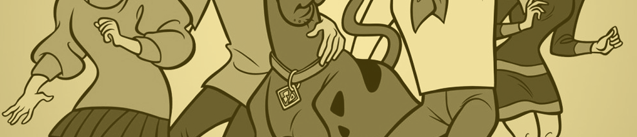
58: Scooby-Doo
(Shown 1522 times, 1970-2012)“And that programme was, of course, to be called… The Mysteries Five. And that five were: Geoff, Mike, Kelly, Linda and W.W., plus their bongo-playing dog, ‘Too Much‘.”
57: Westminster
(Shown 1567 times, 1970-2001)“Here’s one that seems unlikely to generate much excitement. But for much of it’s life, a programme that came with the unenviable challenge of not being able to show any footage of the thing they’re talking about.”
56: Have I Got News for You
(Shown 1578 times, 1990-2021)
“And so, in a set that now looks claustrophobically close, Have I Got News For You thundered onto our screens at 10pm on Friday 28 September 1990. The main competition in that slot at the time was The Golden Girls on C4, and the Florida quartet initially pummelled the upstart panel show in the ratings.”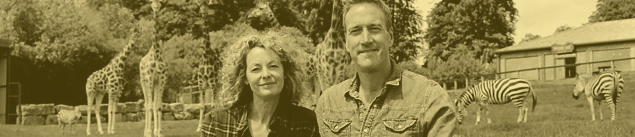
55: Animal Park
(Shown 1639 times, 2000-2021)“If you want an animal-based programme that seems as unstoppable as a rhino-led restaging of the rollerskating scene from Some Mothers Do ‘Ave ‘Em, then Animal Park is the show for you.”
54: Coast
(Shown 1644 times, 2005-2021)“Coast arrived on our screens in 2005 with a simple premise. You know the wiggly bit that runs around the periphery of the UK? Let’s look at that!”
53: Twenty-Four Hours / 24 Hours
(Shown 1684 times, 1965-1972)“Twenty-Four Hours does a magnificent job of covering such a breaking international story – it’s worth remembering that at this point, the entire medium of television is only thirty years old.”
52: Holby City
(Shown 1700 times, 1999-2021)“It’s perhaps notable that, despite the series being a soap opera (sorry, continuing drama). Holby City dealt purely in hour-long episodes, clocking up over 1000 episodes in its time. Indeed, that stack-em-high approach led to criticism, with Broadcasting Standards Commission director Paul Bolt accusing the BBC of squandering the television licence fee on the programme.”

51: Breakfast Time
(Shown 1727 times, 1983-1989)“A pastel coloured set strewn with sofas, a breezy theme tune and a bejumpered presenting team headed by Frank Bough, Selina Scott and Nick Ross eased Britain into each new morning, with a warming mixture of chat, interviews, horoscopes and advice.”
Cripes, that took a long time to put together. Coming up very soon: numbers 50 to 10. And not too long after that, the all-important number nine.
-
DAMN, BALLS AND BLAST (the 100 Most-Broadcast BBC Programmes Of All Time, number, erm, 16).

Or, the follies of trying to cram a huge data analysis project into your vanishingly sparse amount of free time.
Okay. This isn’t the first time this has happened, but it should be the last.
Back when I started this ill-considered endeavour, right in the initial post, I mentioned that there will almost definitely be mistakes within the figures mentioned. All the data is taken from the (magnificent) BBC Genome project, most of which is taken from OCR-scanned issues of the Radio Times, and is therefore hostage to the limitations of both OCR software and the formatting quirks of the RT during any given period. That’s all fine when listings are picked up correctly by the BBC’s Genome Robot Army:

3 Jan 1991: Nice, and how it should be. It’s a bit less fine during spells where the Radio Times uses a different layout to express daytime listings:

7 Nov 1988: Not nice, and how it shouldn’t be. If you’re me, 35 years later. But: not to fret! I could just ignore these inconvenient listings, because almost-correct is better than nothing, right? Initially, that’s how I felt. Nobody has ever seemed to try doing something like this before, after all. There’s almost a million individual programme listings to calculate, nobody could reasonably expect it to be 100% correct.
Except, y’know, it would bug the merry bloody hell out of me knowing there’s a 1988-sized gap in a programme’s data due to the way things were formatted at the time. The data is all thereabouts, ripe for the plucking. The only issue is: how to avoid the thorny bits (i.e. the thousands of instances where programme titles are only mentioned within programme descriptions)? How could I get around this, and get it all as accurate as possible? Individual episodes might squeeze through my big ol’ data net, but at least I can try to avoid any great big gaping holes. Somehow.

So: what I went and did (warning: anyone who doesn’t give a flying fart about Excel can skip to the Natalie Portman meme below) was add in a column which contains a combined YEAR plus WEEKNUM in each cell, throw the whole dataset for each programme into a pivot table, and show =YEAR&”w”&WEEKNUM down the pivot’s vertical axis, then WEEKDAY along the horizontal axis. Any conspicuous gaps would be highlighted, then I can go digging for missing listings. Once I know which date ranges are missing, pull out Genome data for those weeks, and (using a really bloody bitty process involving Notepad++ and Excel filters) extract individual programme details within programme strands, all for the express purpose of seeing how often Jimbo and the Jet Set really got shown on BBCs One and Two (not as often as you might think, just 238 times, putting Jimbo into joint-489th place alongside Diddy Dick and Dom).
It was a right royal pain in the arse, but OH THE IMPROVED ACCURACY OF IT ALL. I could finally sleep at night. Okay, I still couldn’t, but that’s because I’d been up until 2am staring at Excel on an overly bright monitor messing with all the data.

And the dreams I’d have when I did get to sleep. Oh, the dreams. It wasn’t going to be perfect, but before publishing the entries for each programme, I’d do a more thorough check of each broadcast total. What’s the worst that could happen? Just before I click ‘publish’ on the entry for Grandstand, I might notice a gap, examine the missing dates and uncover another 27 episodes erroneously mis-scanned as ‘Grandsland’? It’ll only ever push it up the list a bit, I might need to write about the next programme instead, and have to publish the entry for Grandstand a bit later, but that’s fine.
Hey, it’s not like an entry is suddenly going to have far fewer entries than I’d anticipated, is it?

Hi, people who don’t care about Excel – welcome back. Here’s what you’ve missed: I’ve gone and been a bit too clever for my own good and bollocksed up. A bit.
Basically, in noticing a large gap for One Particular Programme, I used trickery to fill in the gaps (and seriously, the alternative would’ve been filling in several hundred missing programmes manually, which I’ve already had to do too many times in this list), and things accidentally got duplicated. In short: I pulled a load of missing data through twice, and my checks to detect duplicates were thwarted by one set of data erroneously being listed as on BBC1 (gah, morning weekdays kids shows had moved to BBC2 at the time, as Daytime UK had started on BBC1 by then).
In short: an entry was suddenly going to have far fewer entries than I’d anticipated. Which is a bit of a nuisance, as the Programme In Question was about to appear at Number 10 on the list. And now, on checking through the data, correcting the episode count and recompiling the list: it was actually in just 16th place on the list.
Well, damn. That kind of undercuts my sense of satisfaction at finally reaching number ten on the rundown.
I could’ve tried to save face and just gone with my initial, incorrect, episode count, just pretending everything was fine. But: nah, not going to do that. SO: the programmes that I’d initially placed as such:
16: Match of the Day (Shown 4055 times, 1964-2021)
15: Doctors (Shown 4081 times, 2000-2021)
14: Escape to the Country (Shown 4365 times, 2002-2021)
13: Grandstand (Shown 4500 times, 1958-2007)
12: Flog It! (Shown 4530 times, 2002-2021)
11: Jackanory (Shown 4701 times, 1965-2009)Are actually in the following positions:
15: Match of the Day (Shown 4055 times, 1964-2021)
14: Doctors (Shown 4081 times, 2000-2021)
13: Escape to the Country (Shown 4365 times, 2002-2021)
12: Grandstand (Shown 4500 times, 1958-2007)
11: Flog It! (Shown 4530 times, 2002-2021)
10: Jackanory (Shown 4701 times, 1965-2009)Dampens the impact of starting to announce the Top Ten, but fitting given the unique blend of intricate detail and rank amateurism you’d expect from my blog. If nothing else, I’m committed to meeting your expectations of this place. I’d have done it properly if I was being paid for this, honest.
So, what’s in sixteenth place? Well, you may have already guessed given the illustrative images I used near the start of this entry. It’s…
16: Playdays (née Playbus)
(Shown 3908 times, 1988-2002)
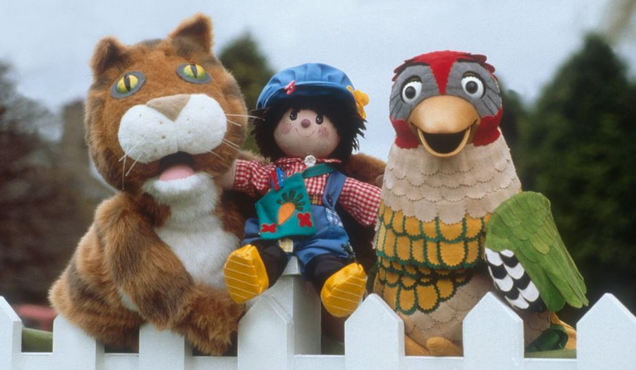
As time marches on, it’s increasingly easy to stumble across things that make you feel old. It can be cultural references that wholly pre-date the births of work colleagues (“sorry, what’s Ceefax?”), it can be seeing someone you went to school with on Facebook (“Nah, that must be someone middle-aged with a similar name who just looks a bit like them. Oh. Damn.”), but for me it was being raised on a diet of Humpty, Little Ted and The Round Window and subsequently seeing people banging on about The Why Bird. I felt alienated, a little afraid and out of touch with popular culture. Which is a bit of a wake up call when you’ve not yet reached puberty.
At the time, Play School had been a preschool colossus. On the air since morning one of BBC2, it was the favourite of many a child. Me included.
The big announcement that Play School was going through the exit window came on 5 October 1988. The programme that (due to circumstances) launched BBC-2 would be no more, and in its place would be something a little more up-to-date for the modern audience.
However, before getting a chance to win over the key audience of two- to five-year-olds, it would first have to win the support of Britain’s parents, many of whom would have been grown up under the benevolent glow of the Play School house. A sense of continuity was to be instilled by way of former Play School producer Cynthia Felgate, who’d be sitting at the controls of the new tyke-friendly offering.
The keys to Playbus were modernisation, new characters and a fresh sense of energy. No more Big Ted, no more cuckoo, and no more peering through windows. In came a programme designed to feel less middle-class, less cosy, and more urban.
It was a gutsy move by the Children’s Department of the BBC, given the lack of threat to their loyal audience at the time. Channel 4 had all but given up on TV for younger children – the likes of Chips Comic had long fallen out of favour, and Pob’s Programme was in the middle of the five-year gap between its two series. Unless your younglings were weird enough to enjoy Murun Buchstansangur, the fourth network had little to offer them. ITV was still bothering with pre-school programming at lunchtime, but word in the press was that groups within the broadcaster would rather be using the slot for something more commercial.
It’s quite likely the BBC was concerned about a different threat being beamed down from the skies. Satellite service BSB was readying itself for a launch, and despite having abandoned plans for a standalone kids channel at that point, were planning on handing a generous amount of airtime to children’s programming into their Galaxy entertainment channel. Ultimately, their modest subscriber base would pose little threat to Auntie Beeb, and it would be eaten up by a rival satellite service content to serve up imported cartoons (and DJ Kat) instead, but that future wasn’t on display in the Beeb’s crystal ball. As it turned out, Play School was still the biggest draw in the playground at the time, and it would likely have thrived had it been left alone. But hey, never hurts to have a bit of a refresh.
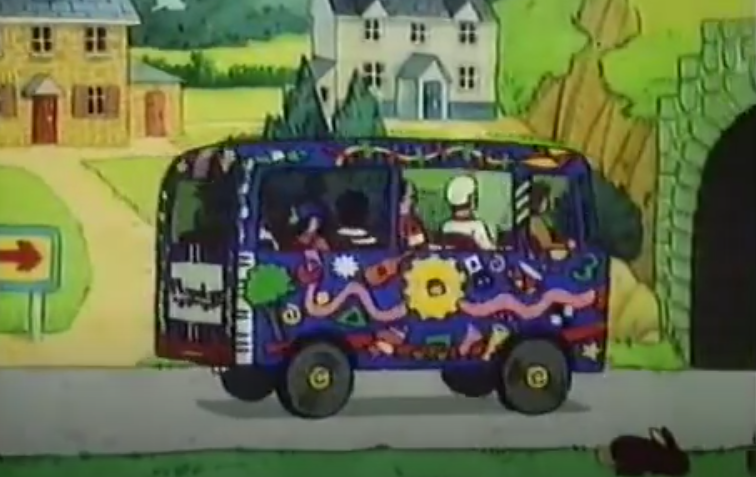
So, Play School was to be knocked down to provide a clear road ahead for Playbus. And so, from 6 October 1988, the final few repeat episodes of Play School (the last of the new episodes having aired in March that year) were to be followed by five minute taster episodes of its successor, listed as ‘Playbus is Coming‘. Set to start on Monday 17 October 1988, this was the bright new future. Albeit one followed in the schedules by repeats of Arthur Negus Enjoys.
The initial reaction was (and if any of this is a surprise to you: welcome to Britain) a general sense of despair at the very concept of change. Predictably enough, the Daily Mail were one of the first in line to spit the dummy over the change, with a full report and review from a group of disappointed critics. “Their bored little faces say it all,” it trilled. “Especially the mouth parts of their faces”, it should have continued, except they probably hadn’t heard of Jack Handey.
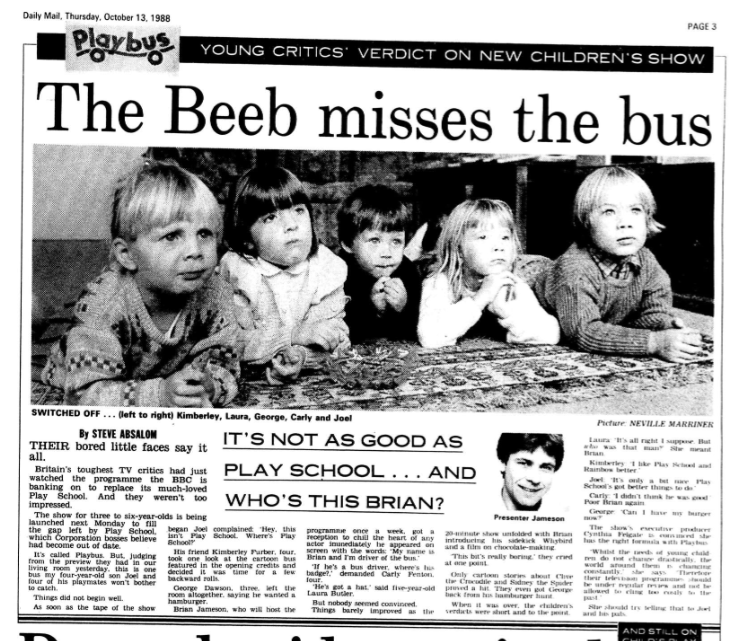
Daily Mail, Thurs 13 Oct 1988 (full transcript in the alt text, detail fans) Despite a sceptical press, Playbus steadily built up a following. Children’s BBC was arguably at its peak around that time, with the corporation pumping £20m per year into the Children’s Programmes department, which resulted in approximately 900 hours of kid-focused programming per annum. That included prestige drama serials such as Tom’s Midnight Garden or The Chronicles of Narnia, the latter attracting audiences north of 10 million, but the less heralded programmes were no less impressive. From the winsome whimsy of Chucklevision, to educational fare like The Really Wild Show, to serious documentary strand The Lowdown, there was generally something for every taste. With some at ITV still grouching about the cost-ineffectiveness of producing Children’s ITV – especially with a costly franchise round looming in 1992 – the BBC was the best place for young viewers could to get that level of diversity.
As it was, Playdays would follow the Play School template in many ways. Going out in a familiar slot each weekday, carrying an understanding that the audience would be travelling with them each day. And at least this time, the weekly ride would provide a bit more variety each day than Play School had offered.
Mondays would be the Why Bird Stop, with the titular fowl dispensing various pellets of knowledge to the viewer. Tuesdays would provide a visit to the Playground Stop, where relatable footage of real children could be seen. Wednesdays would feature the Dot Stop, where the titular Dot (Rebecca Higgins) would offer sun with music and numbers. Thursdays would result in a visit to the Patch Stop, where nature and the environment would be on show. Fridays would seek to instil a sense of wonder and imagination in the viewers, with a trip to the Tent Stop.
Each stop would have its own presenter and characters, and often attempt to tie in to seasonal or topical events (sadly not in the sense of Histor’s Eye, more along the lines of “let’s make some Easter stuff”). This concerted effort may have suggested a lack of faith in any one strand, and I can’t help but suspect the audiences attention may have flagged during the less popular stops. But, it did at least offer some scope for the individual ‘stops’ to evolve, so in 1992 the Dot Stop became the Roundabout Stop, offering puzzles, games and a dash of magic. Similarly, the Tent Stop would be replaced with the Poppy Stop, where a visit was made to Poppy the Cat’s house, allowing for cameo appearances from other characters from the series.
Strangely, considering it was part of the televisual upbringing for children for fourteen years, Playdays (as it was for most of its run, the title changing from Playbus from Christmas Day 1989 following a complaint from the National Playbus Association) doesn’t seem to be imprinted anywhere near as prominently on Britain’s cultural wallpaper as Play School, or successor show Teletubbies. Maybe the stripped approach to those daily editions prevented it sticking to the national psyche in the way those other shows did? Maybe, for all the talk of appealing to a more modern audience, adopting a completely different approach (as Teletubbies would provide) might have been a better idea? Or maybe it was just one of TV’s great palate cleansers, a fourteen-year fade between the way Things Used To Be, and The Way Things Would Be?
Don’t get me wrong, it was definitely doing something right – it clocked up almost 4000 showings on the main BBC channels during that tenure, but it seems relatively little of it remains in our collective consciousness. Maybe it just aired to a generation that would grow up less desperate to revisit the cultural ephemera of their youth? Admittedly, I’m just outside of the generation likely to have their names trip off the tongue, but to my mind the roster of Playdays presenters – the most notable of which were Zoe Ball and Dave Benson Phillips – doesn’t seem as memorable as that of Play School. I mean, yes, Zoe Ball is hosting one of Britain’s most popular radio programmes these days, but Floella Benjamin is a bloody Baroness, so checkmate.

Not that Playdays didn’t make a bit of dough for BBC Enterprises. At the time there were lots of opportunities to bask in Playdays-related paraphernalia, with straight-to-retail VHS tapes aplenty, hardcover annuals, a long-running magazine, most of which being spin-off opportunities Play School left the stage too early for. Plus, there was a spin-off educational videogame that got on the cover of Your Sinclair.
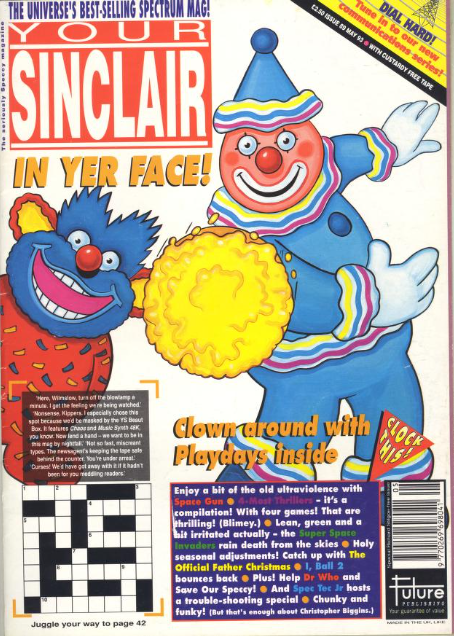
This *really* says a lot more about the lack of ZX Spectrum games being released in 1993. They had a grand total of two games to review in this issue, the other being budget re-release I, Ball 2. Unsurprisingly (if sadly), the magazine folded a few months after this issue. Playdays also displayed an impressive staying power. Despite no new episodes being made after 1997, the programme would continue to air on BBC channels, even after Teletubbies became a phenomenon both national and international, with the latter airing in the mornings on BBC2 (often twice per morning, such was it’s popularity), while repeat episodes of Playdays kicked off each afternoon’s CBBC strand on BBC1. By 2000, it was the repeats of Playdays that were deemed popular (or cheap) enough to be screened twice per weekday, in an early morning slot and at lunchtime. However, by 2002 BBC2 had the fresh-faced Tweenies to enrapture an audience of potty-enthusiasts, and Playdays was shuffled over to the digital-only CBeebies channel for a couple of years.
After that, it was gone from our screens forever. At least for those without the foresight to stock up on Playdays VHS releases beforehand. For those who did… it was just a matter of waiting until 2023, and PAYDIRT. For everyone else: bye, Why Bird.
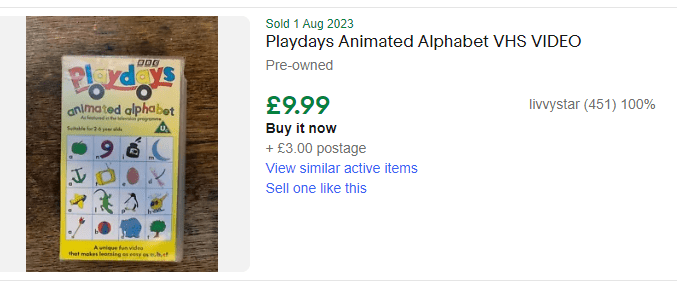
A tenner for any pre-owned VHS is not to be sniffed at in this day and age. FACTS AMAZING: the day of the first ever episode (Monday 17 October 1988) also saw the debut of forgotten Brian Wilde vehicle Wyatt’s Watchdogs. That was that generation’s Barbie versus Oppenheimer.

The Stage/TV Today, 13 Oct 1988 
(With thanks to Paul R Jackson for detail on the last few months of Play School being repeat episodes, and the detail of the final ‘new’ episodes having aired in March 1988.)
There, another one down, albeit in completely inconvenient circumstances. Next time: we go inside number nine.
-
The 100 Most-Broadcast BBC Programmes Of All Time (12 and 11)
Back with a pair of shows that come as close as you can imagine to the final Top Ten.
12: Flog It!
(Shown 4530 times, 2002-2021)
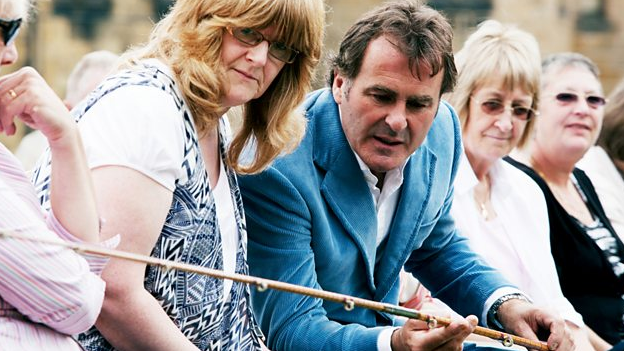
Waiting. There’s something that should be obsolete in this day and age. If you order something off the internet, you want it to arrive the next day. If you want to watch a film, you want to be able to stream it right away, even if you’re just looking at your phone while queuing at the deli counter in Sainsburys. And, I think I speak for us all, if you’re just had your grand-grandmother’s favourite urn valued on Antiques Roadshow and you want to cash in, you want the cash THERE and THEN. Not taking it home, sitting up all night with a baseball bat in case burglars have overheard the valuation, and carefully taking it to an antique dealer hoping to get the full promised amount. I mean, who’s got time for that? Gimme gimme gimme. Now.
Well, if you’re anything like as impatient as I am, Flog It! is the show for you. The formula is much the same as that of Antiques Roadshow – members of the Great British Public bring their heirlooms along to a picturesque location somewhere in the UK, where they might be examined and valued by a resident expert, all under the watchful gaze of host Paul Martin. The main difference is that the owners of antiques are then given the option to sell their items at auction, giving a sense of closure to the viewer and (hopefully) a pocketful of cash for the owners.

More details on this on the Scunthorpe Telegraph website. Occasionally, it takes more than mere pockets to contain the full value of items discovered by the programme. A 2013 episode filmed at Lincolnshire’s Normanby Hall saw Cleethorpes resident Ann Bromley bring in a collection of African tribal art, with resident expert Michael Baggott estimating the lot to be worth between £200-£400. That’s not too shabby, if nothing else it comfortably covers the petrol money for getting thete. Off to auction it went, only for everyone to learn this wasn’t of African origin at all. The collection, long left in a Cleethorpes wardrobe, turned out to contain a rare Australian Aboriginal shield, and was subsequently sold at auction for £30,000, having been bought by the Sydney Museum of Primitive Art.
Unlike similar programmes of that ilk (Antique Roadshow, Antiques Road Trip), what had seemed an unstoppable juggernaut finally juddered to a halt in 2020, when the programme had been cancelled to make way for more contemporary fare. However, something that huge doesn’t just come to a halt – that’s just plain physics. Indeed, we still haven’t reached the end of Flog It!’s stopping distance, at the time of typing a variety of episodes from the last few series are going out each evening on BBC Two, seven days per week. Basically, the ineffective cancellation since the latest political berk banging on about being cancelled from the comfort of their £100k/annum gig on TalkTV.
Of course, it’s not a proper long-running daytime strand unless it’s flanked by spin-off programmes, and Flog It! was no slouch there. Alongside highlight compilation show Flog It! Ten of the Best (broadcast 53 times, 2007-2009), there was Flog It! Travels Around Britain (broadcast 20 times, 2010-2016), which saw Paul Martin leave antiques behind to explore the influence of nature in art. The most successful spinoff arrived in 2013, with Flog It: Trade Secrets (broadcast 380 times, 2013-2020). This saw Paul Martin and his merry band of experts revisit the history of the parent programme, while dispensing advice on getting the best out of car boot sales and charity shops.
Nothing like playing a charity shop for a chump, eh? Oh, Paul.

11: Jackanory
(Shown 4701 times, 1965-2009)
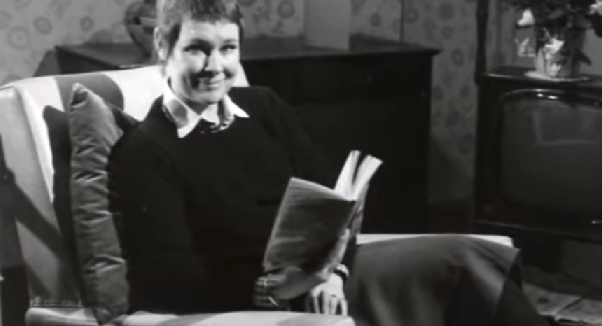
Some television programmes manage to generate a lot of publicity by attracting famous names to take part. Sometimes, it’s Morecambe and Wise employing the likes of Shirley Bassey, Sir Laurence Olivier, Peter Cushing and Vanessa Redgrave for high-level japery. Sometimes, it’s Shooting Stars employing the likes of Larry Hagman, Robbie Williams and Curtis Steigers for top-tier titters. And sometimes it’s Ricky Gervais getting Johnny Depp, Robert de Niro and David Bowie to be in his programmes. But there’s also a much less heralded programme that, in its pomp, attracted a guest list including (amongst hundreds of others) Judi Dench, Denholm Elliott, David Suchet, Joyce Grenfell and Ian McKellen. Oh, plus some chap now known as King Charles III.
Despite the star-studded future it would enjoy, Jackanory began under far more modest circumstances. With the BBC needing to output hours of children’s television each week, there was always a pressing need to produce content that could be worthy and captivating for the kids, but not everything could have the budget of a Blue Peter or Vision On. And so, Jackanory was born.

Since 1950, radio series Listen With Mother had proved that a premise as simple as somebody reading out children’s stories over the airwaves would provide a welcome respite for harried parents, and in the 1960s former Listen With Mother producer Joy Whitby – by now having moved to TV – wondered if such a premise could also work on screen. It was fair to say Whitby had built up a decent track record, having devised BBC2’s pre-school smash Play School, which featured a daily section where a short story was read to the audience.
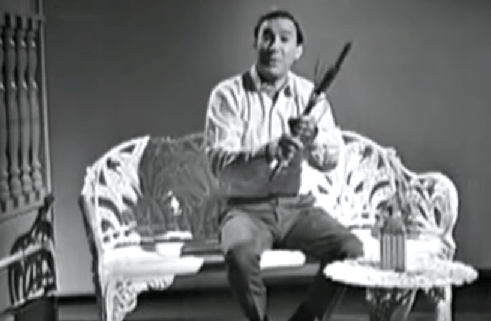
Guest readers and simple illustrations helped capture the attention of Britain’s TV tots, and so Whitby was asked to develop that idea into a standalone teatime show for older children, with a target age of 8-to-11, over on BBC1. Given a six-week trial run, Whitby added Play School producers Anna Home and Molly Cox to the ranks, with the first story (traditional fairy tale Cap of Rushes, read by actor Lee Montague) going out on Monday 13 December 1965 in the pre-Blue Peter 4.45pm slot.
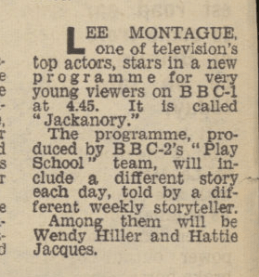
Daily Mirror, Mon 13 Dec 1965 The scheduling helped the new programme gather an audience, Whitby’s idea being that the timeslot would attract passing attention of adults as they returned home from work, and the involvement of mainstream actors would help keep their attention fixed firmly on the screen, sharing in the stories being read to the kids. That first six-week run also featured actors Wendy Hiller (a year before her third Oscar nomination for A Man for All Seasons) and Hattie Jacques, along with author Enid Lorimer.
The programme proved to be a instant success. As the programme neared the end of that initial six-week run, a commission came for the series to continue running throughout the year. The fact it was a relatively inexpensive premise – a welcoming narrator reads a story (or series of short stories) over the course of a week, all from the same sparse set, meant little production lead time was needed, meaning it could continue without the need to retool. But while it didn’t need the longest credit roll at the end of each episode, it also meant the programme wasn’t initially deemed worthy of a place in the BBC archive, with many editions from 1960s and 1970s being wiped shortly after transmission
Within a year of the first edition of Jackanory, the programme was deemed to be so firmly affixed to the zeitgeist, a selection of celebrity narrators were invited onto Late Night Line-Up to discuss the show. Margaret Rutherford, at that point dozens of films into her acting career, proclaimed the experience to be a fairly terrifying vocational detour, while James Robertson Justice expressed how he’d needed to rely on the more than capable guidance of producer Molly Cox to get through his initial Jackanory week.
It didn’t take long before being asked to narrate a week of Jackanory was deemed a badge of honour for actors. Luckily, being able to call on the talents of top actors proved to be a boon for the production team, with the programme’s modest budget allowing little time for outtakes, so the more adept at delivering lines a narrator was, the better. It also certainly didn’t shy from attracting faces the target audience might not be too familiar with, such as Spike Milligan, Dudley Moore and Alan Bennett (the latter, of course, seen more as a white hot satirical firebrand than the literary teddy bear he’s now regarded as [SUB: PLEASE CHECK]). It’s almost tempting to add “much to the bafflement of watching children” here, except the same was far from true a few decades later when Rik Mayall narrated George’s Marvellous Medicine. My school was certainly abuzz with excitement about it in advance, so feel free to ignore that thought.
Part of the programme’s strength was in the range of stories being relayed to its young audience. Joy Whitby saw it as her mission to introduce viewers to stories they might not ordinarily encounter. So along with classics like The Railway Children, The Tale of Johnny Town-Mouse or The House at Pooh Corner, you could expect to hear retellings of folk tales from Africa, Scandanavia, India or Russia.

Contemporary stories from more modern authors were also regularly featured, and in October 1968 the doors were opened to the next generation of young authors, with a week of stories written by the winners of a ‘Write a story of Jackanory’ competition. Possibly anticipating a modest number of entries, the Jackanory team found themselves sifting through more than 6,000 entries from hopeful young scribes. From that bumper mailbag, the most popular genre of story was magic, followed by adventure and science fiction – the eventual winners being as young as four-and-a-half year old David Osrin (his story reportedly dictated to his frantically scribbling mother), and entries arrived in formats ranging from bound booklets to scribbles across their parents’ newspaper. By the end of that week, ten young storytellers found themselves in possession of a three-guinea book token and at least a term’s worth of playground bragging rights, ensuring the Jackanory Children’s Week would remain a feature for years to come.
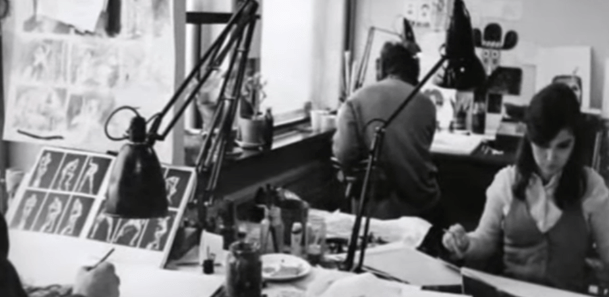
One key part of Jackanory was that illustrations were used throughout each story. Invaluable in helping the audience feel a connection to each story (at least they were if you had an attention span like mine), and in helping differentiate the programme from radio mentor Listen With Mother, the artwork was initially created by a small team of in-house BBC graphic designers. With the programme running five days per week throughout the year, to paraphrase The Simpsons, this put a tremendous strain on the illustrator’s wrists. This meant that illustrators had to take a production line approach to working, while juggling their desire to get their best work onto the screen. Deadlines were regularly straddled as the episodes were prepared, with the team of illustrators keenly flicking through each incoming story with a mixture of excitement and despair on spotting the most thrilling-but-busy scenes within each tale. (“Ooh, a sword fight! Gah, at a lavish banquet!”)
Occasionally, the artistic licence taken with Jackanory illustrations required the involvement of the showrunner. In the splendid BBC Four documentary The Story of Jackanory, illustrator Graham McCallum tells of the time Joy Whitby had to request an illustrator nip down to the studio immediately, as a horse being featured in a pivotal scene had been drawn with a little too much, erm, front tail on show.

In the 62nd volume of literary journal Something About The Author, illustrator Gareth Floyd (above) refers to the demands that came with his twelve years on Jackanory. The production team had seen Floyd’s illustrations in children’s books and offered him a freelance gig working for the programme, having quite sensibly realised the in-house team were being stretched that bit too far. Having worked on a couple of Jackanory commissions per year, including standout stories Stig of the Dump and The Railway Children, Floyd would be expected to provide sixty pictures for a week’s worth of episodes, a process made tricker by his usual style proving unsuitable for broadcast TV (not ‘unsuitable’ in that sense, you filthy lot):”My usual style had been to draw in pen, then in colour in a sort of two-wash drawing. That technique presented a problem on television where you tend to get a strobing of lines, the effect of lines crossing, [so] a more painterly style is often more suitable for television illustrations.”
The relentless demand for fresh artwork being piped through to the studio proved too much for some, as Floyd recalled: “It’s not easy to finish sixty pictures on a tight schedule, and you can’t be late with material for television. Once the drawings were done I had to go to the studios and spend about three days altering details. I had heard many stories of illustrators who couldn’t take the strain. The producer would have to finish the drawings because the artist was too traumatised to go on.”
Not all Jackanory illustrators would feel that much strain, however. It’s probably safe to say the most well-known of the freelance illu strators to work on the programme was Quentin Blake, who took a quite different view. Speaking in The Story of Jackanory, Blake recalls how he used to think “they’re only going to see this for several seconds! Whoopee!”

Not that his near-minimalist style was unsuited to the show, of course. The energy, character and sheer joy contained within each Blake scribble brightened any episode to feature them. Little surprise that he’d work on more than 150 episodes of the series. Slightly more surprising that Blake would go on to present several episodes of the series in the 1970s, drawing illustrations for the Adventures of Lester stories as he went. The need to be constantly facing his canvas meant that, unlike most of the presenters on the programme, Blake would need to remember his stories word-by-word rather than read them from autocue. So it’s probably fortunate that Blake had written all the original Lester stories himself.

Pictured: One of the great British multimediaists of our time. Back with the traditional setup, there were two sets of steady hands that kept the ‘Nory stable more often than any other: Bernard Cribbins – who’d go on to host the charming CBeebies pseduo-‘Nory Old Jack’s Boat until 2015 – and Kenneth Williams. With the latter, Williams’ distinctive performance as half of Round the Horne’s Julian and Sandy brought him to the attention of director Jeremy Swan, who approached Anna Home about getting him to take a turn as presenter. On receiving the offer, Williams expressed concern over the role, almost turning it down, having been informed he’d need to wear a huge hat bearing the illuminated legend ‘Jackanory’ throughout each recording – a particularly cheeky fib relayed to him by a mischievous Hattie Jacques. Fortunately for a generation of kids, Williams’ fears were allayed, and his marvellous vocal mannerisms would go on to feature in a total of 69 ‘Nory episodes.
Such was the popularity of the programme, the brand was extended to cover full-on dramatic stagings of stories in spinoff Jackanory Playhouse – twenty-five minute programmes with full casts – running between 1972 and 1980. This helped whet the BBC’s appetite for producing more proper drama programmes within the Children’s Television hours (rather than standalone family dramas placed elsewhere in the schedule), some of which would be adapted from stories previously read in (standard) episodes of Jackanory, such as Jonny Briggs (Jackanory 1977-1984, standalone programme 1985-1987) or The Borrowers (Jackanory 1967 and 1983, standalone series 1992). Sadly though, it would be the growing popularity of standalone drama series that spelled the beginning of the end of Jackanory.
By the mid-1980s, with Children’s BBC putting out a range of pre-recorded drama ranging from The Box of Delights to Grange Hill, the promise of a bejumpered Martin Jarvis reading tales from a sitting room seemed a little less essential, and having started taking summers off in the late 1970s, from 1985 Jackanory was a treat served only during the first few months of each year.
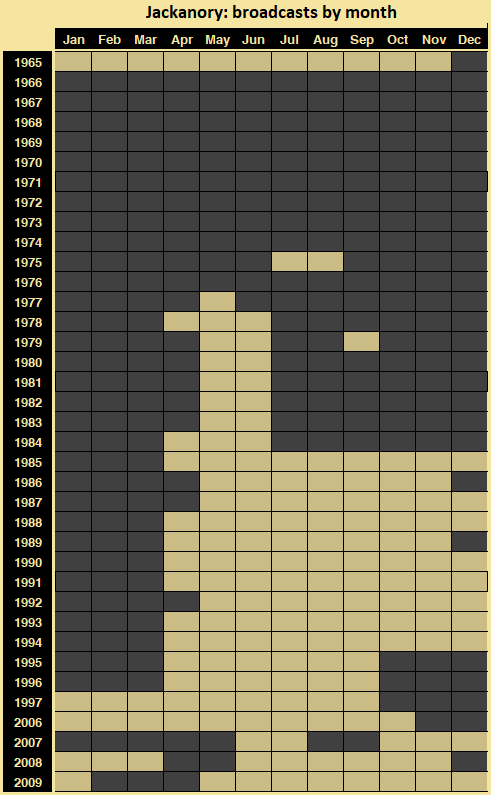
If you’re wondering, that gap in 1975 was down to a mixture of ‘More Sport’ and the ‘BBC Being Skint’ That didn’t mean the programme was going without a fight, however. The introduction of more contemporary storytellers such as Rik Mayall (George’s Marvellous Medicine in 1986 and The Fwog Pwince – the Twuth! in 1993, Jack and the Beanstalk on Christmas Eve 1995) or a pre-Marion Tony Robinson (Theseus the Hero in 1985 – adapted by Richard Curtis and Robinson, Odysseus in 1986, Terry Jones’ Nicobobinus in 1988, and Skulduggery in 1993). Robinson’s stories took to location filming, often involving members of the public, which definitely provided a fresh energy to the series.
Series producer Angela Beeching remarked in The Story of Jackanory that Mayall’s episode had been the popular week of Jackanory in the programme’s history, and (predictably) one of the most complained about1. Oh, 1980s parents. Little wonder that Rik’s inaugural week of Jackanory would be repeated on Children’s BBC in 1988, again in 1994. Plus, once the original audience was somewhat older, again on BBC Four in 2006.

In 1990, the programme’s 25th anniversary was marked by a series of greatest hits, with some of the most popular Jackanory narrators (Patricia Routledge, Bernard Cribbins, Tony Robinson) reading stories by some of the nation’s favourite Jackanory story authors (Joan Aiken, Helen Cresswell and, ah, Tony Robinson). However, the victory lap did little to disguise falling viewing figures. From a 1970s peak of five million viewers, the early 1990s saw audiences averaging around two million (yes, that’s a lot nowadays, but shush). The number of episodes airing in the weekday CBBC strand fell from 64 to 48 episodes per year between 1992 and 1993.
A new producer, Nel Romano, joined the series in 1993, and attempted to bring the storied programme a little more up to date without losing that key identity. In a world with many more distractions to compete with, something new was needed to distract kids from switching to their SNES on AV2. In came another injection of energy, with narrators more normally seen after the watershed like Adrian Edmondson (Diana Hendry’s Harvey Angell, 1993), Kathy Burke (Roald Dahl’s The Twits, 1995) and Paul Merton (Morris Gleitzman’s Misery Guts, 1993). The intent was clearly to make clear how cosy old Jackanory was now anything but. Sadly, the move did little to increase viewing figures and on Friday 31 March 1995, Jackanory aired for the last time in a weekday CBBC slot, returning that October in a Sunday morning slot on BBC2, where stories would be delivered in a single, longer programme.
That new home for the programme started with a determined effort to make the most of things, the first episode of the series marking thirty years on air by bringing back Bernard Cribbins for a tribute to fellow ‘Nory favourite Roald Dahl. Subsequent episodes would see contemporary figures like Pauline Quirke, Mike McShane and Diane-Louise Jordan take to the storybook. Despite those efforts, the early start needed to catch Jackanory meant that viewing figures continued to decline, and in 1996 the original Jackanory was given the chop.
To close things off on Sunday 24 March that year, in came a classic pairing: Alan Bennett and Winnie the Pooh, a duet originally performed in a 1968 episode of the programme.

That wasn’t quite the end for the series, however.
The Sunday morning BBC2 slot was handed over to a run of Jackanory Gold from October 1996, starting with Arthur Lowe reading Peter Hughes’ The Emperor’s Oblong Pancake from 1976. That run would last until December 1997, but Jackanory’s legacy continue for years to come.
Cue the new BBC channels, with Choice and Knowledge being hungry binary beasts desperate for content. It was BBC Knowledge that took up repeat runs of classic Jackanory from 2001, and better yet, in 2006 a fresh batch of Jackanories arrived on the new standalone CBBC channel, with taster episodes also going out on BBC One. The new episodes were perhaps now more at home on a channel with more modest expectations for viewing figures, but it was only ever a short-term concern.
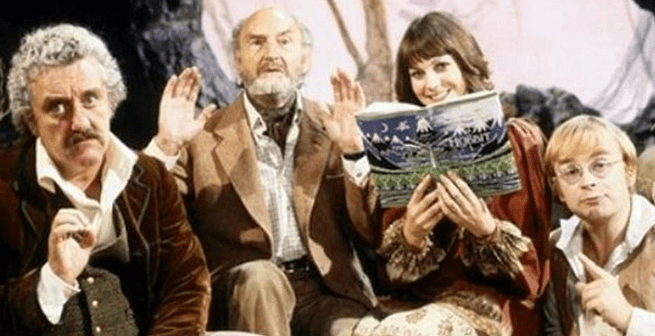
More success was made of another spinoff, with Jackanory Junior airing on CBeebies (and the CBeebies morning strand on BBC2). Stars such as Lenny Henry, Martin Clunes and Art Malik delivered a combination of stories old and new, keeping the Jackanory brand on the main BBC channels until 2009.
From there, the Jackanory name faded into the background, with early morning Jackanory eventually morphing into the early evening CBeebies Bedtime Stories, with one-off five minute tales delivered by a variety of famous faces right before the channel bids sleepy-bye to the digital multiplexes for the night. And, given the fragmentation of viewers across the digital landscape, it’s a format that remains resolutely popular. The stories are still interesting enough to command attention, and with famous names ranging from Tom Hardy to Dave Grohl on hand to read them, it’s every bit as big with parents as the little ones.
It might not quite match the full-on energy of George’s Marvellous Medicine, but it all brings in nicely back to the simpler original age of Listen With Mother on The Light Programme.

EXCITING BONUS FACT: My wife’s grandad once had a gig building props for the BBC, one of which was the Jackanory kaleidoscope. That’s good, isn’t it? 
That was quite a long one, wasn’t it? And so, we’re at the end of the 100-11 part of the list. Yikes. Come back soon for the start of the ULTIMATE TOP TEN.
- Not that this was the only instance of innocent old Jackanory receiving complaints. The retelling of Ted Hughes’ The Iron Woman in 1994 draw complaints for the accompanying model footage, while a much earlier episode referring to Walter Raleigh being sent to ‘The Bloody Tower’ (i.e. Tower of London) compelled at least a few angry parents to call the BBC Duty Office at the shocking use of swearing on kids’ TV. ↩︎
-
Splashdown! It’s The 100 Most-Broadcast BBC Programmes Of All Time (14 and 13)

It’s Saturday. It’s 12:15pm. The Weatherman just told us how rubbish the weather this weekend will be, so it’s time for… um.
14: Escape to the Country
(Shown 4365 times, 2002-2021)
Richie: “Still, I did my bit for the country.”
Eddie: “What, you stayed in the town?”
Richie: “Absolutely.”

Now admittedly, and it might be my own personal circumstances at play here, but it does seem like the much of this chart falls into one of two categories. Category One is all the programmes that have been part of the TV landscape throughout what feels like our entire lives: your Panoramas, your Matches of the Day, your Songses of Praises. Category Two comprises programmes that seem to have amassed a huge episode count seemingly out of nowhere, mainly due to the camouflage of being on when most people are at work, college and/or school. That category includes The Daily Politics, Ready Steady Cook, Cash in the Attic and this next entry on the list.
For those who usually find themselves working/learning/sensibly doing something else when it’s normally on, Escape to the Country falls firmly into the Someone Buying A House And Maybe Living In It genre, and as these things go, it’s a pretty big deal. Generally, the action involves potential home buyers tiring of life in the Big City, and are surprised to learn that their two-bed London terraced home is worth a cajillion pounds, so they’re off to buy something massive near some fields.

I mean, very nice, but how fast is the broadband there? The buyers will look at three or four suitably sprawling properties in their chosen location, including one ‘mystery house’ chosen by the production team. SPOILER: The mystery home isn’t haunted or anything fun like that, it’s basically just Another Very Nice House But The Kitchen Is Upstairs Or Something. Once all that’s done, the buyers are asked to guess the asking prices of each house, the real asking prices are revealed, and they’re asked to reveal which one they’d like to buy. And sometimes they do, which provides some material for a future episode.
As far as I’m personally concerned, it’s something to angry up my blood as I spend an unhealthy amount of time working and still need to consider selling an internal organ whenever it’s time for a big supermarket shop. However, for many it’s clearly a lovely little slice of afternoon escapism. Not everyone is cynical as me, and feels happy for some people who can sell the Balham semi they paid £3000 for in 1978 and can subsequently afford to buy a third of Leicestershire. And that’s only partly a lazy assumption, by the way. The Independent on Sunday picked out the first episode as a Pick of the Day back in October 2002, their write up casually mentioning “an extended family from Basildon, who have a budget of £600,000, are looking for a mansion in Derbyshire”. Ooh, let’s all root for the plucky ragtag family. Collective prayer that they get a mansion they like, everyone.
But anyway.
The programme began all the way back in October 2002, in a mid-afternoon BBC2 slot, arriving with the following billing in the Radio Times:
Hoping to “go green”, a young London couple want a country house. Catherine Gee gives them some options, in the first of a new series in which city-dwellers wanting to move to the country are found homes.It would quickly go on to become a regular for the channel, proving popular enough to receive a short repeat run on weekday morning BBC1 in the run-up to a new series in October 2004. At the time, the premise of the programme focused on families looking to leave behind the urban rat race for a rural idyll, but much of the initial ‘action’ involved the potential buyers viewing potential homes on a laptop in their city house, picking a pair of dwellings to visit in person, along with a third ‘mystery’ house. Ooh, mystery house, that’s a bit spooky… oh, it’s just that one bedroom is behind a big curtain.
From the sixth series onwards, all four potential homes would be viewed in person by the buyers, along with a ‘taster’ day where the contributors are invited to sample delights of the local community, learn a little about the area and visit a few local attractions. A few series later, the number of homes was reduced to just three – retaining, obviously, The Mystery House (attic smells of tuna, third bedroom exists only in two dimensions, etc). And that’s where the format pretty much landed for the final time – it’s stayed that way ever since.
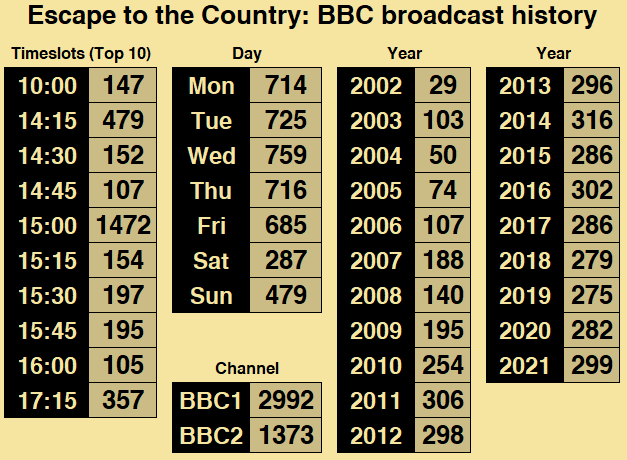
In September 2012, as Escape to… neared its testimonial anniversary, first-run episodes were promoted to plum afternoon slots on BBC One, though revised repeats of the series had been airing on BBC One in a similar slot since 2009. In fact, the programme has been the initial beneficiary of BBC One ending the channel’s long-running Children’s BBC strand, which had been in place since the early days of the Television Service, that first non-CBBC late afternoon schedule in December 2009 dominated by a young couple’s quest to find an East Sussex home with a suitably huge kitchen.
Such longevity would usually generate a spin-off or two, and that’s very much the case with Escape to the Country. January 2017 saw the first episode of catch-up series I Escaped to the Country, with currently in its seventh series, and there was even a variant looking at those lucky enough to escape Normal Island in 2014’s Escape to the Continent. And, if rural living doesn’t butter your crumpet, 2019 saw the first episode of Escape to the Perfect Town, catering for those who get antsy if they wander too far from a Tesco Metro.
There’s even an Australian version of the series, Escape from the City airing on ABC from 2019. Indeed, the original UK version is popular enough in the antipodes to have warranted a pair of Region 4 DVDs from Aussie disc supremos Shock Entertainment – a pair of box sets totalling nineteen discs.
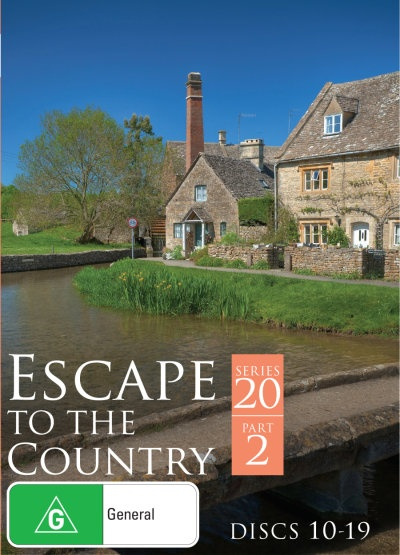
“Quality of life, Stu.” It’s even made a (modest) impact in the US, with the programme having appeared on US Netflix and Prime Video. Not a bad feat getting traction where huge houses are largely the default setting in all but the bigger cities, but it’s in the UK where Escape to the Country is truly an immovable feast.
13: Grandstand
(Shown 4500 times, 1958-2007)

By the 1950s, the BBC Television Service had a problem with sport. Basically, it kept bursting out everywhere – especially on Saturdays – and it HAD to be contained. 1954 had seen the introduction of midweek sporting roundup Sportsview, which arrived with a mission to enthral viewers with the latest news, views and personalities from the world of sport. All very good, but with a runtime between twenty and thirty minutes on any given week, there was only so much room for actual sporting action. Conversely, on Saturday afternoons there was lots of space to broadcast live sport, the resulting BBC-tv schedule akin to a bull let loose in a Sports Direct. Sport was ruddy well everywhere. Live sports coverage was exempt from the Postmaster General’s broadcasting hours restrictions, so Saturday afternoons were pretty much a Linekeresque tap-in for BBC schedulers.
Picking a Saturday at random to give an example, 8 September 1956 saw the following schedule in the Radio Times:
1.50pm: Twenty minutes of Motor Racing from the British Automobile Racing Club’s September Meeting at Goodwood, including The Madgwick Cup, a five-lap race for cars up to 1,100cc. But no time to focus on that, because at 2.10pm viewers were whisked away to the Derby Baths in Blackpool for the National Swimming and Diving Championships. But don’t get too attached to that, because at 2.25pm we’re back off to the Motor Racing for twenty minutes, then back to the Derby Baths at 2.45pm. Who will win the big prize there? You’d better hope it’s decided by 3pm, because then we’re off to Farnborough for an Air Display by the Society of British Aircraft Constructors.
Phew, eh? There really should be a little more order to this kind of thing.
Luckily, a set of steady hands were on the way to steady the Saturday sporting tiller. Programme editor Paul Fox, production assistant Bryan Cowgill and presenter-cum-head of Outside Broadcasts Peter Dimmock had all worked wonders within the BBC’s Outside Broadcast team, Fox having created and edited Sportsview (plus the annual BBC Sports Personality of the Year, originally known as Sports Review of the Year), while Dimmock had proved his broadcasting mettle by taking charge of the BBC-tv’s coverage of the Queen’s Coronation, as well as working as main presenter of Sportsview. But it was Cowgill who had an idea that would transform weekend television for decades to come: an umbrella approach to the Saturday sporting portfolio.

Mind you, Peter Dimmock wanted it to be called ‘Out and About!‘, so nobody’s perfect. Peter Dimmock’s stock was certainly high at the time. In the run-up to ITV’s big launch in 1955, the new network had been prepared to offer hefty pay increases to coax the BBC’s top talent over to the Light Network. Then-DG Sir Ian Jacob, displaying the sense of stoicism and stinginess you’d expect from the BBC of the 50s, was largely reluctant to match any such offers, him being well aware that the BBC’s more limited budget would necessitate cuts elsewhere offset any pay jumps.
That wasn’t the case when Director of Television Sir George Barnes rang up to let him know about ITV’s approach to Peter Dimmock. The response from the DG was definitive: “Make any sort of personal relationships for him – as a personal case – that are necessary.”
That was a decision borne of much more than keeping that friendly sports presenter on screen. Dimmock had displayed a special skill in negotiating sports contracts, and in selling the BBC programmes those contracts generated to overseas broadcasters. He’d also built up a series of working relationships with various sporting authorities, which combined with his ease at presenting live sport coverage made for a pretty comprehensive package. On top of everything else, he headed the BBC’s Outside Broadcasts Department, and had served as Sports Adviser to the European Broadcasting Union. If he hopped channels, any replacement would need one hell of a CV.
Dimmock’s experience at working with the Outside Broadcasts Unit would be essential. He’d been a key component in TV coverage of the Queen’s coronation in 1953, serving as producer for coverage of the Coronation Service from Westminster Abbey, having worked closely with sceptical Abbey personnel to prove that the presence of TV cameras need not be a distraction from the main event. Before then, he’d worked on the 1948 Olympics, the first international relay from Calais in 1950 and the funeral of George VI in 1952.
Having been so instrumental in several of the biggest moments in BBC-tv’s life thus far, throwing to live racing from Haydock was hardly a herculean task. Having seen teleprompters in use during his time in the USA, he know how to get the best out of the nascent tech while live to air. In short, the only person who could hope to keep all the levers moving when it came to launching the BBC’s new, sprawling and enthralling Saturday spectacular: Grandstand.
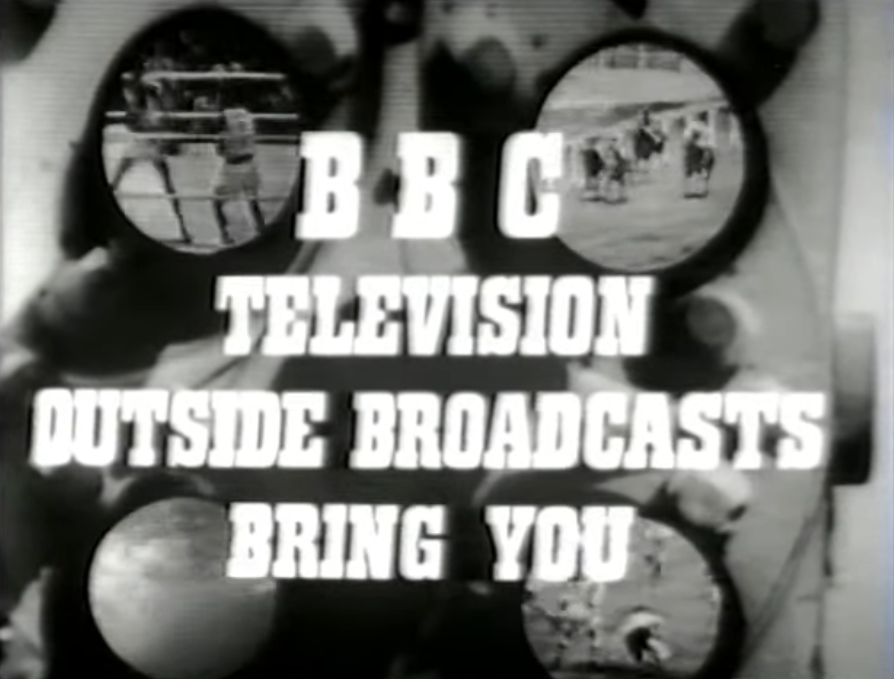
Arriving on Britain’s screens for the first time on 11 October 1958, this was to no small undertaking. A shade under three hours of live television each Saturday, mostly, though not exclusively, devoted to sport – this was a programme from the BBC Television Outside Broadcasts department, after all. Paul Fox took to the Radio Times to explain just how it would all – hopefully – come together, promising that “all the items that used to appear here and there on Saturday afternoons will now come under the Grandstand umbrella”.
With Dimmock at the controls from a swanky new studio at Lime Grove, at least for those first few weeks before his co-anchor – a tyro David Coleman – took sole charge of presentation (allowing Dimmock to move behind the scenes), there were football newsflashes, racing updates (complete with the latest odds), and updates from reporters all around the UK. Fox promised that “sports news of the day will be given as it happens – and, whenever possible, where it happens”, thanks to that BBC Outside Broadcast unit. There was the promise of live horse racing each week, live swimming, motor racing, ice skating and table tennis in the coming weeks. Some of those admittedly easier to capture on camera than others.
There was even the tentative promise of (“if our hopes are realised”) live boxing. But, slightly surprisingly, the callout event on the big preview of Grandstand was… snooker. Not the most obvious draw for the black and white tellies of the time, but this was no ordinary event – Joe Davis, the “greatest snooker player of all time” had signed up for a series of special challenge matches at venues around Britain, taking on top players of the day, such as Walter Donaldson and John Pulman. And, to make it even more of an occasion, Joe’s first match would be against brother and fellow pro Fred Davis.
The action wasn’t just restricted to That England, either. The BBC’s Scottish Outside Broadcast Unit (a branding that conjures up a certain stereotypical image, unless it’s just me picturing an OB van bedecked in tartan) would be on hand to capture action from the World Amateur Team Golf Championship from St Andrews.
It’s fair to say that was a lot to be going on with. The only real hitch was a TV schedule that insisted subsequent children’s programming start airing at 4.45pm, a time which neatly clashes with all the sports results Grandstand would really quite like to tell viewers about. It took until April 1959 before those fifteen critical minutes were finally added to Grandstand’s runtime, allowing for a full Sports Result Service, and an easier route for participants in the football pools to learn they’d need to work for at least another week.
As mentioned, the whole affair being centred around the Outside Broadcast Unit rather than sport specifically gave the programme freedom to wander from its core remit if circumstances required, such as the Henley Regatta or sundry Car Shows. A prime example of this came on 22 February 1964, and an edition promising “the return of the Beatles to the UK, as well as horse racing and rugby union”.

“Ringo! Ringo! Have you heard? Clyde vs Cowdenbeath was postponed!” Unsurprisingly given its position on this list, the programme was a success. So much so, the Grandstand branding swiftly swallowed up key events on the sporting calendar. Alongside regular Saturday afternoon Grandstand, the Radio Times would trumpet the presence of Derby Day Grandstand (from 1960), Cup Final Grandstand (from 1965), World Cup Grandstand (from 1966), Olympic Grandstand (from 1968), and Ryder Cup Grandstand (from 1993), many of which didn’t even air at the weekend. The slow creep of sporting endeavours into the Sabbath also led to occasional airings of Sunday Grandstand from 1967 onwards.
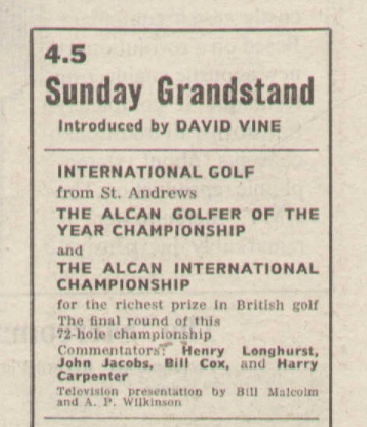
It wasn’t until May 1981 that Sunday Grandstand became a regular fixture, a switch to BBC2 providing the freedom to stretch into the evening schedule. However, the most thrillingly-titled variant was set to arrive on the evening of Tuesday 21 April 1970, where a special edition (step aside, Sportsnight) featured the big Joe Bugner v Ray Patterson boxing match in London, followed by “Apollo 13 Splashdown”. Yep, the return to Earth of moon men James A. Lovell Jr, John L. Swigert Jr and Fred W. Haise Jr led to the programme being rechristened Splashdown Grandstand for a single edition. Just look at this planned programme schedule for the night:
8.0 International Professional Boxing: Joe Bugner v Ray Patterson
8.45 The Main News With Kenneth Kendall
9.0 Apollo 13 Splashdown
9.02 Re-entry due
9.11 Parachutes open
9.16 Splashdown
10.10 On Deck
10.15 International Match of the Day: England v Northern IrelandEpic. Except, of course, a set of fuel cells 180,000 nautical miles from Earth had other ideas. The return flight of the Apollo 13 crew had to be frantically rearranged for the previous Friday, and one of the most exhilarating live broadcasts of the entire space race took place then instead.
Daily Mail, Fri 17 April 1970 
Daily Mirror, Fri 17 April 1970: The Real Splashdown Schedule All very well, but what of our Splashdown Grandstand? Those midweek sporting events instead went out as individual programmes, with the scheduled Splashdown programme replaced by The Dick Emery Show and a rescheduled 24 Hours. Ah, well.
Rewinding slightly, by 1965 Grandstand had a rival on the other side. ITV’s initial reticence to sport receding to make way for World of Sport, which was now very much in play. But while their rival had the winsome Dickie “Last Time I Saw Something Like That The Whole Herd Had To Be Put Down” Davies at the helm, the BBC still held the rights to all the key events, and with Frank Bough sharing hosting duties with David Coleman (the latter frequently off displaying his commentary chops), there was still only one destination for the serious sports fan. World of Sport had Canadian log rolling, Grandstand had Eddie Waring, Football Focus and the Vidiprinter. It was no contest. Especially as Grandstand would be the go to destination for getting those all-important results come 4.45pm. Even now, people of a certain age can only read the Classified Football Results with a particular intonation in their heads.

By the 1980s, a bejumpered Coleman was more at home behind a Question of Sport desk, and with Frank Bough occupied in a similarly wooly vocation on Breakfast Time, it was time for TV’s Mr Unflappability to shine. Step forward Des Lynam. Never had helming several hours of live television on a weekly basis – imagine an election night every seven days, basically – seemed so ruddy effortless. And so, by the late 1980s, Grandstand was cock of the walk. World of Sport had ceased to be, with ITV spending more energy on snaffling exclusivity on individual sporting events – think The Football League, Athletics and Horse Racing – but Grandstand’s greatest foe, and ultimate conqueror, was about to appear from the Sky.
The early days of satellite broadcasting had been no threat to the main broadcasters – nobody was breaking into a sweat over the Screensport Super Cup – but by the mid-1990s, Sky Sports had the budget and the broadcasting bandwidth to do everything Grandstand couldn’t. It could continue live coverage of golfing tournaments, rugby matches or tennis opens way into primetime, with no pressing need to halt coverage in favour of Steve Wright’s People Show or Big Break. And as the pot of available events began to empty, the BBC needed to make more of what it still had. Would people be tuning into Grandstand and hope they enjoyed what they found there, or would they be more enticed by a programme listing for a live Six Nations match?
In the digital EPG age of the noughties, viewers didn’t want to just see that a sprawling Grandstand strand was on, they’d want to know which sport to expect and when. A brand that was once spread across the BBC like sporting butter seemed to be little more than an anachronism kept around out of loyalty more than practicality, and in January 2007 it finally bowed out. By the time of the final Grandstand programme listing, pointing viewers toward the Red Button and BBC website for uninterrupted coverage of the Australian Open or European Figure Skating Championships was the norm, it was clear how the linear Grandstand strand wasn’t really needed any more. The fact that much of that final Saturday edition was shovelled onto BBC2 to make way for a live FA Cup Match of the Day between Luton Town and Blackburn only underlined how inessential the once hardy old brand had become.
Then, it was gone. Broken up for scrap. The following Saturday saw Football Focus officially span off as a standalone programme (which, as far at Electronic Programme Guides had been concerned, it had been for a while anyway), as was the BBC’s Six Nations Rugby coverage. Final Score had the same treatment, once an integral part of Grandstand, now a plucky stat-based orphan left to flourish on its own.
And do you know what? It was fine. When there wasn’t any big sporting event to show on a Saturday afternoon, the BBC no longer felt the need to fling on something sporty for the sake of it. This was an era where Sky Plus was king of the living room. People wanted to be able to record ‘Rugby League’, ‘Swimming’, or ‘Golf’, not use up a valuable chunk of their PVR’s 20GB capacity on several whole hours of sport because that’s how the programme guide had wanted it.
This was the future.
And yet, in a way, it was 1958 all over again.


NOTE: Updated figure and table on 16/7/23 to correct the episode counts for 1965 and 1966, plus totals, accordingly. Thanks to eagle-eyed reader @michael_sas for spotting the discrepancy.
There we go, another one out of the way. Phew. Next time: we brush the quivering brim of the Top Ten. Ooh, eh?

Of course, a photo of 70s Des is enough to send anyone’s brim a-quivering. -
Paging Dr Clitterhouse! It’s The 100 Most-Broadcast BBC Programmes Of All Time (16 and 15)
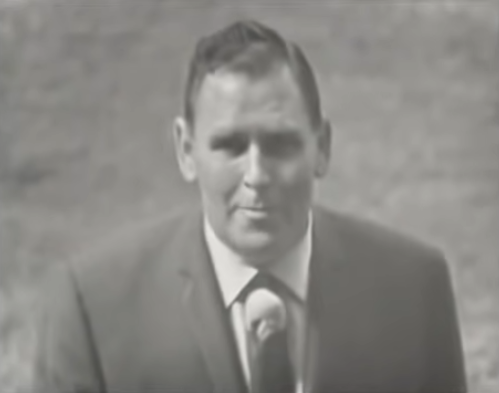
“We interrupt this programme to bring you a football game.”
16: Match of the Day
(Shown 4055 times, 1964-2021)
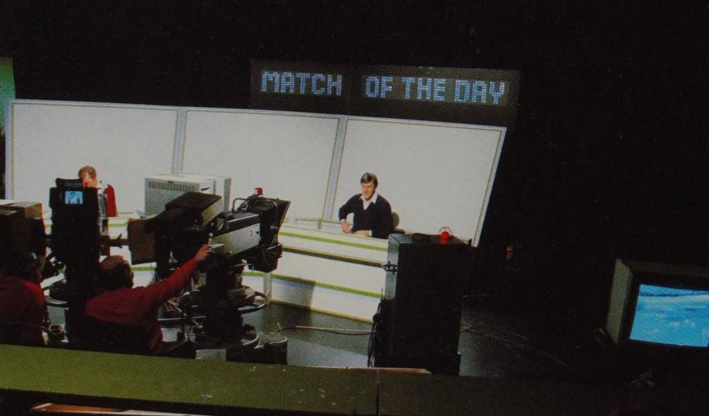
Well, here’s one that was always going to appear, and one where I probably need to clarify the criteria for inclusion. In general with this list, where something had specific programme branding applied to it and it keeps to the core format of the programme, I’m counting it. So, Nationwide Election Special counts, Tweenies Songtime doesn’t. Postman Pat Special Delivery Service please step forward, This Morning With Anne and Nick’s Live Autopsy Hour not so fast.
That gets a little more complicated with Match of the Day. For one thing, the first eleven times the title ‘Match of the Day’ appeared in TV listings, it had absolutely nothing to do with football. While MOTD as we’d come to know it first aired on Saturday 22 August 1964, Match of the Day first appeared as a programme title a whole two months earlier. A total of eleven editions of ‘Match of the Day’ aired in relation to the Wimbledon Lawn Tennis Championships in 1964 before the moniker was first applied to kickball.
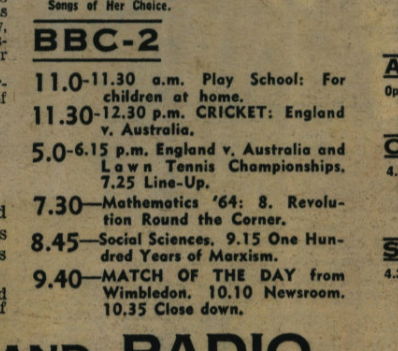
The MOTD branding would go on to become closely aligned to both football and (during Wimbledon fortnight) tennis highlights, with the latter sometimes made clear in the programme title (as Match of the Day from Wimbledon or Wimbledon [YEAR] Match of the Day), but sometimes not.
The other complication comes in defining what makes up the ‘core’ MOTD experience. Saturday night football highlights are the main thing you’d associate the brand with, but it’s also been used for live football coverage (sometimes as Match of the Day Live, International Match of the Day or Match of the Day: The Road to Wembley, sometimes as just plain old Match of the Day). And what about Match of the Day 2? Does that count? How about Match of the Day Greats, or …Kickabout, or …Top 10? How about lockdown gap-filler Match of Their Day?
Right, to try and get some kind of vaguely accurate figure here, I’m going to go with the following rule: If it’s tagged as Match of the Day, and the bulk of the content is footage from a football match (or matches, either live or highlights) of a contemporary match, it counts. If it’s not one of those things (so, Kickabout et al), or doesn’t have the MOTD branding, it doesn’t count. Settled? Good.
The waters are, of course, further muddied by the MOTD branding not always being used in programme listings. Since 2014, much of the BBC’s live or highlight coverage of The FA Cup has been billed as ‘The FA Cup’, keeping it away from the (now) more Premier League-focused MOTD name. Which means that, in this age of iPlayer and rights issues, the two sets of highlights are now kept in separate containers. Even when they’re next to each other in the schedule.
How much better would this be if it had involved Gary Lineker walking across the studio floor to a different desk at 11pm? Like Stephen Fry walking away from the DEF II desk to wheel in the Babylon 2 set in the first ever edition of DEF II? The title World Cup Match of the Day was used when nightly highlights round-ups were broadcast in 1974 (live matches then going out as World Cup Grandstand). Then that title lay dormant for 15 years, with the programme title reused for highlights of Italia ’90 qualifiers in 1989, provided they were on a Saturday – midweek qualifier highlights went out as part of Sportsnight. That is until October 1989, when World Cup Match of the Day was used for a live (midweek) broadcast of the Poland v England qualifier. Then, the programme title hibernated until the 2006 World Cup in Germany, except for the highlights packages for Euro 2000 that used “MotD at Euro 2000” but not for the live matches… look, here’s a table of RT billing titles for every major international football tournament since 1950. Titles included in MotD’s episode count are in bold.
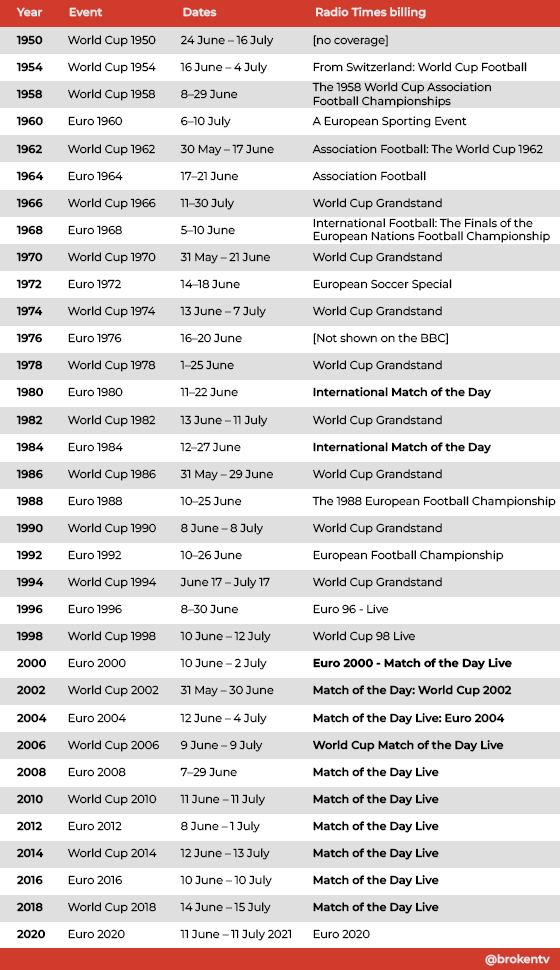
Yes, “A European Sporting Event” for the 1960 final. Very grandiose. Anyway, let’s rewind a bit. Football on the BBC has gone out under a variety of guises – hey, here’s another largely pointless table, this time of non-MotD football match billings in the Radio Times:
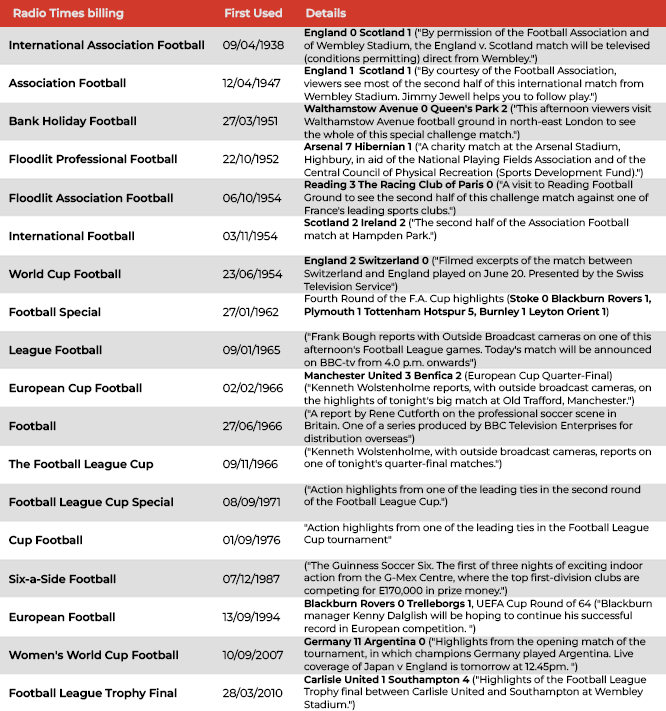
The entry for ‘Football’ up there is a bit tenuous, admittedly. The next time just ‘Football’ was used as a programme billing was in 1984, for coverage of the The Courage Soccer Six from Birmingham, so mentally insert that in place if you prefer. So, it’s probably for the best that they settled on another programme title. The above isn’t even a comprehensive list – between 1971 and 1997, the Sportsnight Special branding was used for midweek football matches, mostly but not exclusively for those broadcast live (first: FA Cup Third Round Replay highlights, last: live coverage of AS Monaco v Newcastle United in the UEFA Cup).
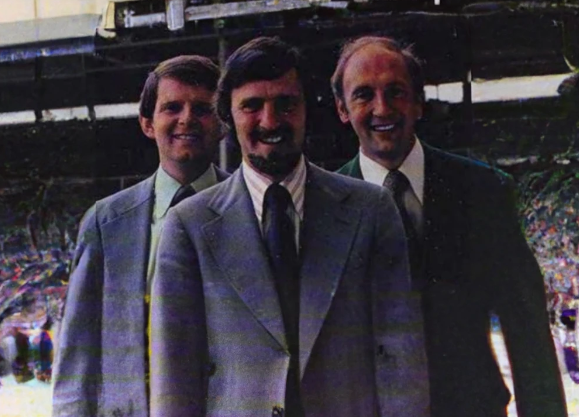
The BBC’s first televised association with Association (Football) dates all the way back to September 1937. That inaugural coverage was, as you may well already be aware, a thrilling tussle between Arsenal and… Arsenal Reserves at Highbury. Yep, fifteen minutes of a training match. While this could easily have been some filmed footage flung out as part of Newsreel, the BBC didn’t take that easier option. The Beeb’s brand new mobile television unit travelled to Highbury to broadcast the footage live. The first ever billed football match (as shown below) was indeed “a demonstration by the members of the Arsenal team” on 16 September 1937, but live footage of football first went out a day earlier – two minutes of soundless but live footage of the Arsenal team went out at 3.45pm the previous day, as part of magazine series Picture Page.
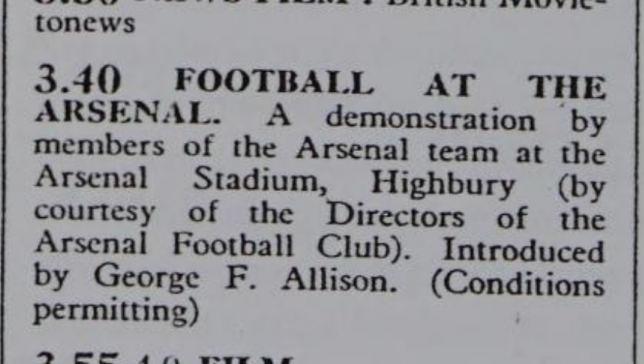
Such was the cost of sending the mobile television unit (around £35, or the price of a pie at Wembley in 2023), a series of broadcasts from the ground were requested to make the whole affair a little more cost effective. As a result, a total of three transmissions were made from the ground, plus (following that brief initial broadcast on Picture Page) a test transmission of Arsenal Reserves versus Millwall Reserves was beamed back to a special viewing room at Ally Pally, so BBC bosses could gauge how suitable this football lark was for public consumption.
The second billed visit to The Arsenal occurred on 17 September that year, which led to another broadcasting first: George Male becoming the first footballer ever to be interviewed on live television. On being questioned about the diversity within the Highbury playing staff, Male proudly proclaimed “they are from Scotland, Yorkshire, Wales, all over the place… provided they are British subjects. We couldn’t put a foreigner in the team”. Plus ca change, eh? As a result (of the broadcast, not Male’s xenophobia), the BBC would go on to broadcast the FA Cup Final between Preston North End and Huddersfield in 1938, followed a year later with the Portsmouth versus Wolves final – the latter listed alongside the caveat “unless anything untoward happens” in the Radio Times (and a warning that “no rediffusion in places of public entertainment will be permitted”).
Following the war, the BBC were keen to show more live football for the demobbed masses, but there was a problem. The Football League – gatekeepers for the bulk of English professional matches – were dead against the idea, calculating that allowing the still-small television audience to watch coverage on tiny monochrome sets would be preferred to the full-3D, full-colour, full-Bovril matchday experience, and stop attending matches in person. Luckily for the BBC, the FA in general were more receptive to the broadcaster. Less luckily for the BBC, technology at the time limited them to covering events within a 20-mile radius of Alexander Palace.
As a result, the next televised football match, taking place on Saturday 19 October 1946, was from the lofty heights of the Athenian Football League, with Amateur Cup holders Barnet entertaining Wealdstone. Even then, the broadcast was far from simple – the permission of a local resident had to be sought so BBC engineers could borrow their phone line, and from another resident to plonk some scaffolding for cameras on their allotment. Thus the programme budget was duly increased to include compensation for damaged crops.
That wasn’t the end of the technical hitches. Despite the promise of “part of the first half and the whole of the second half” in the Radio Times, bad light ultimately curtailed the live broadcast fifteen minutes from the end of the match.
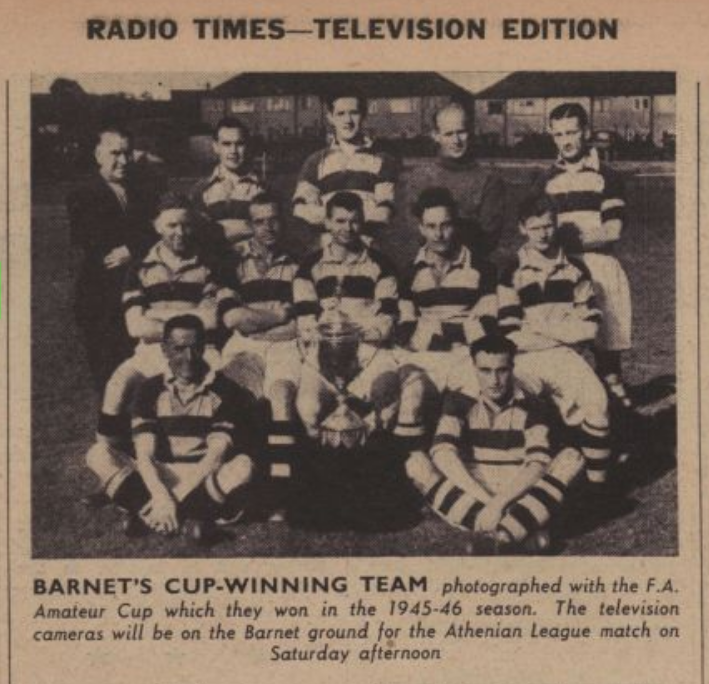
At least anyone watching from those houses in the background could just have looked out of their window. Despite those obstacles, the broadcast was deemed a success, and the BBC would go on to broadcast further (non-Football League) matches from the London area.
By 1954, the popularity of television had grown, along with the demand for televised sport. As a result, Head of Sport Peter Dimmock along with Paul Fox devised Sportsview, the BBC’s first midweek sporting magazine programme. This offered football match highlights alongside other sports, and soon became must-see viewing for sport fans lucky enough to own a television receiver. That popularity led to Sports Special, a Saturday night spin-off for the series packing a more football-focused remit, with Peter Dimmock taking to the Radio Times to provide exciting details on how “a helicopter, two aeroplanes, plus a fleet of motor-cycles and fast cars” would be employed to rush filmed reports from stadia to studio each week.
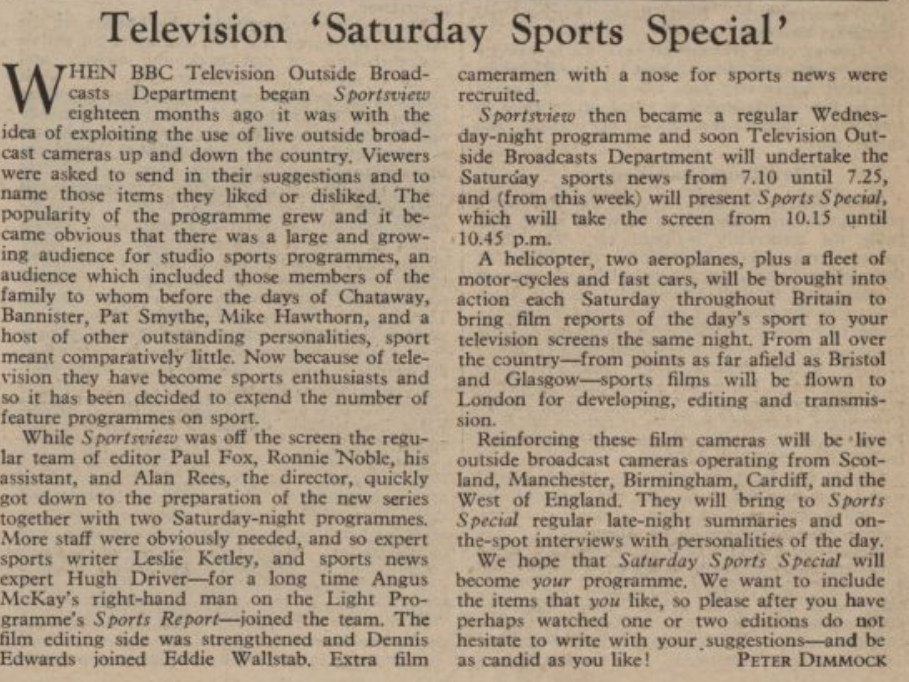
Radio Times Issue 1660, 4 Sep 1955 – 10 Sep 1955 Sports Special would go on to run for ten years from 1955, accompanied in October 1958 by Saturday afternoon stablemate Grandstand. However, the very march of progress that made the programme possible in the first place (including, of course, the thrilling assistance of fast cars and helicopters and possibly at least one Milk Tray Man) would lead to its downfall. Match reports being shot on 16mm film meant that on arrival at the studio, footage first had to be processed, returned as wet negatives and frantically edited at Lime Grove by harried editors praying that they’d get the job done in time for transmission. The reliance on filmed reports (and the budget only allowing for a single camera at each match) also carried the risk of a crucial goal being slammed home while the camera operator was changing reels.
Videotape and multi-camera coverage were still only on the horizon, but Sports Special’s days were numbered. What was once a regular weekly treat became a more sporadic offering, and despite rebranding for most weeks as Football Special from late 1961, in April 1965 the programme would air as a Saturday night strand for the last time, by now on the rechristened BBC-1, with a broadcast of that day’s England v Scotland match from Wembley.
But! Hope for football fans was not lost. Over on upstart BBC-2, a new programme had arrived in 1964, opening with the classic Wolstenholme words “Welcome to Match of the Day, the first of a weekly series coming to you every Saturday on BBC-2. As you can hear, we’re in Beatleville for this Liverpool versus Arsenal match”, and ending with a score of 3-2 to the Mighty Reds.
It would go on to become quite popular.
The write-up for that first-ever episode in the Radio Times went as follows:
Today for the first time soccer fans can watch a feature-length version – as opposed to a potted ‘highlights’ version — of a regular League fixture. Which one? That, by agreement with the Football League, remains a secret until 4.0 this afternoon. But Bryan Cowgill, BBC-tv’s sports chief, promises that it will be a top match.
The agreement by which BBC-tv won permission for this came after careful negotiations between Bryan Cowgill and League Secretary Alan Hardaker. It allows for fifty-five minutes of coverage, enough to show the whole development of the game, and for its screening at a more popular hour.
Up to now we have only been able to show ten-minute edited films of any given match. which, effectively meant a machine-gun succession of goal-goal-goal,’ says Cowgill. ‘Now we can fall in line With BBC-2’s policy by offering “depth” treatment of our most popular sport’. To those who think this breakthrough is a further blow to turnstile takings, he offers his experienced opinion that ‘television never kept anyone away from the best in sport.’
In charge of the new venture as producer is Alan Chivers, BBC-tv’s most experienced soccer specialist. He intends to make full use of the technical advantages of 625 lines, and says: ‘We’re no longer restricted mainly to the close-up, With 625’s greater definition we can use wider shots without losing clarity, and so show much more of the overall pattern of a game.’
Radio Times Issue 2128, 20-26 August 1964
Following the 1966 World Cup, famously won by A British Team Wearing Red (haven’t checked, I presume it was Wales), MOTD made the move from BBC-2 to BBC-1 for the 1966/67 season. Although the programme would move back to BBC-2 for a week in November 1968 so that the first colour edition of the series could be shown. Any football fanatics without a 625-line set that week at least got to watch Hitchcock’s Anatomy of a Murder on BBC1 that night. It wouldn’t be until 15 November 1969 that colour MOTD first arrived on BBC-1 – on the channel’s first official day of colour TV.
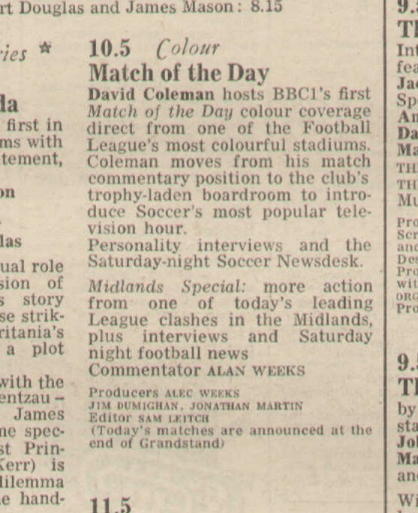
If you’re wondering, the first colour programme in the listings for that day: The Weather. Transition to colour TV aside, the core remit of the series – football highlights on a Saturday night – remained unchanged for a long time. Even when events called for a special episode of MOTD, it was usually affixed to standard match highlights, as had been the case on 10 Jan 1970 and the excitingly-billed “Match of the Day Special: 1970 World Cup Draw“. This contained the exciting curveball of having David Coleman reporting from Mexico City’s Maria Isabella Hotel, where the 16 qualifying nations discovered who they’d be playing that summer (“Presented by Telesistema Mexicano”, no less). Even then, as befitting the programme, the bulk of the content that week was still of match highlights from a suitably sodden football ground.
A year before that Mexican jamboree, MOTD had added the first ever slow-motion replays to their coverage, an innovation that would make a huge difference to the way football was covered. And those innovations were increasingly important. At a time when the USA and USSR were in a PR war to get the first boots on the moon, BBC and ITV’s respective football flagships were locked in a similar, if slightly less cosmic, battle.
The nature of ITV meant there was no network-wide football highlights programme – the whole story of football on ITV could fill an entry on its own – but the big hitter was undoubtedly LWT’s The Big Match, which tried to add a little Light Entertainment pizazz to the whole affair (oh, okay. Brian Moore and a desk with a phone on it). The battle ultimately became so intense that Michael Grade led a coup to snaffle up exclusive rights to the Football League in 1978, the move was famously reported in the papes as ‘Snatch of the Day‘. Which would have been quite witty had the pun not already been public knowledge since a 1974 anti-pickpocket public information film. Luckily, the Office of Fair Trading put a stop to that nonsense, and Match of the Day was safe. For a while.
The battle of the broadcasters intensified throughout the next few years, though there was a truce of sorts after the channels agreed to alternate ownership of the prime Saturday night highlights slot, meaning MOTD aired on Sunday afternoons throughout the 1980/81 and 1982/83 seasons. However, for 1983/84 there was a new, long-awaited change for both channels: live coverage of Football League matches. It’s almost strange to imagine such a thing at a time when almost every single match in the top five tiers of English football can (legally) be watched live, but that represented the first time live league football would be shown on TV since 1960. Highlights briefly faded into the background. Especially during the start of the 1985/86 season, when disputes over money meant TV was a football-free zone for several months. At least that led to Saint & Greavsie parading West Ham’s leading goalscorer Frank McAvennie around London to see if anyone would recognise him, which is quite fun.
1988 saw a dramatic change to coverage for the Beeb, with ITV paying a (then-)whopping fee for exclusivity. It certainly seems quaint now, but paying £44m for 21 live matches per season was big news at the time, not least as it restricted MOTD to coverage of the FA Cup (and for the most part, a rebranding to Match of the Day: The Road to Wembley).
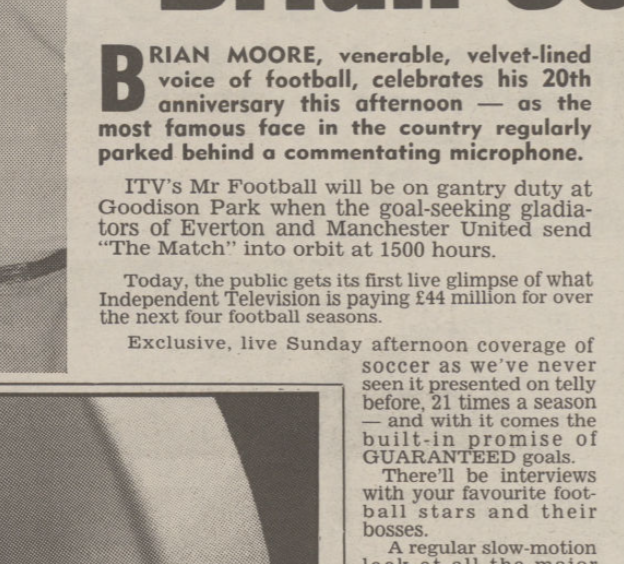
As football’s post-1990 popularity soared Skywards (insert a Waddle penalty gag here if you must) even bigger changes were afoot. But then you probably already know all about that. At least that meant top division highlights returned to the BBC.
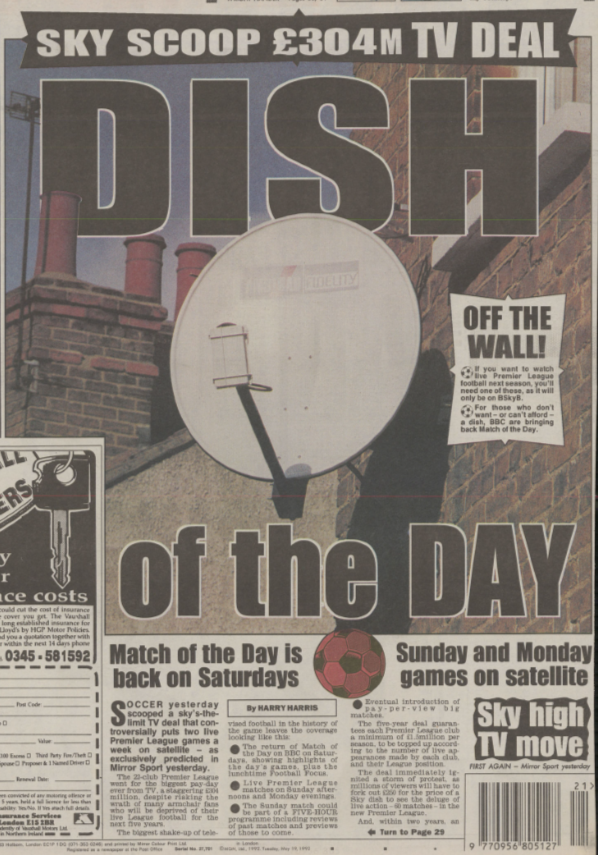
And – if we all pretend those few years of Andy Townsend’s Tactics Truck et al were just a national hallucination – that’s where they’ve stayed ever since. And indeed, the lockdown-era Project Restart even led to the return of Live Top Tier Football to BBC1 after a gap of 32 years.
The mission statement of the programme has certainly changed a lot since Kenneth Wolstenholme’s original trip to Beatleville. The very thing original producer Bryan Cowgill was so happy to be leaving behind – “ten-minute edited films of any given match” – is now the core product of the programme. But, in a world where watching live football on TV is largely restricted to those with a disposable incomes or an illicit IPTV hookup, it’s still appointment television for many, and for everyone else it’s just nice to know it’s still there.
After all, we’ve now seen a vision of the future without Match of the Day. It wasn’t pretty.
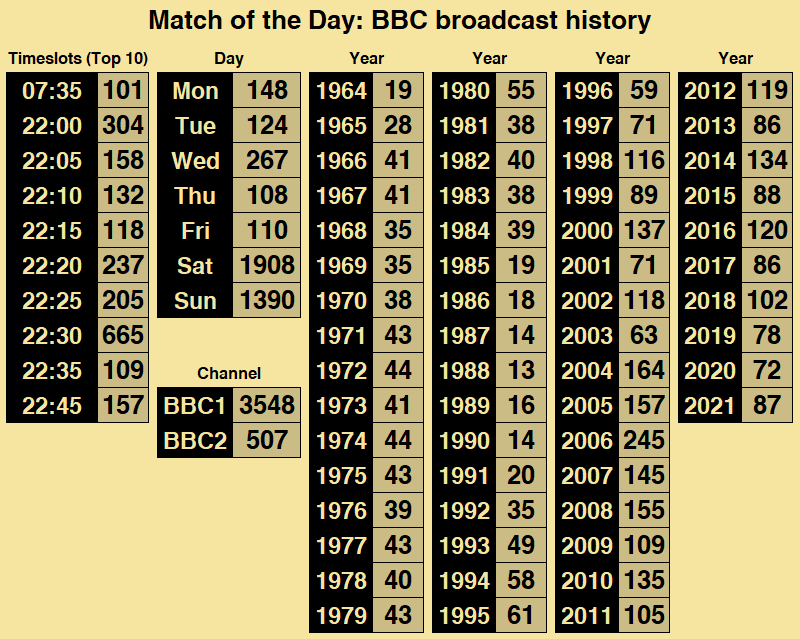
NOTE: If you’d like to read a lot more about the history of football on British TV, be sure to take in Steve Williams’ superb Goalmouths over on OffTheTelly.
15: Doctors
(Shown 4081 times, 2000-2021)
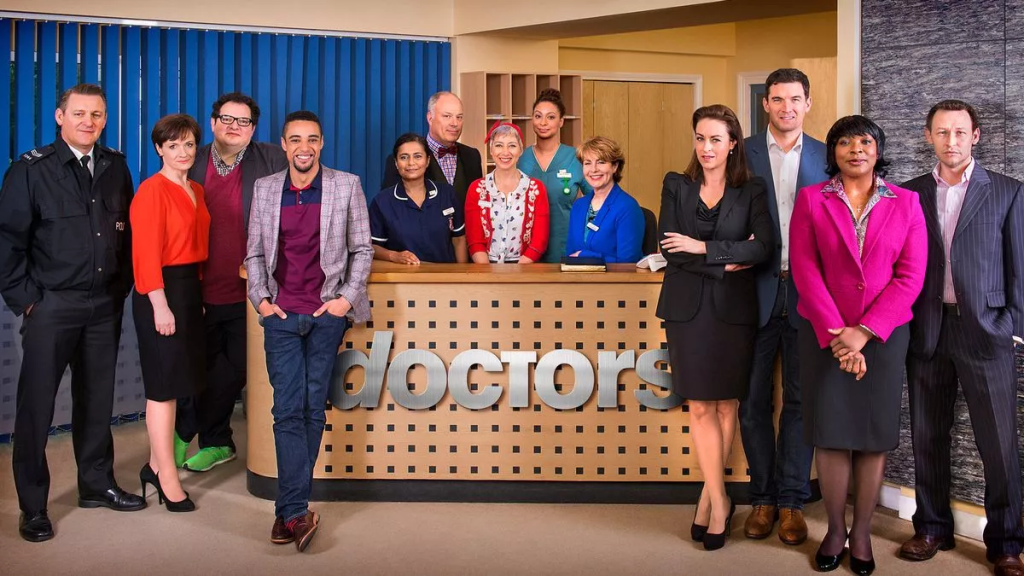
For a genre of television that has seemed utterly omnipresent since the days of Stooky Bill, it’s actually a little surprising to learn that medical drama series were few and far between in the early days of British television. In the early days of the BBC Television Service, the closest you were likely to get was seeing a concert by someone who’d left the medical profession for the world of music, such as pianist Leslie ‘Hutch’ Hutchinson (5 Dec 1936, Starlight) or Norman Hackforth (4 Feb 1937, The Composer at the Piano).
As was the style at the time, there would occasionally be serious factual programming based on medical matters, especially in the post-war years, such as 1947’s I Want to be a Doctor, but dramatic fiction from within doctorly settings were a feature that television simply didn’t seem to fancy. It’s tempting to suggest that the medical profession was deemed sacrosanct when it to TV’s myopic gaze, but that’s swiftly disproved by there being a smattering of comedy plays about the profession. May 1947 saw Annette Mills’ comedy feature Rotten Row, where a dilapidated row of horse boxes is converted into a fracture unit next to an evacuated hospital in post-war London (I repeat: a comedy), while August that year saw the screening of The Amazing Dr Clitterhouse, a comedy thriller by Barre Lyndon.
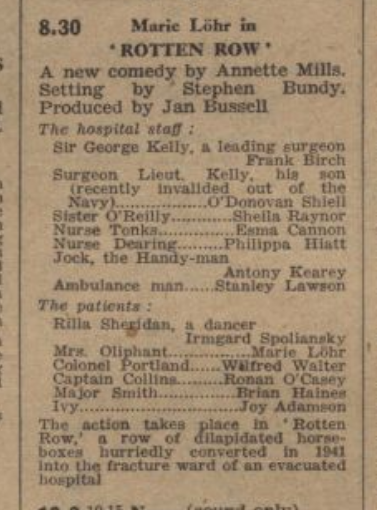
See, it wasn’t just me having a fever dream. By the late 1940s Britain finally had a National Health Service, so it’s perhaps understandable that television preferred to spend airtime demystifying what went on behind hospital doors. As a result, factual programmes often made an appearance in the Radio Times, such as 1948’s Mass Radiography, (“The Medical Officer in charge of a Mobile X-Ray Unit belonging to the North-West London Regional Hospital Board demonstrates a new technique of diagnosing chest diseases in their-early stages”), or 1949’s medical documentary series Matters of Life and Death (“Episode 7: Dr. F. Avery Jones and Mr. Norman Tanner, a physician and surgeon who have made a special study of gastric and duodenal ulcers, discuss their prevalence and show how they are diagnosed and treated”). All very worthwhile, but hardly using matters medical to offer a sense of escapism for the TV audience.
That changed in 1951, with a six-part television adaptation of Anthony Trollope’s 1855 book The Warden. The first of the Chronicles of Barsetshire series, the book followed the fortunes of Mr Septimus Harding, an elderly warden from Barsetshire-based Hiram’s Hospital. That offering aside, it took the launch of ITV in 1955 to successfully transplant the notion of a medical TV drama into Britain’s cathode-ray tubes. Emergency Ward 10 (ATV, 1957-67) became one of the nascent network’s breakout hits, albeit one that came about due to a misunderstanding. It had been suggested to programme creator Tessa Diamond that a show about daily hospital life might be a hit. It was only after Ward 10 was created that her agent revealed the original suggestion was actually for a documentary series.
Daily Mirror, Tuesday, Feb. 19, 1957 Once that happy accident was out of the way, the programme quickly became a success. So much so, in ten years on the air it clocked up a total of 1,016 episodes – including in 1964 one that featured an early example of an inter-racial kiss between two actors.
Aside: For a spell, it seems to have been considered television’s first-ever such embrace (coming a full four years before the Star Trek episode “Plato’s Stepchildren”). However, it was actually preceded by both Granada’s 1962 Play of the Week In Your Small Corner, and 1959 ABC Armchair Theatre play Hot Summer Night – both plays featuring Jamaican actor Lloyd Reckord.
An inter-racial relationship being portrayed in a 1959 TV drama? Very progressive. Only billing the three white actors in the newspaper adverts for it? Not so much. Anyway, with Ward 10 proving a success, other medical soap operas would later appear in an attempt to rebottle that magic, such as General Hospital (ATV, 1972-79), Angels (BBC, 1975-83) and Children’s Ward (Children’s ITV, 1989-2000). On top of that, daytime TV found plenty of room for antipodean imports The Young Doctors (Nine Network 1976–1983, airing on ITV from 1982 and Sky Channel from 1989), A Country Practice (Seven, 1981–1994, shown on ITV from 1982 and Sky Channel – in primetime! – from 1984) and Shortland Street (TVNZ 2, 1992–, shown on ITV from 1993).
For those of a certain age, the above image will be closely associated with being off sick from school. As the millennium (and to a lesser extent, the Willennium) neared, the previously-listed Holby City (BBC, 1999-2022) started a residency on BBC1. And, with that proving popular enough for BBC bosses to attempt a daytime version, this was followed a year later by the first episode of… Doctors. Yes, we’ve got to it at last. Phew.
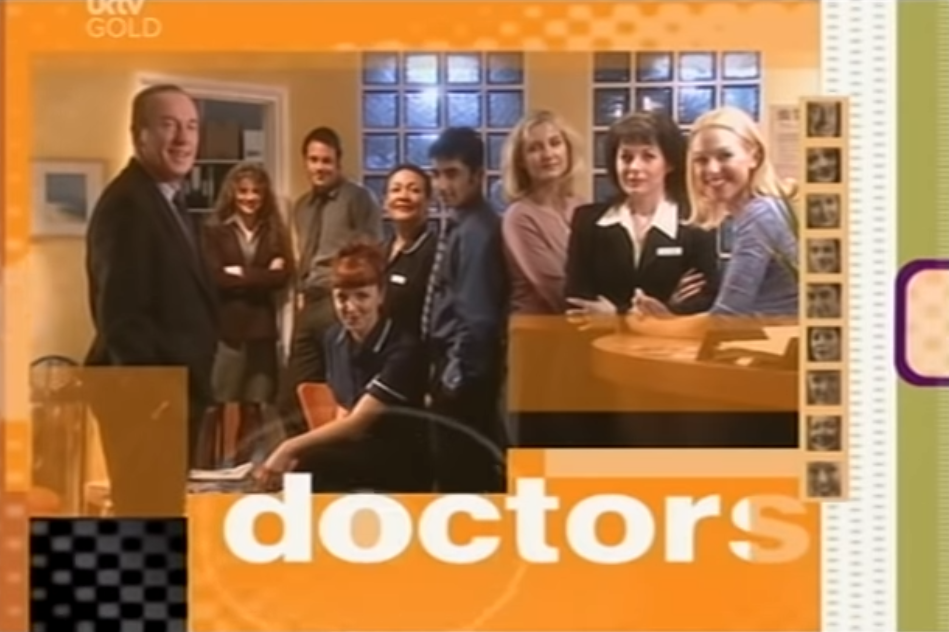
Set in the fictional Midlands town of Letherbridge, the Chris Murray-devised programme follows events within the local doctor’s surgery and the nearby university campus surgery, along with those of the stakeholders within.
Commissioning a brand-new scripted drama to go out in the pre-news slot 12.30pm each weekday – a place you’d usually expect to contain an episode of Changing Rooms, Celebrity Ready Steady Cook or Bargain Hunt – was certainly a brave move by BBC head of daytime programming Jane Lush. To remain receptive to occasional viewers, the programme was to use self-contained stories featuring the key cast rather than having long-running plot strands (a la imperial phase The Bill). In addition, casting cosy drama series stalwart Christopher Timothy as key character Mac McGuire certainly wasn’t going to hurt.
To introduce viewers to the series, the opening episode aired in a primetime-adjacent slot of 6:35pm on Sunday 26 March 2000, with the first regular daytime episode airing the following lunchtime. Under the auspices of showrunner Mal Young, whose vintage included Holby City, Casualty and would later cross the Atlantic to exec produce The Young and the Restless, Doctors proved successful enough to be tried out in a 7pm weekday slot in the summer of 2000. However, it quickly became obvious that a rival soap wasn’t much of a threat to the Emmerdale behemoth, and it returned to the cosier confines of 12.30pm.
And that happy little niche was where it would stay for just over a year and a half, before shifting to a 2.10pm slot in November 2001 in a soapy double-bill with Neighbours. And that was where it stays for several years, Letherbridge being happily twinned with Erinsborough five days per week, making it a Doctors appointment you weren’t likely to miss (oh shut up).
However, in 2007 calamity struck. With the FremantleMedia demanding a whopping £300m from the BBC in return for the rights to Neighbours for the next eight years, the flagship show was instead set to move to Channel Five. The result: a major soap-shaped hole in BBC1’s daytime schedule. What was the BBC to do? Splurge a chunk of programme budget on nabbing the rights to Shortland Street? Fling on repeats of The Sullivans? Nope, by that point Doctors was doing well enough for it to be promoted into that key post-news slot, with the remaining episodes of Neighbours switching to its post-2pm slot.
Doctors continued to perform admirably for the lunchtime audience, but finding a companion for it proved a little more tricky. US drama show Monk was tried out in that slot during December 2007, before long the Neighbours burn-off episodes were restored to the slot while packing its bags and preparing for life on Five. Diagnosis Murder was given a run in that slot a few months later, but April 2008 saw the launch of the BBC’s new secret weapon: Out of the Blue. It was cool. It was sexy. It could air five days per week. And most importantly, it was Australian.
Set in the fashionable Sydney beach suburb of Manly, the action started with a group of thirty-year-old friends returning home for a high school reunion, only for the reunion to end in murder and an investigation into which of them done it. It couldn’t fail. And crucially, it had actually been commissioned by the BBC, so could be tailored to meet the needs and wants of a British audience.
Obviously, it failed. Big time. Ratings were so unspectacular, it was nudged over to BBC2 after just fourteen episodes on BBC1, and lasted less than a year before being cancelled entirely. Not to worry though, Five picked up the repeat rights to the series, and put them out on digital offshoot Fiver. I’m assuming for a much lesser outlay than they’d paid for Neighbours. Diagnosis Murder picked up the post-Doctors reins, and proved a much more popular companion. After all, it is the 62nd most-broadcast programme on the BBC of all time.
Speaking of Doctors (which is what we’re supposed to be doing here, of course), it was the bedrock of the BBC daytime schedule. By 2010, it was picking up a comfortable two million viewers per episode, regularly winning the daytime ratings war. Indeed, some episodes even rated as high as 3.5 million viewers, numbers that EastEnders producers would probably throttle Wellard for nowadays.
And as time went on, those viewing figures only continued to grow. By 2017, they were sitting at a comfortable 2.5 million per episode, at one point reaching a peak of four million (according to a Telegraph link I’m not going to pay to read, so we’ll take Google’s word for it).
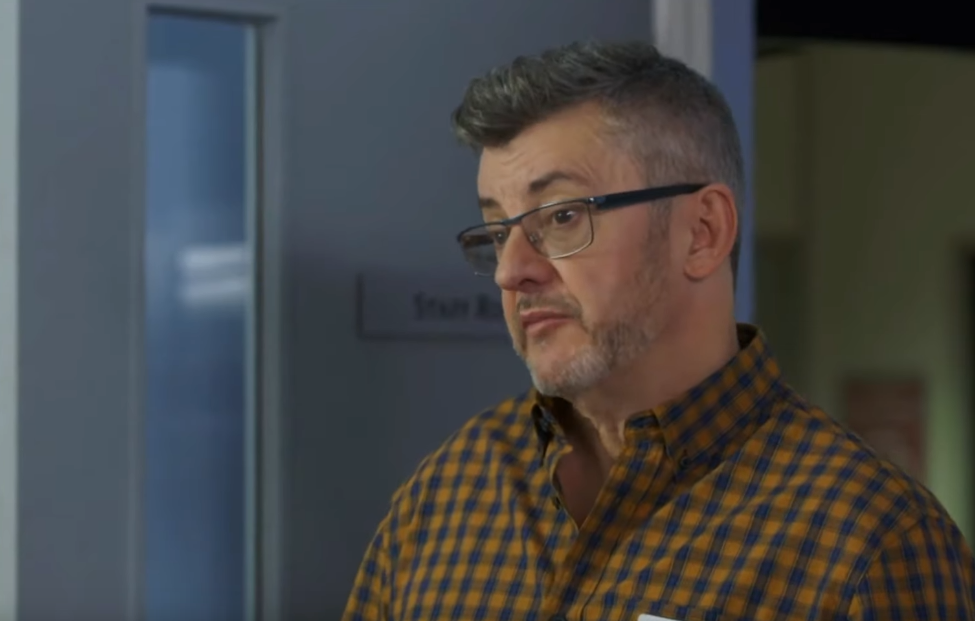
Now, as will be abundantly clear from this update, I’ve barely ever watched an episode of Doctors. However, what has become clear to me is that the creative team behind it aren’t afraid not to try something thrillingly different from time to time. The most obvious example of this would be superbly titled episode “The Joe Pasquale Problem“, which involved a patient seeing everyone as Joe Pasquale (special guest for that episode: Joe Pasq… oh, you’ve guessed).
Better still, an episode airing on the telltale date of 31 October 2014 saw character Al “forced to confront his scepticism of the supernatural when he finds a whistle with mysterious powers”. Or, if you prefer, an episode of a daytime soap opera was used as an excuse to put on a production of M R James’ 1904 ghost story Oh, Whistle, and I’ll Come to You, My Lad. You don’t get that with Emmerdale, do you?
That’s the only episode of Doctors I’ve ever watched, and not going to lie – it was great. The modest budget of a soap episode really helped it capture at least a soupçon of the 1970s aesthetic of the original A Ghost Story for Christmas, which is handy as Jonathan Miller’s 1968 version of the same was a decidedly different beast from the annual anthologies it begat. That Doctors episode is on DailyMotion if you fancy seeing it. And so are plenty more, if you like the sound of the series and would like to catch up.
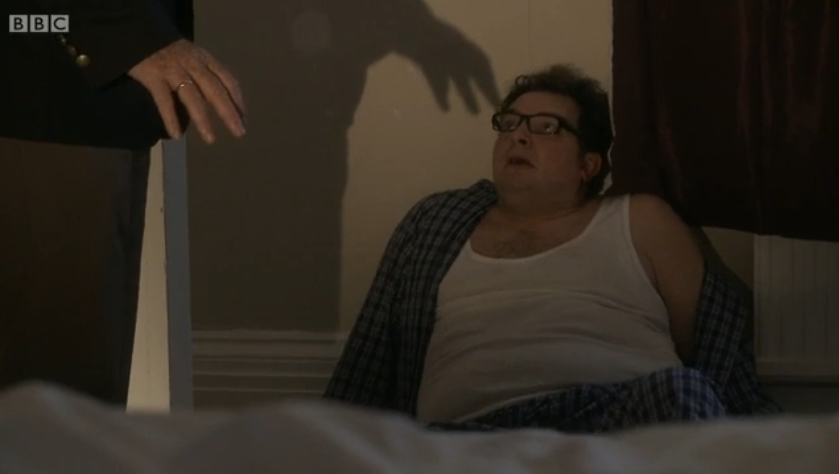
(By the time you finish that, I might have the next entry on the list written.)
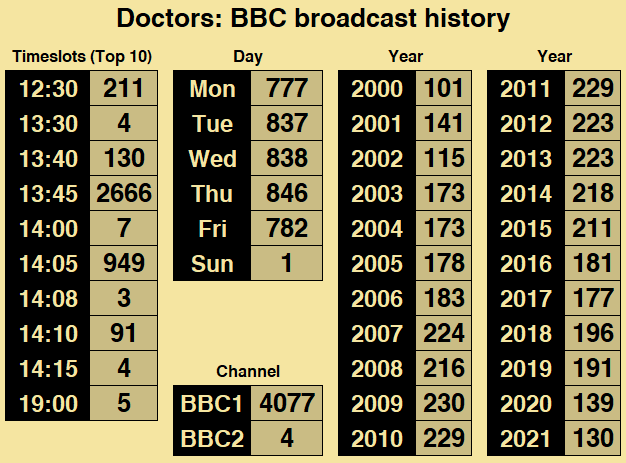
That’s another one in the bag, which isn’t a literal bag. More ‘soon’, if I get out the habit of spending an hour researching something for the sake of a single sentence about something not really connected to the programme I’m meant to be talking about.
-
Silenza: Ne Televisione (The 100 Most-Broadcast BBC Programmes Of All Time, 18 and 17)
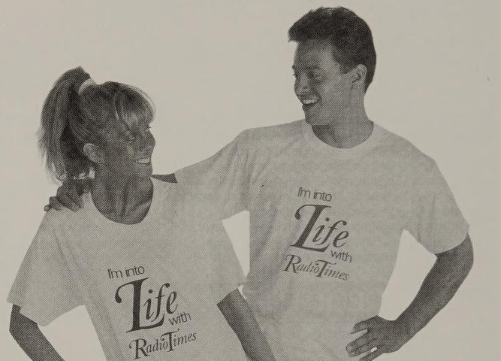
On with this list!
18: The ONE Show
(Shown 3400 times, 2006-2021)
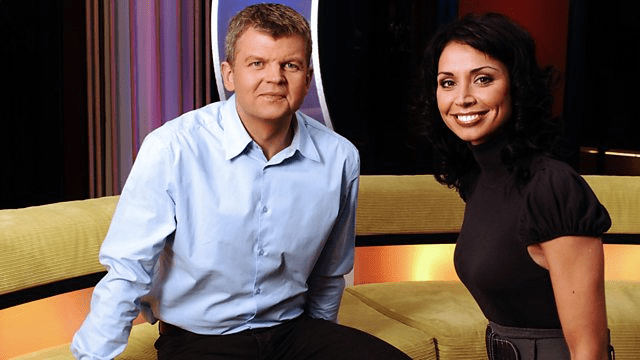
Apparently, ‘ONE’ is capitalised, despite the title being all lower-case in the title sequence. What’s the deal with that?
There are some TV reboots that will never, ever be a success until – against all reasonable logic – they just are. When the BBC initially announced their big new Saturday night Light Entertainment extravaganza was going to be a reboot of sleepy old Come Dancing, many scoffed. And with good cause. Throwing a few newsreaders or athletes into a fusty old format like that wouldn’t be a success! Oh. It was. A huge success.
Similarly, when the announcement was made that the BBC were going to blow the dust off Nationwide, plonk Someone Off EastEnders and A Man Off The Football onto the presenting couch and spend four weeks in 2006 waiting to see if anyone would tune in, the reaction was similar. It was even airing at the distinctly 1976 time of 6.55pm each weekday (seemingly done so anchors of the preceding regional news bulletin could throw straight to it). It wasn’t the 1970s any more, you idiots! We’ve all got Motorola RAZR phones now, and now knows that other space-age things are just over the horizon? This is the future!

The Future (2006 Edition). Luckily for the BBC, the bigwigs weren’t listening to idiots like, erm, me. It didn’t hurt that that particular Man Off The Football happened to be Adrian Chiles, whose TV stock was high off the back of Match of the Day 2 and the BBC’s World Cup coverage a couple of years earlier, his particular brand of black country bravura proving a hit with viewers. His initial co-host, actor, presenter and founding Loose Woman Nadia Sawalha was seen as a similarly safe pair of hands. But surely the TV landscape had moved on from such a format?
There was a sense of neatness to what BBC One were doing. ITV had a nicely stripped and stranded schedule each evening – Local and National news from 6pm, Emmerdale at 7pm, and (for three nights each week at the time) Corrie at 7.30pm. In contrast, BBC One had a much more mixed bag at 7pm each evening. Aside from The ONE Show in 2006, there had been 26 different programmes airing on weeknights at or around 7pm – some solid (Question of Sport, Watchdog), some less so (Davina McCall’s short-lived chat show, Davina). Having something settled in that slot would be more likely to attract a loyal audience who, it was hoped, might just stick with BBC One for the evening.
Of the available options, a magazine show made the most sense. There was no way the Beeb were going to try another soap in that slot (cost aside, the spectre of Eldorado still haunted the BBC boardroom), the flop that was Davina suggested a Wogan-style chat show wasn’t the safe option it once was, and game shows were for earlier in the evening. Nationwide reboot everyone? Nationwide reboot. It couldn’t fail.
Even with a title sequence and theme that seem all kinds of wrong to modern eyes. And ears. Still, that answers the question about why ONE is in all caps. No, seriously – it couldn’t fail. In the initial four-week run, critics were not kind. “We can look forward to a future without this patronising pile of TV excrement” quipped the Mirror’s Kevin O’Sullivan, while former Nationwide producer David Hanington wrote to the Guardian to dismiss the programme as “a load of predictable, pedestrian tat”. However, the ratings were solid enough, usually between three and four million per night, though it was another factor that ensured The ONE Show would return.
The programme had been the brainchild of BBC One controller Peter Fincham, who’d only recently been responsible for another 7pm disaster (the aforementioned Davina). Throwing a bunch of time and money a second failed spoiler for Emmerdale would make for some pretty bad optics. And so The ONE Show would return a year later, with a full run beginning in July 2007.
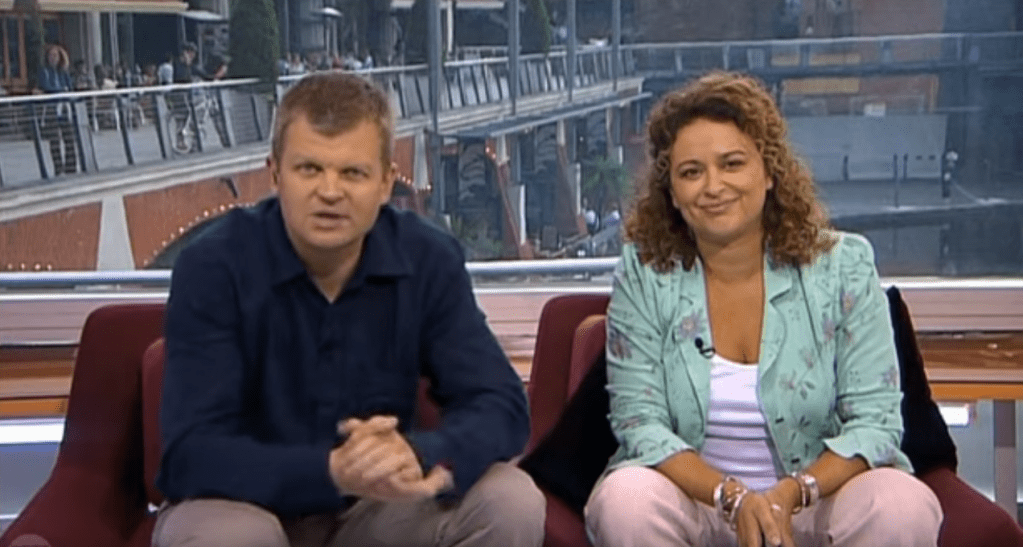
And it would no longer look like it’s being beamed straight from a retail park. Now it was back for a long haul, scales of economy meant production values could be boosted, and the programme was relocated from regional-content-ticking Birmingham to where-the-stars-are London. Breakout ‘star’ of the programme Adrian Chiles became focal point of the series, with Myleene Klass replacing Nadia Sawalha alongside him. From there, the series became the TV fixture we’d all know and sometimes maybe even watch (if it’s only one of the new rubbish Simpsons episodes on Sky One).
There have been bumps along the way. Some of them were especially rocky, like Hardeep Singh Kohli and Carol Thatcher each being dismissed from the show for acts of arseholery, for example. Some were a little more easier for the ONE Show axis to withstand. For example, after a few months on the chair, Klass left on maternity leave, and in came new co-host Christine Bleakley (later Lampard). The on-screen chemistry between Bleakley and Chiles was a winner, and the programme grew in popularity. Somewhere, in ITV’s gothic castle looming over the South Bank, an underling was frantically taking notes.
Another suspension-crunching bump came along in 2010, with the announcement that Friday episodes would be boosted to a full hour… but that those episodes would use Chris Evans as host. Yet another doomed attempt to cram that mid-90s TFI Friday magic into the wrong TV bottle, and which only turned Adrian Chiles against the show, subsequently announcing his departure. In came a new host, 8 Out Of 10 Cats team captain Jason Manford. By the time Manford’s tenure began, Bleakley also departed, in order to team up with Chiles on ITV’s rebooted breakfast show Daybreak (spoiler: it didn’t work out well). In her place came S4C’s Alex Jones, who was set to be the show’s sole five-day host – Manford appearing on Monday to Thursday, and Evans each Friday. All nicely settled now. Good.
For a few months, anyway.
Come November, a tabloid scandal did for Jason Manford’s stint on the series, and in came a series of guest presenters, including Alexander Armstrong, Matt Allwright and Matt “Prime Minister, How Do You Sleep At Night?” Baker. The following year, Matt Baker was appointed perma-host, albeit with guest presenters taking the hotseat each Friday following the departure of Evans.
Let’s not forget this golden moment, either. From that point, things have been a bit more settled for the series. Matt Baker departed (for sensible non-scandal reasons) in December 2019, with more guest hosts initially filling in alongside Alex Jones. April 2021 saw Ronan Keating and ex-England ace Jermaine Jenas appointed as regular co-presenters, where they remain to this very day. With Lauren Laverne also now part of the regular host line-up, the ONE Show, erm, shows no sign of stopping any time soon.
Indeed, The ONE Show even once appeared in cinemas around the world. Well, sort of. The opening scenes of 2010 Jonah Hill/Russell Brand offering Get Him To The Greek included the familiar ONE Show opening titles to the programme as part of on on-location interview with Brand’s wayward rocker Aldous Snow. Might not sound like much, but it’s pretty much the most interesting thing about that film.
Tied in first place with the “I’m not saying I’m Jesus, that’s for others to say” joke stolen from Richard Herring, in fact. You only need to watch the first five minutes of this film, basically. [UPDATE 8pm 06/06/23: With thanks to George Stevens for asking on Twitter about two episodes showing as broadcast on a Saturday and Sunday, I’ve now corrected the episode count. One had been a mislabelled episode of daytime spin-off The One Show: Best of Britain airing on a Sunday, one had been some rogue data that had crept into my database. Fixed ep count above, and fixed table below.]
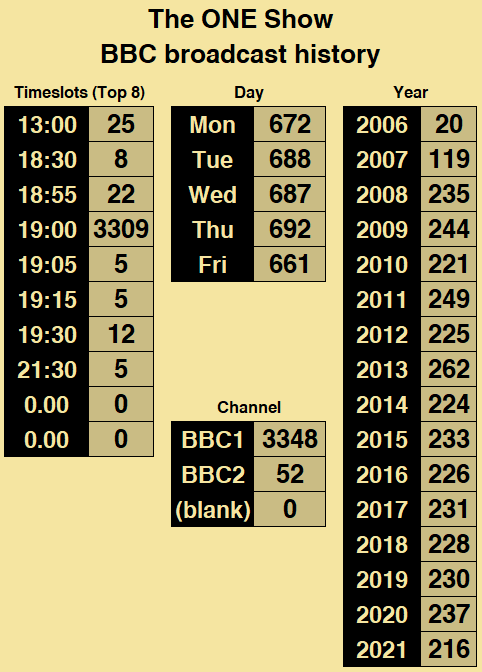
17: Songs of Praise
(Shown 3429 times, 1961-2021)
There aren’t too many British television institutions that started being broadcast solely to Wales. SuperTed, Fireman Sam, the few months in 1994 where BBC2 broadcast Pobol Y Cwm in an afternoon slot (we all remember the Radio Times’ boast that “the Deri Arms could become as famous as the Vic and the Woolpack”). Admittedly, quite a drop-off between those last two*.
(*Side point: there’s such a paucity of British sketch comedy on TV these days, were it still a category in the British Comedy Awards, S4C preschool sketchcom Cacamwnci would win a nomination by default.)
And yet, the Land of Song is the place closely tied to the (eventual) rise of religious programming on British television. Indeed, the title Songs of Praise dates back as far as 96 years into the past thanks to early BBC radio service 5WA Cardiff. Songs of Praise 1.0 first appeared on 2 May 1926 and featured The Station Orchestra (conducted by Warwick Braithwaite), The Choir of the Cardiff Musical Society and soprano Dorothy Silk.
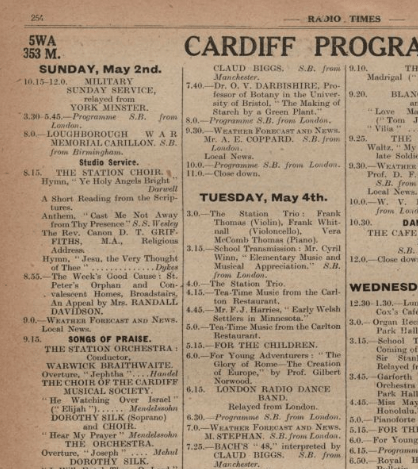
Decades later, a format not dissimilar to Songs of Praise would appear on the nascent BBC Wales television service, going out under the name Dechrau Canu, Dechrau Canmol (“Start Singing, Start Praising”) from New Year’s Day 1961, with a half-hour of community hymn singing from Swansea.
However, there’s a bit of a journey between those two points.
It took a long time to get there, in part thanks to the very concept of television on a Sunday having been initially forbidden by the Television Advisory Committee way back in 1936.
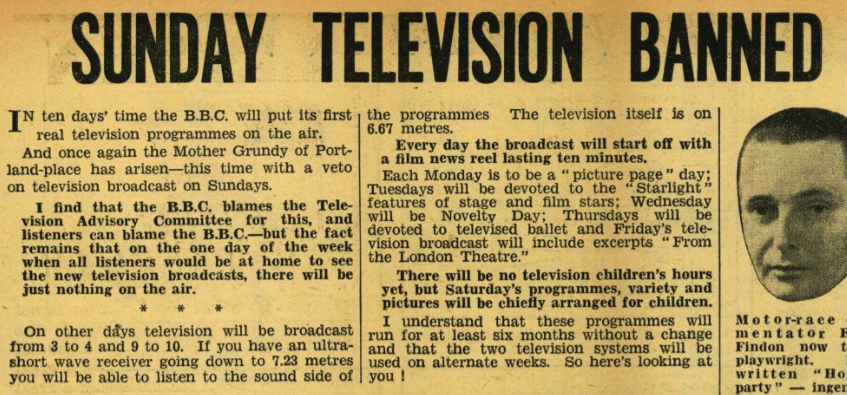
Daily Mirror, Fri 23 Oct 1936. The blanket ban wasn’t to last for long, however. As the Daily Mirror pointed out in the run-up to the launch of regular BBC-tv programming, it was a bit much that anyone who’d worked hard all week to pay for a television set wouldn’t be able to watch the blessed thing on their day of rest. And so, from 1938, Sunday broadcasting trickled onto the Television Service for the first time. That said, the hours were strictly rationed, so as not to tempt churchgoers away from Sunday services.
As far as I can find, Sunday programming on the Television Service back then was surprisingly secular, with everything from puppetry to classical music in place, but save for the occasional teleplay with a religious-sounding name (such as James Bridle’s Tobias and the Angel, or George Bernard Shaw’s Saint Joan) television seemed very wary of muscling in on the territory of organised religion.
For the most part, radio was the home of religion on the BBC, faith-based programming on television usually being restricted to short televised sermons on Christmas Day, or carol concerts in December. It had been decreed that religion was something best delivered away from the gogglebox, and as such, a block on all television programming on early Sunday evenings would remain in place until the 1950s.
By the early 1950s, religion would become a more commonplace sight on British television. An expansion in Sunday broadcasting hours in 1953 allowed regular Sunday morning broadcasting on the BBC Television Service, and with it the first episode of the long-running Morning Service, the first edition coming from the Moseley Road Methodist Church, Birmingham. For the first time, those unable to travel to church could attend a Sunday service from their own home. In 1955, ITV arrived, turning British television into a duopoly, and the nascent network soon started broadcasting regional sermons from each franchise, along with religious documentaries like About Religion or Living Your Life each Sunday evening.
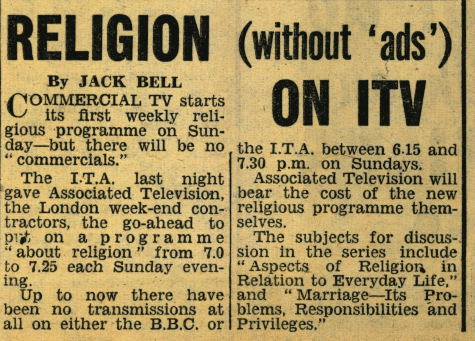
Daily Mirror, 3 Jan 1956 But there was still a hole in the Sunday schedules. Save for a few occasions where the BBC had broadcast an Evening Service, the hours between 6pm and 7pm (generally) saw television broadcasts blacked out, to encourage Britons to get off their armchairs and onto pews. This presented a problem for ITV, who noticed that much of the audience that switched off at 6pm wasn’t tuning back in at 7pm. As a result, the broadcaster lobbied for the removal of the ban, on the proviso that the slot be filled with religious programming, broadcast without commercial breaks.
It took a while before ITV was allowed to fully employ those lost hours, but by 9 March 1958, the 6.15pm break in Sunday broadcasting was finally broken with the first episode of Welsh language hymn compendium Land of Song, a rare network offering from TWW (where it went out under the original Cymraeg title Gwlad y Gan), going out one Sunday in four. It would take another week for the first English-language programme to appear. And so, on 16 March 1958, The Sunday Break broke onto the ITV network, built on the basis of being a televised youth club, featuring dancing, singing and bible readings.
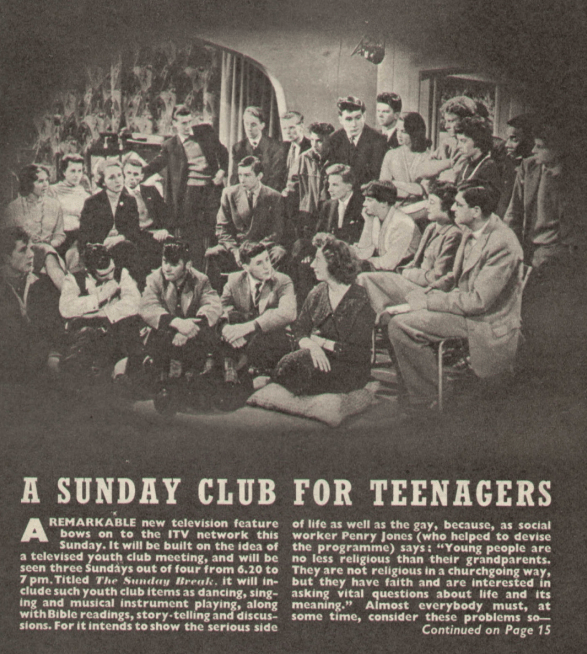
Back on the BBC, it took a while to land on a regular programme to fit that slot. For years at this point, special religious-based programming had been scheduled in that slot to fit in with particular occasions such as Harvest Festivals or Whit Sunday, but generally the hours between 6pm and 7pm on Sundays featured a summary of the weather and a closedown1. Even from 1958, the Corporation would generally offer ten-minute sermon series Sunday Special at 6.10pm before shutting up shop for the remainder of the hour. It took until October 1959 before, in what is fast becoming a running theme, another Welsh-language programme filled that particular gap (or at least most of it).
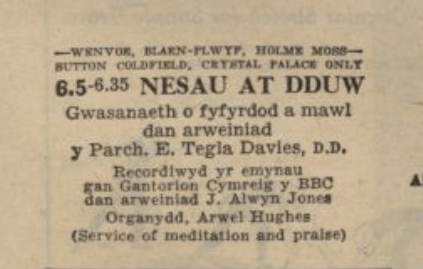
Even then, this particular service of meditation and praise only aired on a monthly basis. For the other three Sundays per month, it was back to weather and 45 minutes of nowt from the 6pm hour.
This state of affairs continued until 1 October 1961, when a new programme arrived at 6.15pm, and which would become a fixture on British television. That programme was (deep breath) Songs of Praise (“Finally!” – every single person reading this).
The genesis for Songs of Praise came about due to BBC assistant controller Donald Baverstock happening across a recording of hymn-singing in Welsh. Employing the same producer instincts that had previously led him to devising long-running current affairs series Tonight, Baverstock felt it was something that could appeal to the wider UK audience. It also helped that the BBC had accumulated large outside-broadcast units for the purpose of beaming live sport onto Grandstand each Saturday afternoon, but which had little to do each Sunday.
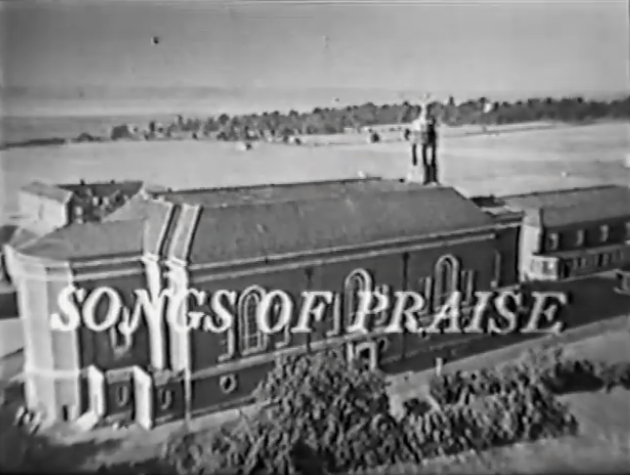
Surprisingly, it seems the main initial naysayers to this new programme were the BBC’s Religious Broadcasting department. Their flagship offering was Meeting Point (726 episodes, 1956-1968), which covered religion around the world, offered serious discussions on the topic and included documentary films. A weekly programme offering people having a good old sing-song was considered to be a little flippant for such a serious topic. However, an episode of Meeting Point broadcast from BBC Wales’ studio, devoted to choirs singing a series of requested hymns, had been one of the programme’s most popular episodes.
Ultimately, the threat of handing Songs of Praise to Light Entertainment made the Religious Broadcasting department come around to the idea, albeit reluctantly.
It was a format not dissimilar to the aforementioned Dechrau Canu, Dechrau Canmol, which had started in a mid-afternoon slot ten months earlier. And, appropriately enough, the very first (television) Songs of Praise came from the Tabernacle Baptist Chapel in Cardiff, the very same city that provided a venue for the very first edition of (radio) Songs of Praise back in 1926. To cap it all, that first edition was even introduced by Rev Dr Gwilym ap Robert, host of… Dechrau Canu, Dechrau Canmol.
Luckily for Donald Baverstock, the gamble paid off. Songs of Praise quickly became the British TV’s most-watched religious programme. From there, the format was a study and unwavering one: an hour of songs, sermons and readings, coming each week from a different place of worship, ensuring a packed house for each venue (and a memorable Not the Nine O’Clock News sketch a couple of decades later).
By the 1970s, ITV had made an effort to add some glam to their God Slot offering, with Stars on Sunday attracting a variety of well-known names to perform appropriately religious readings and songs. BBC1 however remained resolutely loyal to their trusted Songs of Praise format.
Following 1977’s further relaxation in the rules governing which bits of the Sunday schedule were allocated to faith-based programming, BBC1’s Sunday evening schedule became even more predictable. Songs of Praise would run from 6.40-7.15pm, followed by something decidedly different. Initially, there were episodes of play series Jubilee (“reflecting life in the last 25 years”), later followed in that 7.15 slot by The Onedin Line, Poldark and All Creatures Great and Small. By the 1980s, family-friendly sitcoms would occupy the post-Songs slot, with Banana Sandwiches and Tinned Fruit stalwarts Open All Hours, Hi-De-Hi! and To The Manor Born making themselves at home. Later on, a generation of mid-80s kids followed their Sunday night bath with episodes of Ever Decreasing Circles, Last of the Summer Wine and Sorry!. Perhaps the most pleasing offering of all come in early 1986, when 7.15pm became home to repeats of Hancock’s Half-Hour.
Come January 1993, a change to the restrictions on religious programming meant Songs of Praise moved from that rigid 6.40pm slot, and the slide towards being broadcast earlier in the day began. Initially, Songs slipped back a quarter-hour to 6.25pm, meaning subsequent programmes could begin at the neater time of 7pm. January 1996 saw it nudged back to 6.10pm (occasionally 5.55pm), then to 5.40pm a couple of years later, and from 2010 around the 4.30pm mark. Currently airing in an early afternoon slot, Songs of Praise picks up an audience much more modest that in its 1970s heyday, with figures at around a loyal million or so.
In any case, whether you’re a person of faith or otherwise (I’m classed as ‘otherwise’, so I’ve learned a lot from researching this), there’s something comforting about knowing it’s a topic that the BBC is still keen to cover. Indeed, religious programming is a genre that wouldn’t exist on mainstream telly at all these days were it not for the BBC, unless you’re willing to get into the more evangelical fare in the nosebleed section of Sky’s EPG.
No wonder so many people watch it religiously I’M NOT EVEN SORRY.
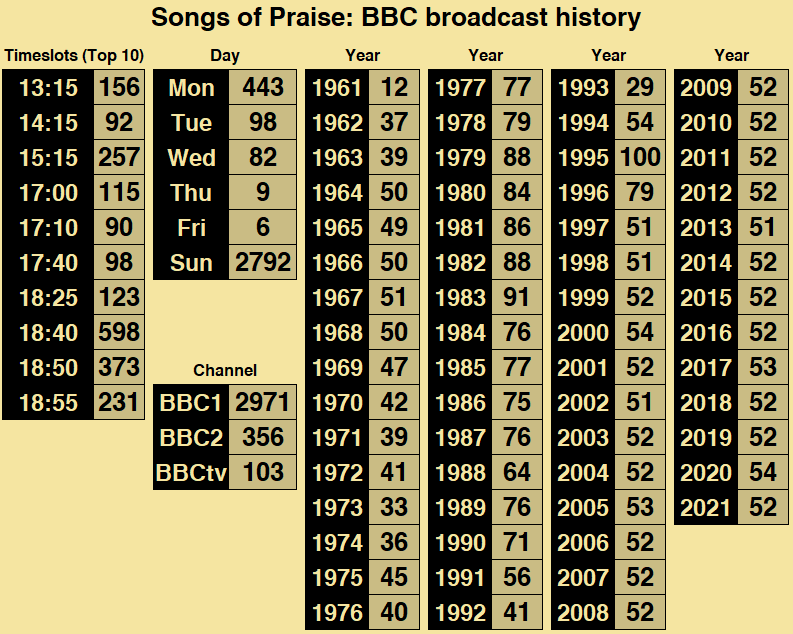
Another one down. More soon!
Footnotes
1It might not necessarily be a reference to this practice, but the fake TV listings guide for Chanel 9 in The Fast Show book include the following:
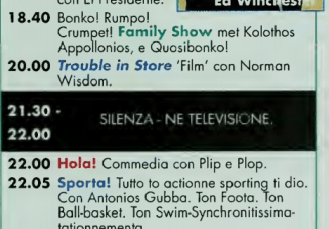
-
Mum’s Tape
It’s one of those moments that pretty much everyone prepares for mentally, possibly years or even decades in advance, yet hits you unexpectedly when it actually happens. Last week, that moment happened to me. My mum died.
Obviously, there’s no ‘best case scenario’ for such a life event. Even your mother gallantly sacrificing herself by coaxing a demented robot Hitler into a spacecraft’s air lock to thwart an Earth-destuction plot would hit you like a bastard. But in the case of me and my family, we pretty much knew that moment was coming for some time, even if we all hoped we were massively mistaken. That doesn’t make it any easier (no robot Hitlers were involved, either. Unless they were some bloody convincing disguises).
At the time of writing this, I don’t even think I’ve fully processed it yet. It’s something that keeps barging into my mind, a gut-kicking suffix to thoughts like “must give Mum a ring to tell her about… oh”. Something where little parcels of sadness occur via nondescript events, like how phoning the dentist pushes my last call to mum a notch down my phone’s ‘recently dialled numbers’ list. And, to keep this on topic for the blog, seeing stuff on telly I know she would’ve loved. BBC Two’s recent retrospective of Barry Humphries’ appearances on the Beeb is precisely the sort of thing I would’ve phoned her to make her aware of. That’s because one trait I was lucky enough to inherit from Mum was a general sense of taste when it comes to Things On The Telly.
Usually the de facto rule when it comes to a parent recommending a piece of popular culture to you is that it’s immediately befouled forever. Well, I can’t like *that* anymore. Tsk. But, my dear old mum was frequently right on the money when it came to films and TV that I might like. Which, considering she was more then forty years my senior and therefore from a generation very different to my own (plus, I was annoyingly keen to avoid liking things that would be obvious, because I’m annoying), is quite a feat.
For most of my childhood, my parents ran a working men’s club1 in a small village a few miles south of Wrexham. For the most parts, one parent would keep things ticking over behind the bar, while the other would be keeping me company in the adjoining house. On busier nights both would be required to operate the pumps, meaning that I was afforded free rein when it came to choosing my evening’s televiewing. They clearly understood that I was sensible enough to pick things at least semi-suitable for myself, and that I was thoughtful enough to cope with what I was watching. Apart from the time at the age of ten when I watched Threads on my own, but anyway.
It’s likely this played into my favour at school. As a largely quiet and introspective child, my knowledge of the previous night’s Absolutely, Blackeyes or, um, Life After George provided me with a veneer of respectability in the eyes of my peers. Having that cultural currency seemed to help me skitter up at least a couple of rungs on the social ladder, meaning I eventually escaped school with only a mild sense of depression and self-loathing. Success!
Here, I’ve picked out a handful of programmes recommended by my dear old Mum. Suffice to say, along with the following there were attempts (as any good parent would make) to get me to watch suitably improving fare like The Railway Children, but I’d say that if any children of the 1980s willingly dashed home to watch The Railway Children, I’ve certainly never met them. Instead, these are a few of the much better things Mum recommended to me.
Bedazzled (Channel Four, 23:15 Sat 5 Jan 1991)
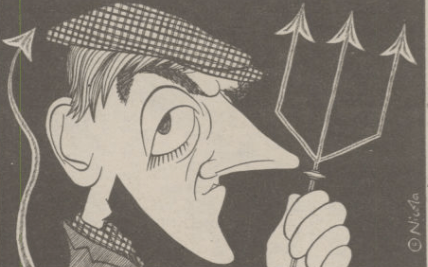
Now, it’s quite likely I’d never have stumbled over this myself, following as it did a four-and-three-quarter hour broadcast of Richard Wagner’s operatic epic Der Ring des Nibelungen: Siegfried2. Thanks to the recommendation of Mum, I stayed up way too late watching what would become one of my favourite ever films, with short order chef Dudley Moore lured into an eternal/infernal contract with the devil himself (aka George Spiggott, aka Peter Cook). To think, had I been born a decade later I might have been raised on the Liz Hurley remake. Brr.
Blackadder II (BBC1, 21:30 Thu 9 Jan 1986)
While my mum definitely had a penchant for historical drama series, I’d later find it a little surprising that she’d been so taken with the original The Black Adder that she’d enthusiastically recommend I stay up late to see the first episode of the sequel going out on original broadcast (Jim Broadbent voice: “What was she like?”). Especially so given that (at the time) it felt much more of an alternative outsider offering than the cosy TV classic it would later become, and I was only 11 years old at the time (and it was a school night). You already know that this was definitely the correct decision on her part.
Duel (BBC2, 20:30 Mon 14 Sep 1992)
Not the first film you’d associate Steven Spielberg with – not least as it was made for TV rather than cinema – but this lo-fi affair is every bit as gripping as his later work. And that was definitely the case for my parents when this was first broadcast on BBC2 in October 1975, when their ramshackle rental set decided to go ‘ping’ and suddenly compress the picture into a postage stamp-sized square in the centre of the screen thirty minutes from the end. Undeterred, my Mum and Dad were so determined to see what would happen to Dennis Weaver’s traumatised traveller, they watched the remaining half-hour perched inches from the screen.
Luckily for me, technology had progressed enough by 1992 that I was able to watch the entire thriller without any such concern. And make no mistake, it’s a great film, and one all the better for going into it knowing nothing other than “watch this, you’ll love it”.
The end of analogue television from the Winter Hill transmitter (BBC1, ITV, C4 & Five, Wed 2 Dec 2009)

If ever proof were needed that The Way I Am is down to genetics rather than any learned behaviour, during a phone call from my mum on 3 December 2009, my mum mentioned having stayed up late to see if they’d do anything interesting to mark the shutting down of the local analogue transmitter mast. They didn’t, it just crashed to static in the middle of overnight News 24 coverage. In a perfectly-timed piece of parent-child synchronicity, just days earlier I’d spent an evening writing a lengthy blog post on the exact same topic3 when it had happened to BBC2 the previous month.
Hancock’s Half Hour (BBC1, 19:15 Sun 23 Feb 1986)
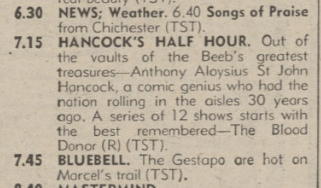
Like many kids of my particular vintage, Old Comedy4 was a large part of my television landscape. I was just old enough to experience (and adore) the tail end of Morecambe and Wise’s Thames years, so was delighted when repeats of their BBC shows began in the mid-1980s. Similarly so with repeats of Some Mothers Do ‘Ave ‘Em, Porridge and Dad’s Army. However, perhaps still desperately trying to recover from the expense of setting up colour TV in the first place, any archive programming in black and white was usually the sole preserve of the schedule’s fringes. The likes of The Phil Silvers Show or Leon Erroll would be tucked away in at Too Late O’Clock or Way Too Early O’Clock in the morning, meaning that aside from slapstick compilations of Harold Lloyd or old films (both usually restricted to the niche confines of BBC2), the sensible viewing hours were populated entirely by colour programming.
That changed in 1986, with BBC1’s first primetime foray into black and white archive programming for a number of years, and the last time the channel would ever do so. Following on from a well received Omnibus special on the work of Tony Hancock the previous year, and bolstered by BBC Enterprises’ desire to sell VHS cassettes of Hancock’s Half Hour, the lad himself made a triumphant return to Sunday evenings, with the The Blood Donor (pedant mode: ‘Hancock’ rather than ‘Hancock’s Half Hour’ by that stage, of course) attracting over 15 million viewers. One of whom was me, following an assurance from Mum that I’d love it. Catchphrase on ITV didn’t stand a chance, and a lifelong obsession with events at 23 Railway Cuttings had begun.
People Just Do Nothing (BBC Three, 00:00 Wed 24 Jun 2015)
Even in their later years, the viewing habits of my parents would often surprise me, whether it was Dad using catchphrases from Lee & Herring’s Festival of Fun in everyday conversation (not Fist of Fun, the Just For Laughs coverage they did for Paramount that about 376 people watched), or Mum suddenly displaying a hitherto unannounced knowledge of Hammer Horror films during a BBC2 season of them in the late 1980s.
A peak example of this came as my wife went into both the early stages of labour and hospital with our first child in 2015. The hospital selfishly not wanting me cluttering up their prenatal ward overnight, I left at midnight but needed to get back there as soon as I could the following morning. Living a 45-minute drive from the hospital, I needed to find somewhere closer to crash out for a few hours, and luckily my parents lived just a few miles from there. On arriving at their house shortly past midnight, they were both still awake (they were never morning people), and enjoying the latest antics from the Kurupt FM massive. Because of course they were.
Russell Coight’s All Aussie Adventures (DVD, 2002)
Perhaps helped by a large portion of our wider family (plus my eldest sister) having emigrated to the antipodes, Australian programmes were something that was always given a fair go in our house. There were the obvious ones (you didn’t need an affinity with Australasia to enjoy soaps like Neighbours or Prisoner Cell Block H, after all), ones that were checked out but not really stuck with (The Flying Doctor – bit boring, Let The Blood Run Free – too pleased with itself) and… oh, that was about all that was on offer. And so, following a visit to my Melbourne-based sister in the early 2000s, my parents brought home a (thankfully region zero) DVD detailing the exploits of a survival and wildlife expert whose haplessness is matched only by his tenacity. It’s a premise – main character shows off a survival tip which subsequently goes wrong – that shouldn’t really work beyond a series of sketches in theory, yet comedian and actor Glenn Robbins gives such a winsome performance as Russell Coight that each half-hour coasts by breezily.
Mark up another triumphant recommendation by Mum. (She also made a point of recommending The Micallef P(r)ogram(me) to me, but I was already aware of that one. Good eye, though.)

In summary: Miss you, Mum. Whether it’s about enjoyment of television or just my general outlook on life, you helped me become the person I am (all the good bits, anyway), and you’ll always have a place of the hearts of people lucky enough to have known you.
—
Footnotes
1One that would go on to see its name adopted by a moderately successful local indie band.
2Ah, old Channel Four. I might not have watched things like that, but by Darwin’s soupy beard television was a lot more interesting that things like that could dominate an entire Saturday night schedule on a main channel.
3Yes, I do really regret those references to Stuart Hall.
4In these instances, ‘Old Comedy’ being stuff from about fifteen years earlier. So, the same as a kid from 2023 watching The Peter Serafinowicz Show.
-
Wake Up Mario! It’s the 100 Most-Broadcast BBC Programmes Of All Time (20 and 19)

Here we go. Top twenty. Big leagues. Every programme from this point on an absolute titan of British broadcasting. Starting with…
20: Working Lunch
(Shown 3296 times, 1994-2010)
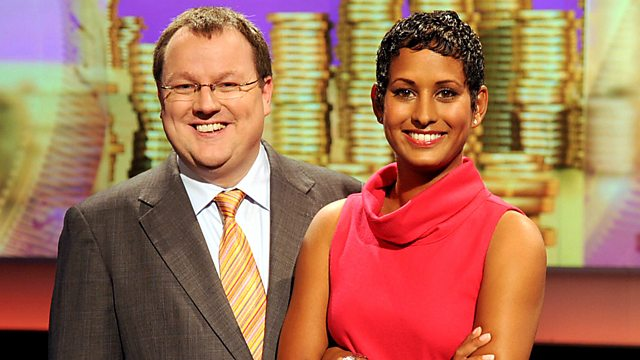
I’m willing to admit, this is a bit of a surprise.
For a programme that would go on to become the 20th most-broadcast programme in the BBC’s history (under the conditions laid out for the purposes of this list), it’s probably fair to say it was a little undersold in the Radio Times for the week of Working Lunch’s first-ever broadcast on Monday 19 September 1994. “A daily look at business and how it affects us.” That’s it. Publish. Done. To be fair, they did have the write-up for ‘1:00pm History File: The World Since 1945’ to crack on with. That one probably needed a bit more research.
So, that tiny informational morsel aside, what was Working Lunch? A cookery show? A documentary exploring the catering industry? William S. Burroughs’ surprisingly tame follow-up to Naked Lunch? Nope, it was – and I appreciate this makes it sounds much worse than it is – a weekdaily topical programme covering business, consumer and personal finance news, the twist being that it was all done in a relatably accessible manner.
Oh dear? No, dear. It certainly helped that the programme was captained by Adam Shaw and early-era Adrian Chiles (coming off the back of hosting Radio 4’s Financial World Tonight), who offered a clear contrast to the Beeb’s other business output, such as World Business Report or Business Edition. This was much a looser affair, where every day is Casual Friday and there aren’t many meetings and someone has brought cakes from home. Look, here’s a bit where Adrian Chiles is playing Super Mario 64.

GET BACK TO WORK, CHILES. Despite it having been originally planned as a vehicle for Jill Dando and George Alagiah, Chiles was considered to have been a boon for the new series, his Black Country burr certainly a lot more welcoming than what you’d expect from your average BBC financial programme. Aside from that, Working Lunch was the first live programme on the Beeb to rely on a virtual set, which certainly helped disguise the fact it was being recorded in the pokiest studio the News and Current Affairs department had to offer. While BBC News had been using a virtual set for opening and closing long shots at the time, close-ups and mid-shots employed an actual set with real furniture. With ‘Lunch, not even the desks were real. Heck, if mid-90s CGI had been up to the task, one wonders if we’d still have had the meatspace version of Adrian Chiles.
One illustrative if surprising signifier of how well-received the programme was become happened in February 1996. Chiles found himself at Heathrow Airport in the midst of screaming teenagers. Not there for him, of course (let’s not go crazy here), they were present as 90s popmonger Robbie Williams was due to arrive at the airport en route to some foreign clime. After working his way through the crowd and onto an escalator toward the departure lounge, the West Bromwich wag was tapped on the shoulder by none other than Williams himself, who took the opportunity to express his enjoyment of Working Lunch. See, he’s not all bad. That almost makes up for Swing When You’re Winning. Almost.
Those early years even offered up a fun little title sequence, where a goldfish finds some gold coins and tries to put them in a bank, only to get chased away by a shark. Granted, it didn’t hold a candle to the Westminster crocodile of On The Record, but this was only weekday daytime BBC2, expectations should be lowered accordingly.
That was replaced a few years later by an even more comic opening sequence to mark the shift to widescreen programming in 1998, with the goldfish and shark careering around a tremendously 90s CGI set. This is certainly not a scene you’d expect from the titles to a daily business news roundup.

For anyone wanting to know, the CGI goldfish is called Lloyd. And for anyone who wants to feel a bit sad, the real Lloyd died the week this new title sequence aired for the first time. Until that point however, he’d lived in a fishtank made out of a vintage 50s television, thereby making him Britain’s Coolest Goldfish. So, a life well-lived.

Bye, Lloyd. In later life, Declan Curry and future Breakfast host Naga Munchetty would join the series, but despite a revamp in 2008 that threw in things like a ‘Tech Shed’ to test out the latest gadgets, it seems the strand just wasn’t the cult hit it once was, and in 2010 the programme aired for the last time.
To be fair, if an episode where Terry Wogan gives a web surfing masterclass isn’t bringing in the viewers, the jig is probably up.

19: Panorama
(Shown 3346 times, 1953-2021)
What am I supposed to tell the Panorama audience?

Let the strident tones of Francis Lai’s Aujourd’hui C’est Toi soundtrack a spinning globe, and let a nation of kids ask if they can put another channel on.
(Aside: of course, the best use of the Panorama title sequence came in Dave Allen’s 1990 stand-up series for BBC1, which came with no sketches, no opening theme, no title sequence or even anything showing the programme’s title. That was apart from episode three of the series, which used the opening titles for Panorama, with Allen claiming “we can’t afford any titles of our own, so we borrowed some”.)
At the time of writing (the year 2023, which makes it increasingly embarrassing this list only covers up to the end of 2021, but shush), Panorama is but months away from clocking up seventy years on British screens, the first ever episode arriving in November 1953. And, while much of Panorama has been of the cracker-dry variety, the Radio Times box-out for that first ever episode really goes gangbusters on the whole austerity aesthetic, with original host (or ‘guide’) Patrick Murphy staring you out in a way that would make you leave a pub immediately.

“I’m going home. Tap on the window when I’m in the car park if he starts trying to follow me, so I can start running.” Originally airing on a fortnightly basis, those original reflections of the contemporary scene did at least include a tantalising “telecartoon of passing events”, which is surely now making you think of The Day Today’s Brant. In short, those very early years were a markedly different beast from the Panorama the nation would become used to in later years, being more of a magazine programme looking at the arts as much as current affairs, but it would soon evolve. In the case of the host, evolve very quickly, with initial host Patrick Murphy replaced in the second edition by Max Robertson.
For the first couple of years, the ‘Rama initially aired every other Wednesday evening, usually between 9pm and 10pm, but from September 1955 changes were afoot. The programme moved to Monday evenings, it moved to an earlier slot around 8pm, and it would become a weekly programme. On top of that, the programme’s tagline was changed to “Television’s Window on the World”. Indeed, the changes were outlined in an accompanying Radio Times article, which promised to comment on world affairs as much as home-based happenings, with co-producer Michael Peacock promising everything from “ships, jazz, people, ploughing, theatre, industry, art, books, buildings or bulldozers”.

To try and take that range of topics, Panorama was afforded access to all the BBC’s resources: outside broadcast cameras, film camera teams, Roving Eye cameras and use of the shiny new Eurovision link to provide live broadcasts from across Europe. While new host Richard Dimbleby would be keeping track of everything from the studio, Max Robertson wasn’t cast aside, but rather given a roving assignment with the outside units, while Malcolm Muggeridge was afforded a similarly roving remit as ‘entrepreneur for theatre, films, music and the arts’.
The choice of Dimbleby Sr as Panorama’s new guide proved to be an inspired one, pretty much forging a template for the current affairs presenter, offering a perfect blend of gravitas, insight, interview skills and background research. Little wonder that he would be chosen to helm BBC TV’s first ever foray into live overnight general election coverage.
It was no huge surprise that Richard Dimbleby had proved so capable in the big Panorama chair. Having initially joined the BBC in 1936, he’d become the Corporation’s first war correspondent, going on to report from the battle of El Alamein, the D-Day landings and the liberation of the Bergen-Belsen concentration camp – Dimbleby threatening to resign over the latter due to the BBC initially declining to broadcast his despatch.
Back on Civvy Street, Dimbleby was the BBC’s choice on commentating on events such as the 1953 Coronation, the first live television broadcast from the Soviet Union and the funeral of George VI. All that experience was put to good use behind the Panorama desk, conducting probing but well-mannered interviews with key figures of the day, plus putting his reporting skills to good use by helming live on-the-spot reports from the UK and overseas. Plus, in a skill that proved invariably useful given the propensity of mid-20th century technology to misbehave, he was more than adept at improvising during problems in running pre-recorded items or live links.

That’s not to say Dimbleby didn’t also have a lighter side. This was most famously displayed on the first of April 1957, when he provided commentary to the infamous spaghetti-harvest hoax. So convincing was his delivery of the report, it’s said that even Director-General Ian Jacob was fooled by the pastariffic prank. All good things, however, must come to an end, and a tragically untimely end occurred in 1965, when Richard Dimbleby died at just 52. In his stead came a series of rotating anchors behind the Panorama desk, including Robin Day, Charles Wheeler and Leonard Parkin, but it would be Richard’s son David that would go on to have the longest association with the Panorama desk.
Indeed, it was at that very desk where the most memorable unplanned moment in Panorama’s long history would occur. With the studio-based portion of the programme broadcast live, in the event of developing news, the anchor’s role at this stage was largely to introduce each filmed report. It also meant there’d be someone to throw back to if there were ever a technical problem with a filmed report, as could sometimes be the case in that pre-digital era of television, but there’s normally be little need to panic in such a situation. There’d be a backup filmed report on standby, ready to run. Just in case.
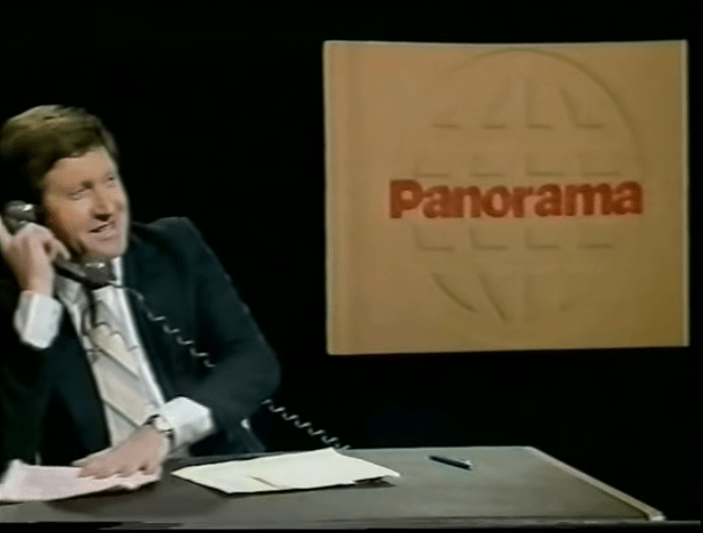
Except for on 8 November 1976, when a there was a problem with film covering events in Rhodesia. Not to worry, thought the elder Dimbleboy (©Bernard Levin), onto the next filmed report looking at the IMF. Except, as a voice on the other end of the Dimblephone informed the presenter, the film on the IMF wasn’t available either. All there was to broadcast to millions of homes was live footage of Dave, the Panorama logo and an otherwise minimalist set. It wasn’t even as if he read out the script of the commentary from the report on Rhodesia, as it didn’t have any commentary, and the situation covered in the film on the IMF was deemed too “complicated” to simply explain. And so, the stricken presenter was left to announce that everyone would just need to sit in silence until something happened. Luckily for our intrepid host, that something was the issue with the Rhodesian report being resolved, and it could now be shown. Suboptimally however, it started playing out before he could introduce it.
Stuff your Succession, THAT is watercooler television.
Of course, for a large chunk of its run, Panorama wasn’t the only heavyweight current affairs strand on British television. Granada’s similarly weighty World in Action began in January 1963 and would run for 35 years. Initially, both aired at different times on Monday evenings, Panorama at 8:25pm, World in Action at 10:30pm, making a mouth-watering evening for anyone really into windows on the world. However, within a few years, both programmes were somehow sharing a slot at 8pm on Monday evenings (starting around July 1967, with World in Action having just returned as ‘World in Action’ after a couple of years under the unpopular – if less borrowed from the National Film Board of Canada – rebranding ‘The World Tonight’ and ‘The World Tomorrow’). Quite why this scheduling clash was suddenly the case is a bit of a mystery – a similar, if less Governmentally-sanctioned situation to God Slot programming going out on Sunday evenings? An admission that neither show would get large audiences unless there was more of the same on the other side? An attempt at encouraging some Whizzer and Chips rivalry? I’m not sure, but it certainly didn’t go unnoticed, and can’t have been popular with people who waited all week for some heavyweight reporting on current affairs before having to pick just one programme to watch.

World in Action arrived on British screens having been, in the words of former producer Gus MacDonald, ‘born brash’. That was an ethos the production team kept to, with early series editor Tim Hewat having declared viewers wouldn’t stick to a half-hour of current affairs unless grabbed by the lapels and “sturdily intimidated into staying with it”. It was an approach that worked, a determined effort to marry film-makers with facts and journalists with moving pictures, and took British film journalism in a new direction. While Panorama had the likes of Dimbleby or Day asking the questions, World in Action would see interviewees converse with unidentified off-screen interrogators, throwing the subject into sharper focus. Series producers soon understood that putting incriminating photographs or documents exposing wrongdoers on screen seldom make for compelling viewing, so instead reporters would use tactics such as posing as Rhodesian sanctions busters or Biafran arms dealers to capture hidden camera footage that would prove more visually arresting. A tactic that Panorama, inexorably tied to Auntie Beeb’s apron, would find hard to emulate.

Still, there was a tactic that Panorama could certainly employ to grab the attention of the audience: scare the living shit out of them. The programme had hardly been incident-free in the past – 1955 saw Christopher Mayhew take mescaline on camera and report on his experiences, though skittish management preventing the footage from airing at the time (it would later air as part of 1992 BBC2 theme night TV Hell, and lead to a fun series of sketches by Limmy). But with nuclear paranoia rising at a time when the threat of World War Three seemed an increasingly likely possibility (plus ca change, eh viewers?), 1980 saw arguably Panorama’s most controversial episode to date. If The Bomb Drops was an investigation fronted by Jeremy Paxman about what would actually happen if, well, the big one went up, along with the UK Government’s preparations for the public in such an event. A pretend spaghetti harvest it wasn’t.

Here is a house. Oops, wrong programme. A similar furore had erupted in 1979, with a film on the Carrickmore incident attracting accusations that the Panorama editorial team were a little too friendly with the IRA. In 1982, a Panorama report on the RSPCA led to complaints (and ultimately, Broadcasting Complaints Commission censure) over the programme’s tactics in covering the society, but it was January 1984 that saw a real storm emerge. Panorama episode Maggie’s Militant Tendency claimed that three Tory MPs (Neil Hamilton, Harvey Proctor and Gerald Howarth) had links to far-right organisations in the UK and Europe. The story originated out of an internal Conservative Party report compiled by the chair of the Young Conservatives, and the programme makers had confirmed the status of the report with a Conservative vice chair, but the party was no less angry with the outcome. The MPs named in the report diligently avoided providing comments to the programme, and two of the MPs (Hamilton and Howarth) subsequently sued the Beeb and the Panorama production team. The trial was to start in October 1986, but within days of opening statements, the decision was made for the BBC to settle out of court. But not before Neil Hamilton’s “I’m very much not a racist” defence involved him doing a Basil Fawlty Hitler impression, so that’s something.
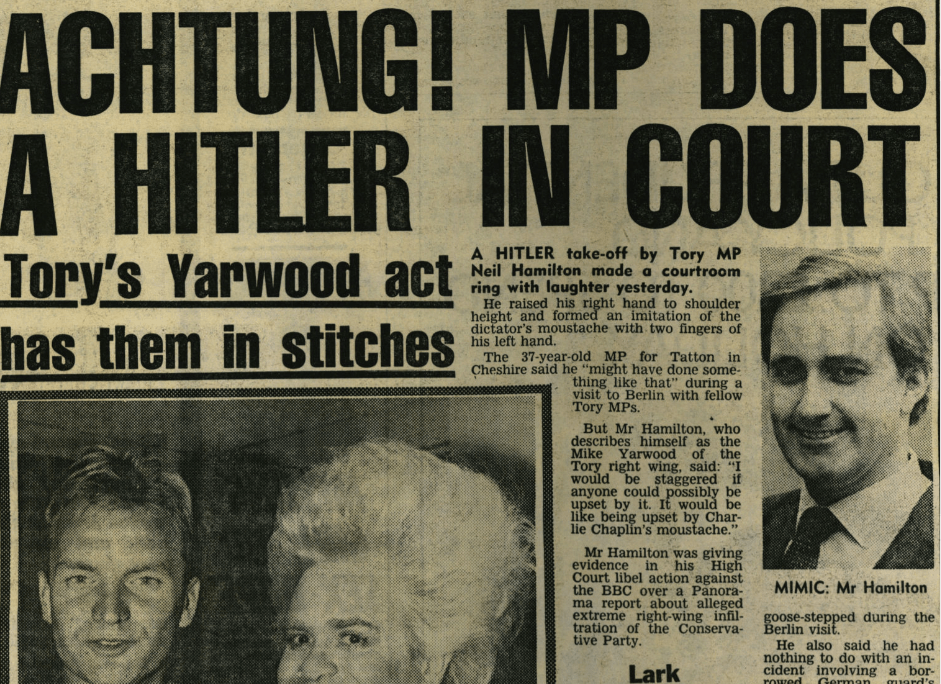
Not even making that up. Daily Mirror, Friday 17 Oct 1986. And yet, despite hundreds of column inches being employed to cover Panorama, it still didn’t mean that viewers were flocking to it. And with World in Action still airing on ITV at the same time, it at least meant BBC-2 had a chance to attract a bumper audience. In the 1970s, this often meant American imports like The Waltons, The High Chaparral or Alias Smith and Jones found an appreciative audience before the slot was handed to popular homegrown offerings like Dave Allen at Large, The Mike Reid Show and Des O’Connor Tonight and the occasional curio I’d love to see, like The Amazing Randi Magic Show.
Perhaps the best current affairs counterweight came in 1983, with the first episode of chat show/international comedy showcase The Bob Monkhouse Show. If you were going to give Lord Bob carte blanche to make any programme, this would undoubtedly have been the result, featuring interviews and live performances from comedy greats of the past, present and future, including the likes of Tommy Cooper, Bob Hope, Joan Rivers, Sid Caesar and Spike Milligan, plus early UK exposure for US-based acts like Steven Wright or The Unknown Comic.

Back at Panorama, and 18 February 1985 saw the programme moved into a post-watershed slot for the first time since the mid-sixties, being shifted into a slot following the Nine O’Clock News. New BBC1 controller Michael Grade couldn’t have helped but notice that BBC2 was clobbering BBC1 in the ratings each Monday while Panorama was on, so the decision was made to afford the slot to something a little more popular with the viewing millions. Indeed, the first week of the Monday 8pm hour being freed up on BBC1 saw the opening episode from the tenth and final series of Are You Being Served? air to an audience of 14.5m viewers. Quite an increase on the 3.5m average figure Panorama had been enjoying in the same slot beforehand.
The new post-news slot also led to a few format changes for the programme. Out went a desk in a dark studio, with the majority of episodes now dedicated to a single filmed report, with no in-vision host at all, and the runtime was reduced from fifty to forty minutes. People may not necessarily been watching in larger numbers – in early 1986, circumstance meant that it was still going out against The Bob Monkhouse Show on BBC2, though the presence of proper competition on ITV meant Bob’s audience had dropped from eight to around four million – but it was deemed worth the ratings hit to have something that weighty on air, and there would generally be a popular The Monday Film on straight afterwards to coax some viewers back over.

Even if the conspiratorially-minded might think you’re heavily hinting at something sinister by having an episode on the NHS followed by Soylent Green. For several years, BBC2 would continue using the Panorama Is On The Other Side slot to put out popular shows – from Moonlighting in 1987 to The X-Files seven years later. But the hardy current affairs strand was certainly sturdy enough to be rolled out into a major slot when something big came along, such as a series of interviews with leaders of the main political parties in the run-up to the 1997 election, plus – famously or infamously – a certain Martin Bashir interview with a certain princess in 1995.

Some classic BBC self-flagellation to come in later years when Panorama ran an episode exposing the tactics used by… Panorama to get the Diana interview. In October 2000, with the Nine O’Clock News being moved to 10pm (it’s okay, they renamed it to fit) and the 9pm hour being afforded to popular comedy series One Foot In The Grave and The Royle Family, there suddenly wasn’t much room in the schedule for Panorama on Monday nights, at least without shunting it into a slot skirting 11pm. And so, for the first time in the programme’s history, it was to start airing on Sunday nights. A slot at 10:15pm was hardly going to attract a lot of new viewers however, and despite the production team’s efforts to cover topics that would appeal to the viewing public (the first couple of Sunday night editions covered working conditions in Nike and Gap factories, and the US election campaign, nothing especially off-putting), it was a slot unlikely to attract many casual viewers.
Thankfully, by 2007 BBC1 had a new Controller in Peter Fincham, and he made the decision to move Panorama back where it belonged – Monday evenings, and in a primetime 8:30pm slot to boot. Admittedly, that was the slot opposite ITV’s second Monday helping of Coronation Street, but that slot had worked well for the previous occupants Rogue Traders and DIY SOS, proving that as long as that slot contained a suitable alternative for soap naysayers, there’d be an audience happy to tune in. It certainly didn’t hurt that the new slot demanded the programme be trimmed to a leaner thirty-minute slot, and concentrate on topics likely to draw attention. Plus, of course, there were now dynamic sweeping shots of Jeremy Vine in the introduction for each episode.
It was a tactic that was deemed to be a success, and indeed, Monday nights remains home to Panorama to this very day. The slot has been tweaked a little – it’s now going out at 7:30pm, still opposite Corrie, and occasionally airs on nights other than Monday, but it remains a programme that seems set to remain on our screens for a long time to come.

Another one out of the way. Phew. Hopefully the next installment won’t require as much time-consuming research. Or, at the very least, have more things written about them than Working Lunch.
SEE YOU NEXT TIME ARMCHAIR BRITAIN.
-
BABY BAB-AI! It’s the 100 Most-Broadcast BBC Programmes Of All Time (22 and 21)

So close we can taste that top twenty.
22: Eggheads
(Shown 3049 times, 2003-2021)
Hang on, what’s a Channel 5 programme doing on here?

Admittedly, I really don’t know much about the series. Never watched it, and one time some work colleagues were thinking of taking part, and one suggested to me that they’d like me to become an Egghead with them. Given the person who’d asked me was bald, I was unable to immediately dispel the suspicion I was about to have my head shaved.
Anyway, let’s crack out ChatGPT and see if I can work out where it’s wrong using my own feeble human brain? Over to you, Chatty. If nothing else, it’ll distract it from destroying society for a few minutes.
“Eggheads” is a British television quiz show that first aired on BBC Two in 2003. The show is produced by 12 Yard Productions and is hosted by Jeremy Vine. The format of the show features a team of five contestants, known as the “challengers,” competing against a team of quiz experts known as the “Eggheads.”
Oh dear. Not off to a great start. Eggheads actually started airing on BBC One in November 2003. Look, here’s the Genome entry and everything. Not a bigtime slot or anything, tucked away in lunchtime between a new episode of Cash In the Attic and the 1pm News bulletin. But still, BBC One. Not Two.
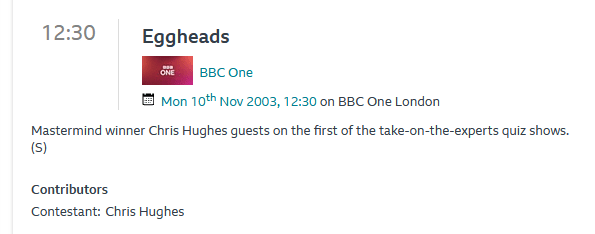
It actually first aired on BBC Two in Monday 10 May 2004, going out at 2.55pm between an airing of 1955 Barbara Stanwyck vehicle Escape to Burma and a Flog It!, if you’re wondering.
My feeble human brain: 1, AI: 0
The original Eggheads team consisted of five members: Chris Hughes, Kevin Ashman, Judith Keppel, Daphne Fowler, and CJ de Mooi. Each member of the Eggheads team is a former quiz show champion, with several holding titles such as Mastermind and University Challenge champions.
Yep, I’ll give you that.
My feeble human brain: 1, AI: 1
The show quickly became popular and was moved to a prime-time slot on BBC One in 2008. The format of the show has remained largely the same over the years, with each episode featuring a series of rounds of general knowledge questions.
Well, it had mainly been a BBC One programme at first anyway. Of the first 70 broadcasts for Eggheads, 63 of them had been on BBC One. I’ll call for a steward’s enquiry over it quickly becoming popular, though. It took until 23 May 2005 for the ‘Heads to first arrive in the slot it’d be most closely associated with – weekdays at 6pm on BBC2, at which point it made a fleeting appearance in the weekly Barb Top Thirty for the channel – sneaking into the arse-end of the chart for the first couple of weeks in the teatime slot (between 24th and 29th place on the weekly lists for weeks ending 29 May 2005 and 5 June 2005, if you must know), but after that it disappeared from the Beeb ratings for BBC2 until August of that year, when a week of airings at 17:15 – a lead-in for a fresh batch of Weakest Links – saw it reach the BBC Two top ten for the first time. It wouldn’t return to that BBC2 top ten until the following May, and even then only for a single episode.
My feeble human brain: 2, AI: 1
Oh, and it never aired in a prime-time slot on BBC One, either. Don’t know where you picked that up from.
My feeble human brain: 3, AI: 1

The challengers are given the opportunity to select a category for each round, and the Eggheads team must answer questions on that topic. If the challengers answer more questions correctly, they win the round. If the Eggheads answer more questions correctly, they win the round.
I mean, yes that’s technically correct. But you’re not getting a point for saying how a quiz works.
My feeble human brain: 3, AI: 1 (Goal disallowed)
Over the years, the Eggheads team has grown, with several members joining and leaving the team. Some notable former Eggheads include Barry Simmons, Pat Gibson, and Lisa Thiel. The current lineup of Eggheads includes Kevin Ashman, Judith Keppel, Barry Simmons, Chris Hughes, Steve Cooke, and Lisa Thiel.
While the number of eggheads has indeed grown over the years, putting together a list of just three notable ‘former Eggheads’ that includes two people you then say are current Eggheads is poor form. For shame. Also: the current line-up of Eggheads doesn’t include Judith Keppel. She left in October 2022. Pfft.
My feeble human brain: 4, AI: 1
The show has been a success for the BBC, with over 2,000 episodes produced as of 2021. In addition to the main show, several spin-offs have been created, including “Celebrity Eggheads,” “Revenge of the Egghead,” and “Eggheads Jumbo Quiz.”
Not going to knock the claim of ‘over 2,000 episodes’, as that’s the reason it’s here, so well done there. But, (and feel free to correct me in the comments, fellow squashy human brain beings) there’s never been a thing called “Eggheads Jumbo Quiz”. Poor show, ChatGPT.
FINAL SCORE: My feeble human brain: 5, AI: 2
CURRENT AI THREAT TO HUMANITY LEVEL:

Yeah, right. Hey, Supposed AI Menace That Will Doom Us All, do a picture of you being outwitted by me, a genius.
Bah.
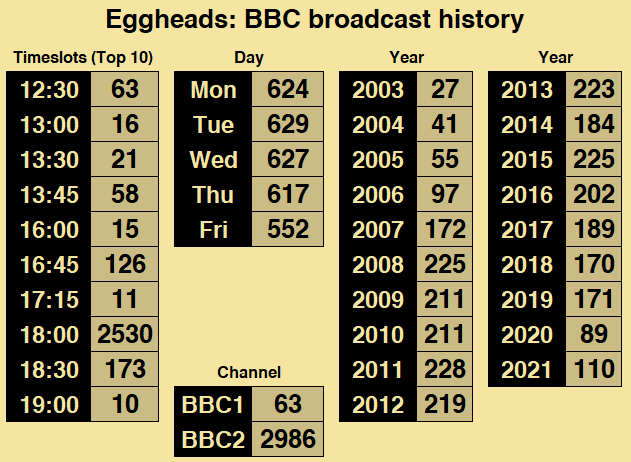
21: Pebble Mill
(Shown 3137 times, 1972-2004)
In this age of ENDLESS TELLY, it’s a bit weird to consider that back when Britain just had a tiny handful of channels to keep us entertained, they didn’t even bother broadcasting throughout the daylight hours, let alone overnight. If you’d scored a day off school with some horrible 70s Scarfolk disease (probably mumps), you might settle down on your brown and orange sofa, pull up your warming if scratchy blanket (also brown and/or orange) to watch whatever might be on telly. Except: the daytime TV menu seldom contained anything other than “For Schools comma Colleges”, which was hardly fun. Maybe there’ll be something else on after that… oh it’s an hour of the test card. Or, if you’re lucky, ‘Interval’.
I always felt a bit cheated that I was born too late to see what the difference was between ‘Closedown’ and ‘Interval’. Presumably one of them had different music to the other. Anyway, it was all the fault of that ruddy Postmaster General, limiting the aggregate totals of hours in which TV can broadcast in a given week, meaning Britain’s TV companies sensibly opted to do so during hours where more people would be watching. If you were a daytime viewer, the occasional public service remit broadcast of Nai Zindagi Naya Jeevan (see list passim) or Dechrau Canu Dechrau Canmol (see a small part of a future list-part) might be all you get.
However, October 1972 brought a bit of good news for Sickday Britons – the GPO bigwigs loosened their grip on the broadcasting reins, affording the nation Proper Daytime Telly for the first time. Nothing new before noon during termtime, mind – those hours were still reserved for broadcasting programmes for schools and colleges, but at least the hours between the lunchtime news and the start of children’s programming around 3pm could be filled with something other than Test Card F. And so, from Monday 2 October 1972, BBC-1 viewers got to experience Pebble Mill At One for the first time.
Welcomed to the airwaves by the Daily Telegraph’s Richard Last as “one of the first genuinely new programmes to emerge from unrestricted daytime hours”, Pebble Mill At One offered up at least a couple of new things.
THING ONE: a daily jaunt to plucky upstart regional outpost, um, Birmingham. Hey, it was a novelty at the time.
THING TWO: The whole affair coming from the foyer of the titular (and for the period, pretty darned modern) Pebble Mill studios. For a nation used to the hard-hitting likes of Tonight, 24 Hours and Panorama, this was a much gentler affair under the auspices of editor Terry Dobson. No custard creams were in danger of being dropped into cuppas.
If nothing else, it was probably a relief to the BBC that the building was doing something to help earn its upkeep. Constructed at the cost of £6m and initially decried as a white elephant, by the time Pebble Mill at One came along, the studios themselves – all 6500 square feet of them – were often filled to capacity (which might explain the need to fill At One in the foyer), but it took a while to reach that stage, such was the concentration of TV talent in London during those early years.
…At One came about thanks to former manager of BBC Radio Leeds, Phil Sidey. By 1972, he’d found himself in the role of Head of Network Production Centre, Birmingham, and having previously worked on 24 Hours and Nationwide, he certainly knew his way around a daily live production. Using his contemporary Midlands location, he was able to offer viewers what was considered a “non-Metropolitan view” of British life, which certainly helped sell the concept to BBC1 controller Paul Fox. With their moneyed rivals over at ITV busily preparing their own daytime TV schedule, a thrifty Beeb was never going to have the budget to take on an ITV line-up containing the likes of Emmerdale Farm, Lunchtime with Wogan or Crown Court on their own terms. But it did have that innate BBC talent at putting together reliable live programming on a daily basis.
To front the programme, former newsreader Bob Langley was chosen, having been deemed suitably avuncular for the new programme. Throw in a theme tune and title sequence that made the whole thing look like a precursor to Dynasty, and Cup-a-Soup Britain would never be the same again.
As mentioned, it was certainly didn’t hurt that BBC Pebble Mill was finally being used frequently. Theoretically, given its status as a single entity, the BBC should have been freed from the multifranchise bunfight between the big ITV regions trying to get their own shows to a national audience. In reality, the BBC regions were having an equally tough time getting their content shown nationally, with niche shows turned breakout hits like Pot Black or Gardener’s World the kinds of exceptions that found regular audiences.
The hope was that this would change. Pebble Mill became home to an English Regions Drama department, headed by David Rose, original producer of Z Cars, with fare from the department including a series of Thirty-Minute Theatre plays, alongside provincial offerings for the Play For Today strand. Luckily, things soon worked out for the Pebble Mill Studios, with it going on to become home to (at least briefly) Top Gear, Doctors, Telly Addicts, Howards’ Way, Juliet Bravo amongst others.
Back to 1972 and the studio’s daytime mainstay, and the Times didn’t seem particularly enamoured with the new programme, with TV reviewer Stanley Reynolds referring to it as “aggressively lower brow” and (it’s still 1972 there, this wasn’t as much of a cliche then) something that “makes Blue Peter look like Panorama”. He’d waited until December to write that, too.
Despite that stinging broadsheet rebuke, Pebble Mill at One went on to because a resolute rock within BBC-1’s daytime schedule, gradually picking up a fiercely loyal audience. Plus, it didn’t exactly hurt that it saw plenty of Golden Age of Light Entertainment stars popping in for a lunchtime chat.
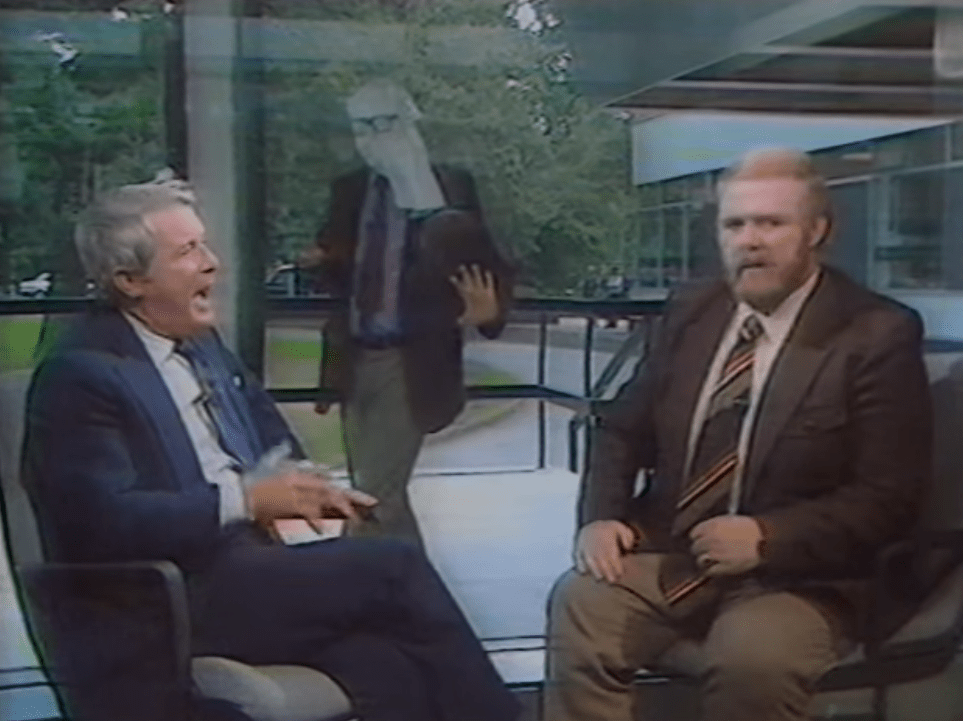
And, this being something I have to mention as it always pleases me, if circumstances led to it going out at a time other than 1pm sharp, the programme title was occasionally amended accordingly:

By 1974, the programme was popular enough to warrant its very own Christmas specials. Still in the daytime schedule (on 23 and 24 December, mind), but they’re using the word ‘spectacular’ in the listing, so something big must have been going on. Not big enough to let them borrow an actual studio, but still.
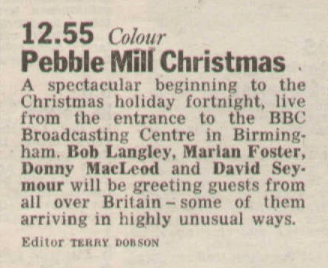
In 1976, Pebble Mill at One was considered such a safe pair of weekday hands, the decision was made to make a Saturday night spin-off of the programme. As such, Saturday Night at the Mill roared into life at 11.30pm on 6 March 1976, pretty much as post-watershed as it was possible to get. So, what debauchery could an audience who’ve just tumbled in from the Dog and Trumpet with a belly full of Watneys expect? Well, the Daily Mirror’s preview of the programme promised a programme every bit as “bland, folksy and fairly predictable” as the daytime counterpart. Indeed, the safe pairs of hands Bob Langley and Donn MacLeod were on hosting duties, with the premiere episode featuring guests Michael Bentine, Elaine Delmar and Buddy Greco. There was also time for “a nostalgic look at British films and television of twenty years ago”.
Not going to lie, that’s probably preferable to The Jonathan Ross Show on ITV.

While it hardly set the TV schedules ablaze at the time, Saturday Night at the Mill certainly proved a sturdy weekend outpost for BBC1, running until July 1981. The final episode saw hosts Bob Langley and Jenny Hanley joined by Honor Blackman, Griff Rhys Jones and Edward Woodward. Not a bad way to bow out. And at least they’d finally settled on a co-host for Langley by that point. Previous co-hosts had included Hayley Mills, Liza Goddard and writer Anrianna Stassinopoulos, none of whom apparently proved a success. The latter reportedly failed as a result of her Greek accent proving impenetrable to the parochial ears of the viewing public – Stassinopoulos lasted just five episodes.
Additionally, if nothing else, Saturday Night… led to one of the great Not Quite The Right Names Of The Programme listings in 1977:

28 Dec 1977 Back at the day job, O.G. Pebble Mill at One would continue all the way through to 1986 (despite having their special ‘Pebble Mill at Ten‘ celebration in 1982 kicking off with the Black and sodding White sodding Minstrels), but by then it was time for BBC1’s shiny new daytime schedule to take over. Out went the old guard (mainly Programmes For Schools and Colleges, which shuffled over to BBC2), and in came the new Daytime UK line-up. At the hand of then-BBC1 Controller Michael Grade, Pebble Mill at One made way for a new One O’Clock News bulletin, and in October 1987 the Pebble Mill at One chat-and-chicken-soup remit was to be fulfilled by brand new early afternoon chat show ‘Daytime Live’. Which came live each lunchtime from… Pebble Mill studios in Birmingham.
By 1990, the fairly bland title of Daytime Live was abandoned for the equally unmemorable ‘Scene Today’, which really sounds more like a regional news bulletin. And so, with no small sense of inevitability, 1991 saw Pebble Mill returned to Britain’s screens, this time shorn of the ‘at One’ suffix. The regular set within the lobby of Pebble Mill Studios was retained, but by now the likes of Bob Langley had been replaced with Alan Titchmarsh, but the regular recipe of light chat and light music was retained.
Then, in 1996, this happened.

Clearly, things had got badly out of control. In March of that year, the final regular edition of Pebble Mill aired on BBC1.
And that was it. Save for a single retrospective programme on Pebble Mill, made to mark the closure of the storied studios in 2004.
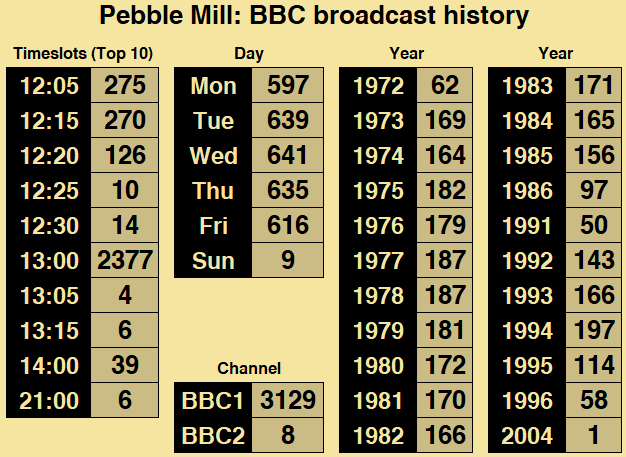
Phew, we got there. Sorry this was a bit of low-energy effort this time. A proper piece of Heavyweight BBC Programming in the next update, however. See you next time, armchair Britain.

BrokenTV
Welcome, welcome, welcome home
 BrokenTV