
On with this list!
18: The ONE Show
(Shown 3400 times, 2006-2021)
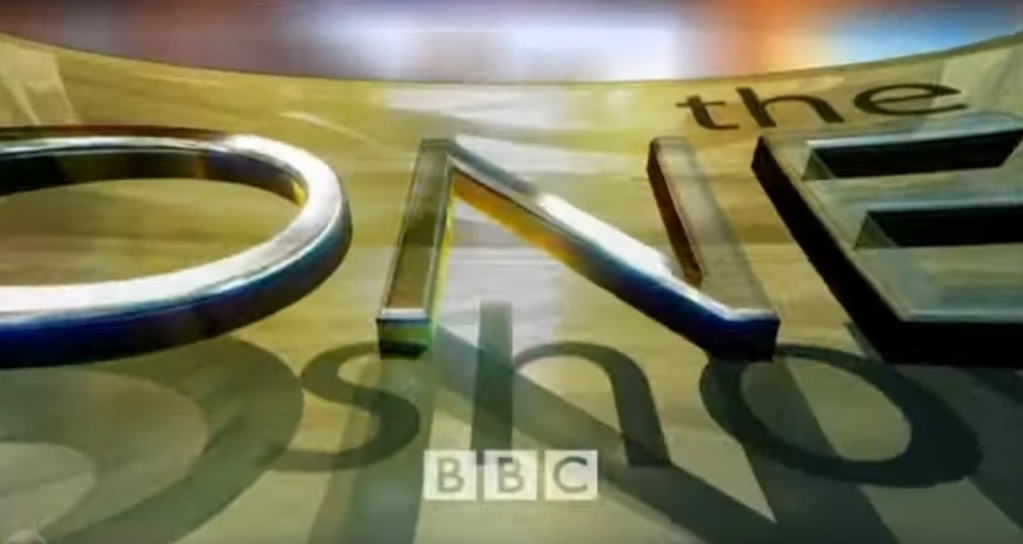
Apparently, ‘ONE’ is capitalised, despite the title being all lower-case in the title sequence. What’s the deal with that?
There are some TV reboots that will never, ever be a success until – against all reasonable logic – they just are. When the BBC initially announced their big new Saturday night Light Entertainment extravaganza was going to be a reboot of sleepy old Come Dancing, many scoffed. And with good cause. Throwing a few newsreaders or athletes into a fusty old format like that wouldn’t be a success! Oh. It was. A huge success.
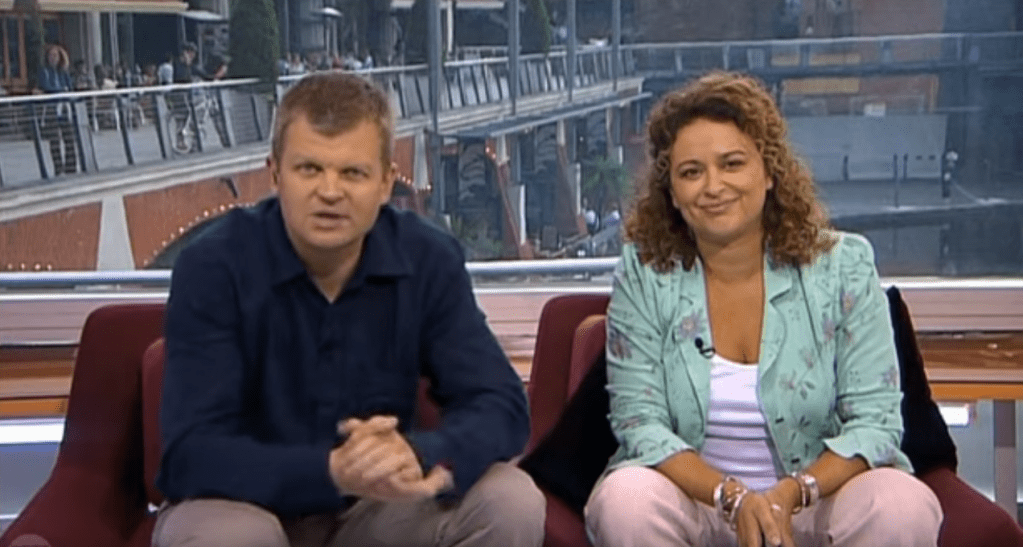
Similarly, when the announcement was made that the BBC were going to blow the dust off Nationwide, plonk Someone Off EastEnders and A Man Off The Football onto the presenting couch and spend four weeks in 2006 waiting to see if anyone would tune in, the reaction was similar. It was even airing at the distinctly 1976 time of 6.55pm each weekday (seemingly done so anchors of the preceding regional news bulletin could throw straight to it). It wasn’t the 1970s any more, you idiots! We’ve all got Motorola RAZR phones now, and now knows that other space-age things are just over the horizon? This is the future!

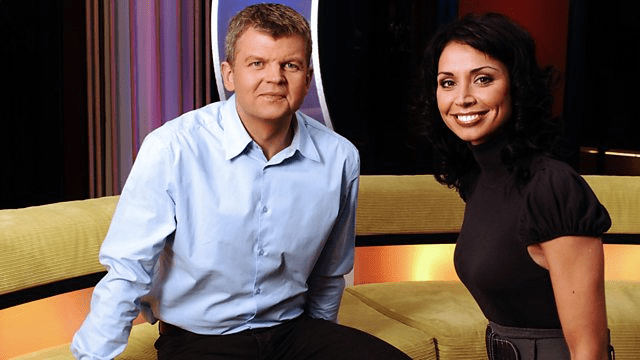
Luckily for the BBC, the bigwigs weren’t listening to idiots like, erm, me. It didn’t hurt that that particular Man Off The Football happened to be Adrian Chiles, whose TV stock was high off the back of Match of the Day 2 and the BBC’s World Cup coverage a couple of years earlier, his particular brand of black country bravura proving a hit with viewers. His initial co-host, actor, presenter and founding Loose Woman Nadia Sawalha was seen as a similarly safe pair of hands. But surely the TV landscape had moved on from such a format?
There was a sense of neatness to what BBC One were doing. ITV had a nicely stripped and stranded schedule each evening – Local and National news from 6pm, Emmerdale at 7pm, and (for three nights each week at the time) Corrie at 7.30pm. In contrast, BBC One had a much more mixed bag at 7pm each evening. Aside from The ONE Show in 2006, there had been 26 different programmes airing on weeknights at or around 7pm – some solid (Question of Sport, Watchdog), some less so (Davina McCall’s short-lived chat show, Davina). Having something settled in that slot would be more likely to attract a loyal audience who, it was hoped, might just stick with BBC One for the evening.
Of the available options, a magazine show made the most sense. There was no way the Beeb were going to try another soap in that slot (cost aside, the spectre of Eldorado still haunted the BBC boardroom), the flop that was Davina suggested a Wogan-style chat show wasn’t the safe option it once was, and game shows were for earlier in the evening. Nationwide reboot everyone? Nationwide reboot. It couldn’t fail.
No, seriously – it couldn’t fail. In the initial four-week run, critics were not kind. “We can look forward to a future without this patronising pile of TV excrement” quipped the Mirror’s Kevin O’Sullivan, while former Nationwide producer David Hanington wrote to the Guardian to dismiss the programme as “a load of predictable, pedestrian tat”. However, the ratings were solid enough, usually between three and four million per night, though it was another factor that ensured The ONE Show would return.
The programme had been the brainchild of BBC One controller Peter Fincham, who’d only recently been responsible for another 7pm disaster (the aforementioned Davina). Throwing a bunch of time and money a second failed spoiler for Emmerdale would make for some pretty bad optics. And so The ONE Show would return a year later, with a full run beginning in July 2007.
Now it was back for a long haul, scales of economy meant production values could be boosted, and the programme was relocated from regional-content-ticking Birmingham to where-the-stars-are London. Breakout ‘star’ of the programme Adrian Chiles became focal point of the series, with Myleene Klass replacing Nadia Sawalha alongside him. From there, the series became the TV fixture we’d all know and sometimes maybe even watch (if it’s only one of the new rubbish Simpsons episodes on Sky One).
There have been bumps along the way. Some of them were especially rocky, like Hardeep Singh Kohli and Carol Thatcher each being dismissed from the show for acts of arseholery, for example. Some were a little more easier for the ONE Show axis to withstand. For example, after a few months on the chair, Klass left on maternity leave, and in came new co-host Christine Bleakley (later Lampard). The on-screen chemistry between Bleakley and Chiles was a winner, and the programme grew in popularity. Somewhere, in ITV’s gothic castle looming over the South Bank, an underling was frantically taking notes.
Another suspension-crunching bump came along in 2010, with the announcement that Friday episodes would be boosted to a full hour… but that those episodes would use Chris Evans as host. Yet another doomed attempt to cram that mid-90s TFI Friday magic into the wrong TV bottle, and which only turned Adrian Chiles against the show, subsequently announcing his departure. In came a new host, 8 Out Of 10 Cats team captain Jason Manford. By the time Manford’s tenure began, Bleakley also departed, in order to team up with Chiles on ITV’s rebooted breakfast show Daybreak (spoiler: it didn’t work out well). In her place came S4C’s Alex Jones, who was set to be the show’s sole five-day host – Manford appearing on Monday to Thursday, and Evans each Friday. All nicely settled now. Good.
For a few months, anyway.
Come November, a tabloid scandal did for Jason Manford’s stint on the series, and in came a series of guest presenters, including Alexander Armstrong, Matt Allwright and Matt “Prime Minister, How Do You Sleep At Night?” Baker. The following year, Matt Baker was appointed perma-host, albeit with guest presenters taking the hotseat each Friday following the departure of Evans.
From that point, things have been a bit more settled for the series. Matt Baker departed (for sensible non-scandal reasons) in December 2019, with more guest hosts initially filling in alongside Alex Jones. April 2021 saw Ronan Keating and ex-England ace Jermaine Jenas appointed as regular co-presenters, where they remain to this very day. With Lauren Laverne also now part of the regular host line-up, the ONE Show, erm, shows no sign of stopping any time soon.
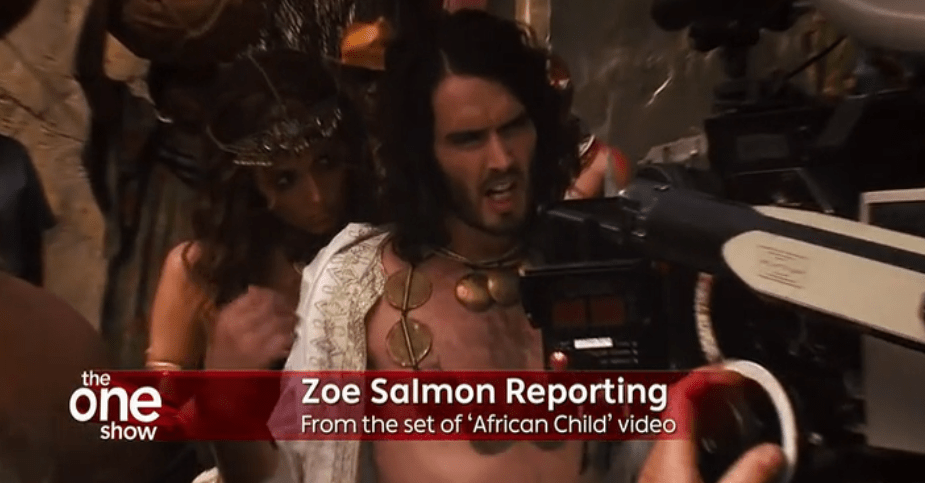
Indeed, The ONE Show even once appeared in cinemas around the world. Well, sort of. The opening scenes of 2010 Jonah Hill/Russell Brand offering Get Him To The Greek included the familiar ONE Show opening titles to the programme as part of on on-location interview with Brand’s wayward rocker Aldous Snow. Might not sound like much, but it’s pretty much the most interesting thing about that film.
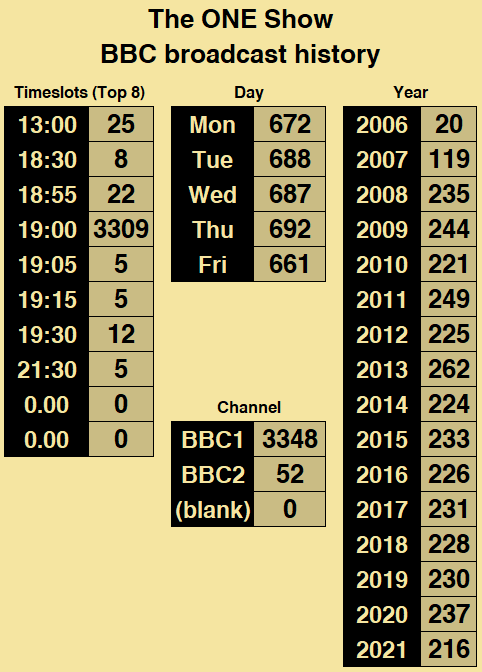
[UPDATE 8pm 06/06/23: With thanks to George Stevens for asking on Twitter about two episodes showing as broadcast on a Saturday and Sunday, I’ve now corrected the episode count. One had been a mislabelled episode of daytime spin-off The One Show: Best of Britain airing on a Sunday, one had been some rogue data that had crept into my database. Fixed ep count above, and fixed table below.]
17: Songs of Praise
(Shown 3429 times, 1961-2021)
There aren’t too many British television institutions that started being broadcast solely to Wales. SuperTed, Fireman Sam, the few months in 1994 where BBC2 broadcast Pobol Y Cwm in an afternoon slot (we all remember the Radio Times’ boast that “the Deri Arms could become as famous as the Vic and the Woolpack”). Admittedly, quite a drop-off between those last two*.
(*Side point: there’s such a paucity of British sketch comedy on TV these days, were it still a category in the British Comedy Awards, S4C preschool sketchcom Cacamwnci would win a nomination by default.)
And yet, the Land of Song is the place closely tied to the (eventual) rise of religious programming on British television. Indeed, the title Songs of Praise dates back as far as 96 years into the past thanks to early BBC radio service 5WA Cardiff. Songs of Praise 1.0 first appeared on 2 May 1926 and featured The Station Orchestra (conducted by Warwick Braithwaite), The Choir of the Cardiff Musical Society and soprano Dorothy Silk.
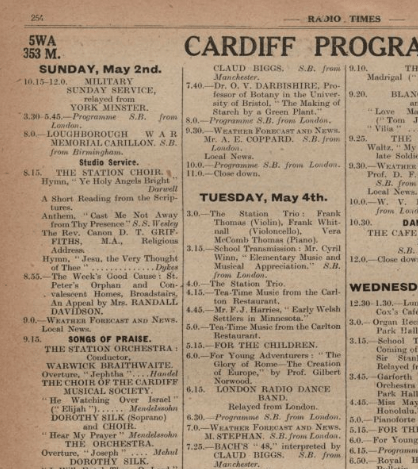
Decades later, a format not dissimilar to Songs of Praise would appear on the nascent BBC Wales television service, going out under the name Dechrau Canu, Dechrau Canmol (“Start Singing, Start Praising”) from New Year’s Day 1961, with a half-hour of community hymn singing from Swansea.
However, there’s a bit of a journey between those two points.
It took a long time to get there, in part thanks to the very concept of television on a Sunday having been initially forbidden by the Television Advisory Committee way back in 1936.
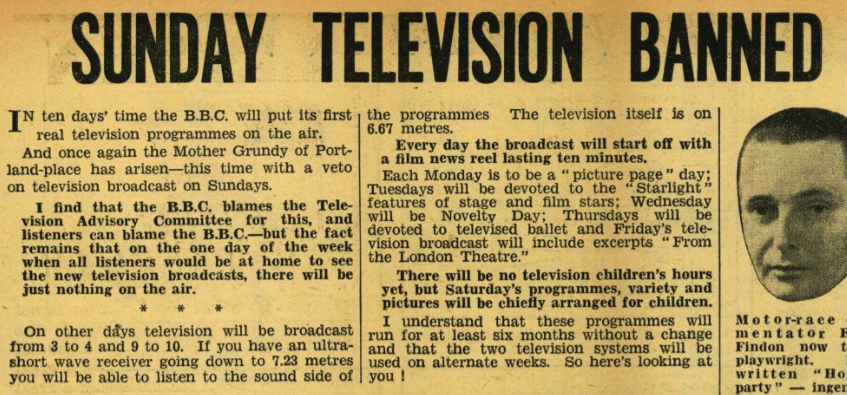
The blanket ban wasn’t to last for long, however. As the Daily Mirror pointed out in the run-up to the launch of regular BBC-tv programming, it was a bit much that anyone who’d worked hard all week to pay for a television set wouldn’t be able to watch the blessed thing on their day of rest. And so, from 1938, Sunday broadcasting trickled onto the Television Service for the first time. That said, the hours were strictly rationed, so as not to tempt churchgoers away from Sunday services.
As far as I can find, Sunday programming on the Television Service back then was surprisingly secular, with everything from puppetry to classical music in place, but save for the occasional teleplay with a religious-sounding name (such as James Bridle’s Tobias and the Angel, or George Bernard Shaw’s Saint Joan) television seemed very wary of muscling in on the territory of organised religion.
For the most part, radio was the home of religion on the BBC, faith-based programming on television usually being restricted to short televised sermons on Christmas Day, or carol concerts in December. It had been decreed that religion was something best delivered away from the gogglebox, and as such, a block on all television programming on early Sunday evenings would remain in place until the 1950s.
By the early 1950s, religion would become a more commonplace sight on British television. An expansion in Sunday broadcasting hours in 1953 allowed regular Sunday morning broadcasting on the BBC Television Service, and with it the first episode of the long-running Morning Service, the first edition coming from the Moseley Road Methodist Church, Birmingham. For the first time, those unable to travel to church could attend a Sunday service from their own home. In 1955, ITV arrived, turning British television into a duopoly, and the nascent network soon started broadcasting regional sermons from each franchise, along with religious documentaries like About Religion or Living Your Life each Sunday evening.
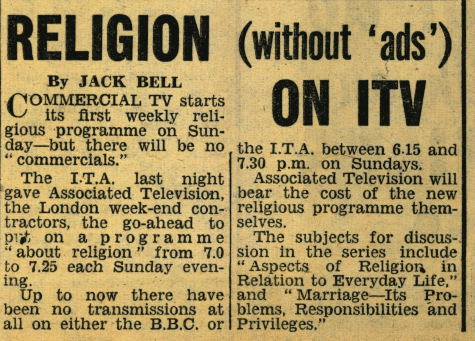
But there was still a hole in the Sunday schedules. Save for a few occasions where the BBC had broadcast an Evening Service, the hours between 6pm and 7pm (generally) saw television broadcasts blacked out, to encourage Britons to get off their armchairs and onto pews. This presented a problem for ITV, who noticed that much of the audience that switched off at 6pm wasn’t tuning back in at 7pm. As a result, the broadcaster lobbied for the removal of the ban, on the proviso that the slot be filled with religious programming, broadcast without commercial breaks.
It took a while before ITV was allowed to fully employ those lost hours, but by 9 March 1958, the 6.15pm break in Sunday broadcasting was finally broken with the first episode of Welsh language hymn compendium Land of Song, a rare network offering from TWW (where it went out under the original Cymraeg title Gwlad y Gan), going out one Sunday in four. It would take another week for the first English-language programme to appear. And so, on 16 March 1958, The Sunday Break broke onto the ITV network, built on the basis of being a televised youth club, featuring dancing, singing and bible readings.
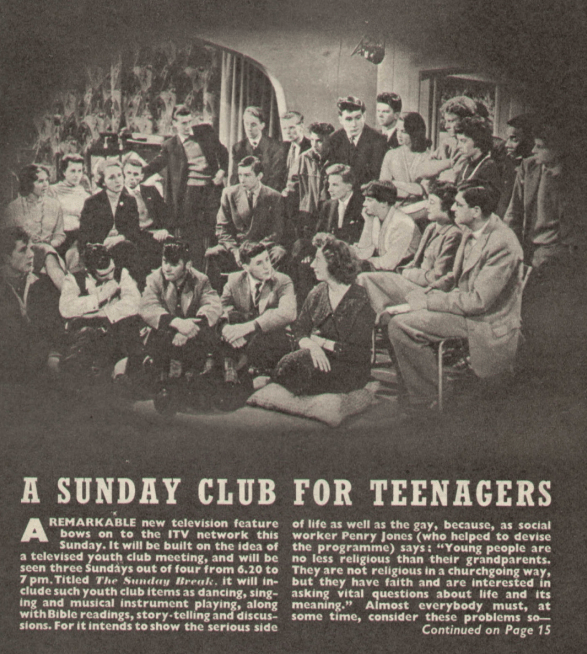
Back on the BBC, it took a while to land on a regular programme to fit that slot. For years at this point, special religious-based programming had been scheduled in that slot to fit in with particular occasions such as Harvest Festivals or Whit Sunday, but generally the hours between 6pm and 7pm on Sundays featured a summary of the weather and a closedown1. Even from 1958, the Corporation would generally offer ten-minute sermon series Sunday Special at 6.10pm before shutting up shop for the remainder of the hour. It took until October 1959 before, in what is fast becoming a running theme, another Welsh-language programme filled that particular gap (or at least most of it).
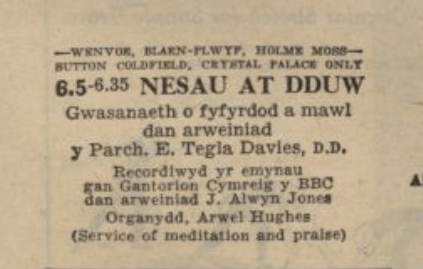
Even then, this particular service of meditation and praise only aired on a monthly basis. For the other three Sundays per month, it was back to weather and 45 minutes of nowt from the 6pm hour.
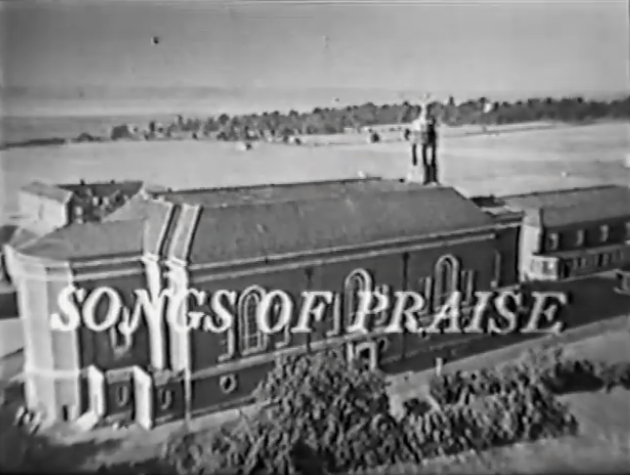
This state of affairs continued until 1 October 1961, when a new programme arrived at 6.15pm, and which would become a fixture on British television. That programme was (deep breath) Songs of Praise (“Finally!” – every single person reading this).
The genesis for Songs of Praise came about due to BBC assistant controller Donald Baverstock happening across a recording of hymn-singing in Welsh. Employing the same producer instincts that had previously led him to devising long-running current affairs series Tonight, Baverstock felt it was something that could appeal to the wider UK audience. It also helped that the BBC had accumulated large outside-broadcast units for the purpose of beaming live sport onto Grandstand each Saturday afternoon, but which had little to do each Sunday.
Surprisingly, it seems the main initial naysayers to this new programme were the BBC’s Religious Broadcasting department. Their flagship offering was Meeting Point (726 episodes, 1956-1968), which covered religion around the world, offered serious discussions on the topic and included documentary films. A weekly programme offering people having a good old sing-song was considered to be a little flippant for such a serious topic. However, an episode of Meeting Point broadcast from BBC Wales’ studio, devoted to choirs singing a series of requested hymns, had been one of the programme’s most popular episodes.
Ultimately, the threat of handing Songs of Praise to Light Entertainment made the Religious Broadcasting department come around to the idea, albeit reluctantly.
It was a format not dissimilar to the aforementioned Dechrau Canu, Dechrau Canmol, which had started in a mid-afternoon slot ten months earlier. And, appropriately enough, the very first (television) Songs of Praise came from the Tabernacle Baptist Chapel in Cardiff, the very same city that provided a venue for the very first edition of (radio) Songs of Praise back in 1926. To cap it all, that first edition was even introduced by Rev Dr Gwilym ap Robert, host of… Dechrau Canu, Dechrau Canmol.
Luckily for Donald Baverstock, the gamble paid off. Songs of Praise quickly became the British TV’s most-watched religious programme. From there, the format was a study and unwavering one: an hour of songs, sermons and readings, coming each week from a different place of worship, ensuring a packed house for each venue (and a memorable Not the Nine O’Clock News sketch a couple of decades later).
By the 1970s, ITV had made an effort to add some glam to their God Slot offering, with Stars on Sunday attracting a variety of well-known names to perform appropriately religious readings and songs. BBC1 however remained resolutely loyal to their trusted Songs of Praise format.
Following 1977’s further relaxation in the rules governing which bits of the Sunday schedule were allocated to faith-based programming, BBC1’s Sunday evening schedule became even more predictable. Songs of Praise would run from 6.40-7.15pm, followed by something decidedly different. Initially, there were episodes of play series Jubilee (“reflecting life in the last 25 years”), later followed in that 7.15 slot by The Onedin Line, Poldark and All Creatures Great and Small. By the 1980s, family-friendly sitcoms would occupy the post-Songs slot, with Banana Sandwiches and Tinned Fruit stalwarts Open All Hours, Hi-De-Hi! and To The Manor Born making themselves at home. Later on, a generation of mid-80s kids followed their Sunday night bath with episodes of Ever Decreasing Circles, Last of the Summer Wine and Sorry!. Perhaps the most pleasing offering of all come in early 1986, when 7.15pm became home to repeats of Hancock’s Half-Hour.
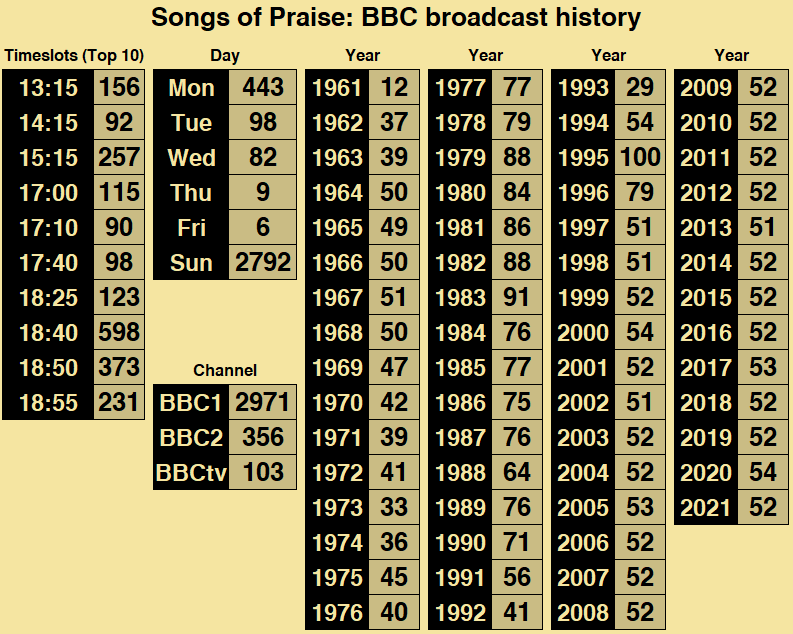
Come January 1993, a change to the restrictions on religious programming meant Songs of Praise moved from that rigid 6.40pm slot, and the slide towards being broadcast earlier in the day began. Initially, Songs slipped back a quarter-hour to 6.25pm, meaning subsequent programmes could begin at the neater time of 7pm. January 1996 saw it nudged back to 6.10pm (occasionally 5.55pm), then to 5.40pm a couple of years later, and from 2010 around the 4.30pm mark. Currently airing in an early afternoon slot, Songs of Praise picks up an audience much more modest that in its 1970s heyday, with figures at around a loyal million or so.
In any case, whether you’re a person of faith or otherwise (I’m classed as ‘otherwise’, so I’ve learned a lot from researching this), there’s something comforting about knowing it’s a topic that the BBC is still keen to cover. Indeed, religious programming is a genre that wouldn’t exist on mainstream telly at all these days were it not for the BBC, unless you’re willing to get into the more evangelical fare in the nosebleed section of Sky’s EPG.
No wonder so many people watch it religiously I’M NOT EVEN SORRY.
Another one down. More soon!
Footnotes
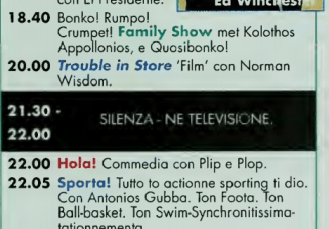
1It might not necessarily be a reference to this practice, but the fake TV listings guide for Chanel 9 in The Fast Show book include the following:


3 responses to “Silenza: Ne Televisione (The 100 Most-Broadcast BBC Programmes Of All Time, 18 and 17)”
A fascinating account of Sunday broadcasting. And two shows I expected to be much higher? The intrigue only increases…
LikeLike
There were a lot more Sundays in the late 70s and 80s. Like the ever shrinking Wagon Wheels and Crème Eggs – another example of fings not being wot they used to be.
LikeLiked by 1 person
[…] The ONE Show(Shown 3400 times, […]
LikeLike