
After the longest of times, this is complete:
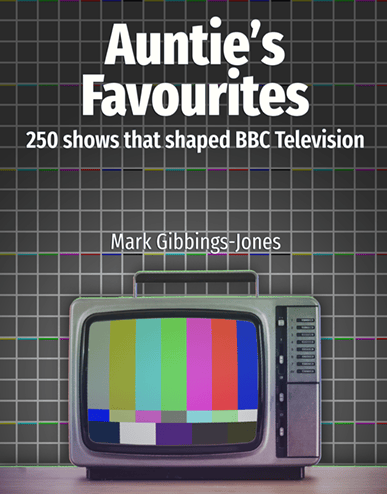
All being well, it’ll be available to buy in a couple of days as an ebook and shortly after that as a real, physical book you can hug at night. I’ll publish more details when each is available, along with details of the foolishly reasonable pricing.
What is it? Well, a few years ago this blog (re)launched with a rundown of the hundred television programmes that have been broadcast on the main BBC channels most frequently since that first official television broadcast on 2 November 1936. This book extends the remit (to also cover BBC Three, BBC Four, BBC Choice and BBC Knowledge), the scope (to 250 programmes in total) and the detail (barring any last minute tweaks, it’s a shade under 250,000 words across 626 pages). And this time, I’ve included Newsnight.
So, why post an update now? Well, it’s very nearly 2 November 2026, which means it’s just about the 90th anniversary of the launch of the BBC Television Service. My original goal was to have the book on sale by then, but found it hard to put the pen down, adding in about a dozen extra pages instead of submitting it in good time for that self-imposed deadline.
So, in lieu of that, here’s an entry from the book. And a pretty appropriate one – a programme that will also be enjoying its 90th anniversary on the second day of November. At joint-208th place in the list, here’s:
Picture Page
1936-1952, broadcast 590 times
BBC-tv (1936-1952)
Ah, The One Show. The idea of having a daily magazine programme featuring interviews with anyone famous (and willing) enough to visit the studio, along with features, reports and performances, is hardly new. For one thing, Pebble Mill had been doing the same thing for ages. And, as you’ll have guessed by this entry being for neither The One Show or Pebble Mill, so did this programme. And, at least as far as television is concerned, it did just that before anyone else. Mainly because Picture Page came along on the very first day of tele-visual broadcasting – the fourth programme ever broadcast on the BBC Television Service after it officially launched, in fact.
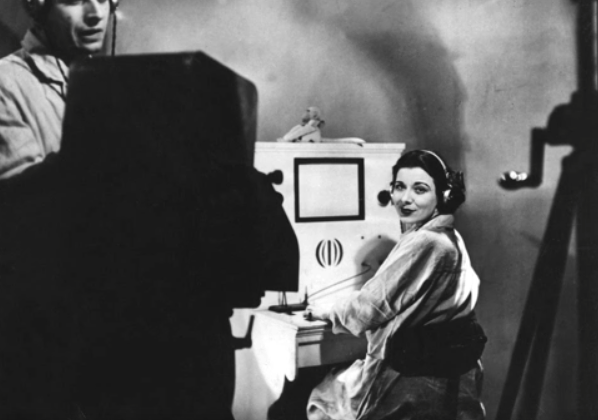
Such were the limitations of the Baird system; it was hardly the most arresting programme for those nascent televiewers. The broadcasting system in use for that first week of TV demanded the use of Emitron cameras mounted on top of iron pedestals, meaning that the first official episode of Picture Page (on Monday 2 November 1936, which gave an official debut to Joan Miller “who links the show introducing each person by plugging in a telephone switchboard after a few preliminary words of description”) consisted of two basic shots – while the Baird cameras could pan, that was about the limit of their range. There was no chance of moving the camera around otherwise, meaning everything was filmed from pretty much the same angle.
However, test transmissions had shown how things could be quite different. The rival EMI system had been used for a test transmission on 8 October 1936 – featuring a sort-of-pilot edition of Picture Page – was able to employ three cameras that could be moved much more easily, allowing for different shots from various angles. The test transmission was impressive enough for the Daily Telegraph to trumpet the programme “a brilliant success, [setting] up fresh standards in television entertainment and presentation” which “approached cinema standards of efficiency”. In short, bye-bye Baird.
The programme itself was however a perfect candidate for the new medium. No scenery, just Joan Miller at an ersatz switchboard, and a selection of guests that could slot into the programme’s remit of providing “a magazine of topical and general interest”. It was personalities that made the programme, and even if that generally promised little progress from radio precursor In Town Tonight, there’d at least be the occasional promise of a performing pooch or circus act to tickle those visual senses.
The first edition of Picture Page opened with a young bugler from HMS Warspite standing against a Union Flag background while the signature tune – The Jack Hylton Band’s recording of Red, White and Blue – played. Cut to a picture book bearing the show’s title, which opened to show flipping pages, before a cut to Joan Miller seated at her telephone switchboard. Miller’s shtick throughout the initial episodes was to pretend she was speaking to a theoretical caller, taking a request to speak to a passing star. Cue a bit of business along the lines of “You want to see who? Miss Kay Stammers? Miss Stammers is coming into the studio now” before the conversational baton was passed to the seated tennis player.
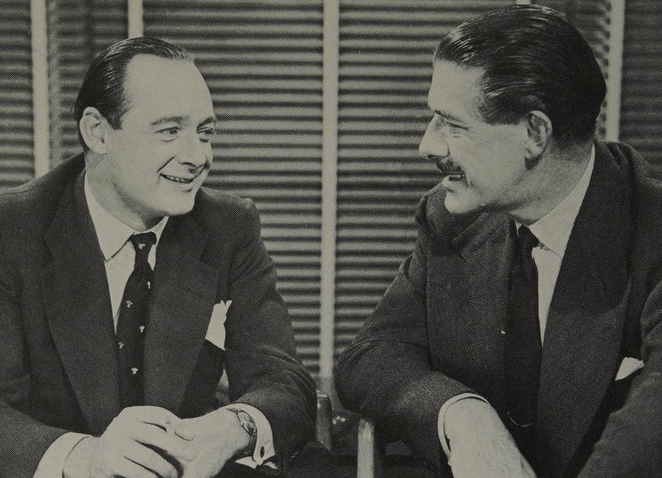
With the concept of recording content for later repeat viewing still many moons away, each edition had to be broadcast live. Meaning, from the following Monday onwards, each early afternoon and each late evening edition of Picture Page would be live. And, as was considered proper at the time, interviewer Leslie Mitchell would be donning a lounge suit for afternoon broadcasts, but would have changed into a dinner suit for each evening episode. After all, to quote 30 Rock’s Jack Donaghy, “It’s after six. What is he, a farmer?”.
As everyone was still frantically getting their heads around this whole “Tele-vision” fad, there was a veritable conveyor belt of guests in each half-hour edition – as many as eight being introduced by Miller at the switchboard. Yet, the programme provided several tropes that would live on throughout television history:
- the first ever linking device – Miller’s switchboard was a device that linked interviewees with a smoothness many current hosts would wrestle their floor manager for
- the first ever TV catchphrase – “You’re through! You’re looking at…”
- and – given everything on air until its debut edition used merely descriptive titles (“3.0pm The Opening of the BBC Television Service”), television’s first ever identifiable brand
- heck, if you’re going to count the opening day’s billing of “Variety” at 3pm a description of a genre rather than a programme title (the listings at the time took both approaches), Picture Page is the world’s oldest scheduled television series
- in young Canadian actress Miller, television’s first true star
- going by a contemporary memo from the BBC’s Chief Engineer of Radio RTB Wynn – what could have been the first ever TV scandal: aviator Jim Mollison, a guest on the first edition, apparently “having had several”. It’s lucky only a few hundred people were watching.
With that very sense of “not many people have got TV sets yet” ringing around the subconsciousses of the Picture Page team (one presumes), there was a sense of freedom about putting the programme together that wouldn’t have been the case on the wireless.
Picture Page was routinely put together on the day of broadcast – very often in the hours leading up to broadcast – which made for a white-knuckle ride for those used to working in radio. Programme editor Cecil Madden used a series of ‘scouts’ who were tasked with procuring the attention of famous faces as soon as they arrived in London, no matter what field they operated in. They would then contact Madden, explain who they were able to get, and be given a simple ‘yes’ or ‘no’ on whether they were a suitable pick for that day’s editions.
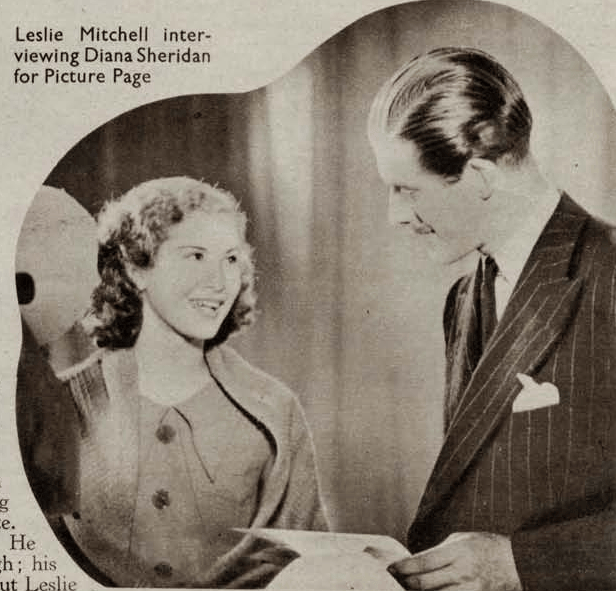
If a scout’s target was deemed suitable, a script for their segment was hurriedly put together, and scripts handed to interviewers Leslie Mitchell and Jasmine Bligh, each taking a ‘shift’ for a day’s programme. This came with its own challenges. With the notion of televised interviews being as young as the programme itself, there was no previous experience to draw upon. Radio interviews could employ scripts for both participants, but sitting and staring at a script would be a no-no for television. Instead, the interviewers would be given a few key points about each interviewee before going live which they’d duly memorise. But with their targets being largely new to the world of broadcasting, it would be up to Mitchell and Bligh to engender a feeling of naturalness and informality, to keep those guests at ease.
The limitations of the new format brought fresh challenges. In his 1981 autobiography Leslie Mitchell Reporting, Mitchell recalled how he’d need to keep a watchful eye on the oft-unreliable cameras in the studio, keeping the conversation flowing as he’d guide his subject towards what was often the studio’s remaining functioning camera. The use of rival (and incompatible) broadcast systems – with Baird and Marconi EMI systems alternating between afternoon and morning broadcasts – meant each episode would have different demands for lighting, clothing, cameras and make-up. Furthermore, the harsh lighting required in the early television age caused undue wear-and-tear on Mitchell’s clothing, requiring an advance on his salary to procure a suitable repository of clothing.
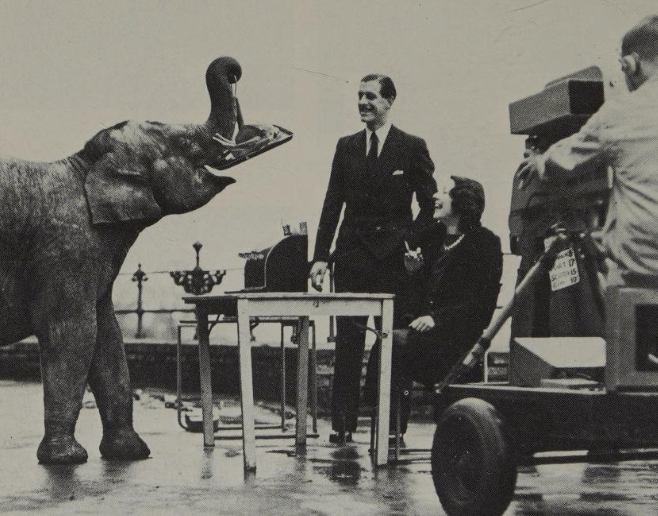
With two episodes going out each week, it didn’t take long for Picture Page to register a number of broadcasting landmarks, with the 200th edition on 15 December 1938 being marked by a great big birthday cake, the programme boasting of having welcomed “over 1,500 men, 660 women, the ghost of Alexandra Palace and a large number of animals of all kinds” by that landmark point. It was certainly easy to keep count, with each episode being billed in the Radio Times as “Picture Page ([n]th edition)”. That would continue right up until the last pre-war episode on 31 August 1939’s “262nd Edition”, broadcast the evening before the end of television broadcasting until 1946.
The resumption of the Television Service saw the return of Picture Page, albeit with a few changes. The programme had a new editor, Joan Gilbert, who’d worked with predecessor Cecil Madden’s Overseas Entertainment Unit during the war. Gilbert appointed a new ‘Picture Page Girl’, Patricia ‘Paddy’ Bath, the switchboard replaced by a reception desk and a board detailing forthcoming interviewees. Gilbert would present the programme herself, with Leslie Mitchell returning as main interviewer. With hostilities over, the Television Service was starting to expand, as broadcasts started to reach other parts of the UK, and the acquisition of Lime Grove studios provided more capacity than ever to produce programmes. And yet, Picture Page was still central to the BBC’s output – and as TV was starting to take off around the world, it was able to boast of being the oldest television programme in the world. Television announcer Gilbert was a canny choice as presenter – such was the regard for her links, one viewer felt compelled to write in saying how – following an evening where Gilbert appeared to be suffering from a cold – they’d placed a dose of cough mixture on top of their set in an attempt to help.
However, despite the programme’s continuing popularity – it was frequently singled out for praise by TV critics of the age – the fast-evolving TV business seemed to consider it something of a dinosaur. And so, on 12 March 1952, the final edition of the programme went to air. The decision came as something of a surprise to those working on the series. The BBC brass announced their decision to retire Picture Page just a couple of days before the final edition, a Beeb official positing that the series had been “going on too long and is getting stale”. As the standout star of the show, Joan Gilbert was awarded a standalone interview series – Joan Gilbert at Home, which ran for just seven weeks, with contemporary reports suggesting the all-important debut suffered from a short turnaround time – it aired just a week after the surprise cancellation of Picture Page. A lack of prep time was perhaps evident when Gilbert – usually no slouch at conducting interviews – asked distinguished screen actor Ralph Lynn if his forthcoming film Wild Horses would be his first movie appearance. He’d been appearing in films for over twenty years by that point. A more successful sequel, roving fortnightly topical talk show Joan Gilbert’s Diary, ran from 1953 to 1954. As for Picture Page’s chief inquisitor, Leslie Mitchell would go on to join founding ITV franchise Associated-Rediffusion as senior announcer and Head of “Talks”.
More of this kind of thing very soon. Happy 90th birthday, television!

